
Review · ITALY
Amalfi: Make Fresh Pasta, Mozzarella & Tiramisù with wine
The best part of this Amalfi Coast cooking class is the setting: a family farm high above the coast, with wide views toward the Gulf of Salerno. You make three Italian staples, then sit down to eat them in the same place they were prepared. I especially like the farm-made mozzarella and the chance to work from Nonna Maria’s tiramisu recipe.
I also like the warm, hands-on style led by Giovanni, Valentino, or Giuseppe, plus the fact that wine, parking, a farm tour, and the meal are included. The main thing to consider is the location. The farm can be difficult to find and may take longer to reach than expected, so allow extra time and do not treat this as a quick stop between Amalfi and Positano.
Key points at a glance
- Three dishes in one short class: Prepare tiramisu, mozzarella, and fresh tagliatelle within roughly 1 to 2 hours.
- A real family farm: The Acampora family has cared for the property for centuries, and the farm still produces organic food and wine.
- Views above the coast: You look across the upper Amalfi Coast toward the Gulf of Salerno while cooking and eating.
- Good value at $34: The price covers the chef, lesson, farm tour, organic wine tasting, parking, and a meal.
- Lively but varied group size: Some sessions are intimate, while others can include a much larger communal group.
- Useful for families: Children as young as 6 have taken part successfully, with plenty of mixing, shaping, and tasting.
A farmhouse above the Gulf of Salerno
This is not a cooking school in a city kitchen. You arrive at Luna d’Agerola, an old Acampora family farm set above the Amalfi Coast. Its position gives you something many food classes cannot: a wide view over the coast and the Gulf of Salerno while you work.
The setting also has a literary footnote. The property was a place where the Neapolitan poet Salvatore Di Giacomo rested and wrote Luna d’Agerola, one of the early dialect texts in the Neapolitan language. That story gives the farm a sense of place without turning the class into a history lecture.
You also get a look at the farm itself. The property includes a large garden, and some of the food used in the meal is homegrown. That matters because the class is not only about copying recipes. You see how a working family farm connects its garden, kitchen, dairy products, wine, and table.
The view is a major part of the experience, so try to arrive with enough daylight to enjoy it. The farm sits away from the busiest coastal road, which helps explain both the peaceful setting and the difficulty some people have finding it. Parking is available on the property, a useful benefit if you are driving.
More Wine and Cheese Tastings in Italy
- Authentic Farm Tour with Pizza, Cheese, Wine & Limoncello Tasting
★ 5.0 · 698 reviews - Cooking class with Pasta, mozzarella and Tiramisu with wine
★ 5.0 · 549 reviews - Amalfi: Make Fresh Pasta, Mozzarella, & Tiramisù with Wine
★ 5.0 · 305 reviews
Starting with Nonna Maria’s tiramisu
The class begins with tiramisu made from scratch using Nonna Maria’s family recipe. You are not simply handed a finished dessert at the end. You take part in the early preparation, then the tiramisu is set aside to chill while you move on to the other dishes.
That order works well. It keeps the class moving and gives the dessert time to firm up before the meal. It also means you begin with an approachable recipe. Tiramisu is familiar to many people, but making it from the start gives you a better feel for the balance of coffee, cream, and biscuits.
This is a good activity for families because the work is easy to share. Children can take part in mixing and assembling, while adults can focus on following the recipe and watching the texture. You should not expect a silent demonstration where only the chef handles the food. The format is communal, with the instructors showing the method and inviting everyone to help.
The family recipe is one of the more personal touches. You leave with a better idea of how the dessert comes together, rather than just another restaurant version of tiramisu.
Stretching milk into fresh mozzarella
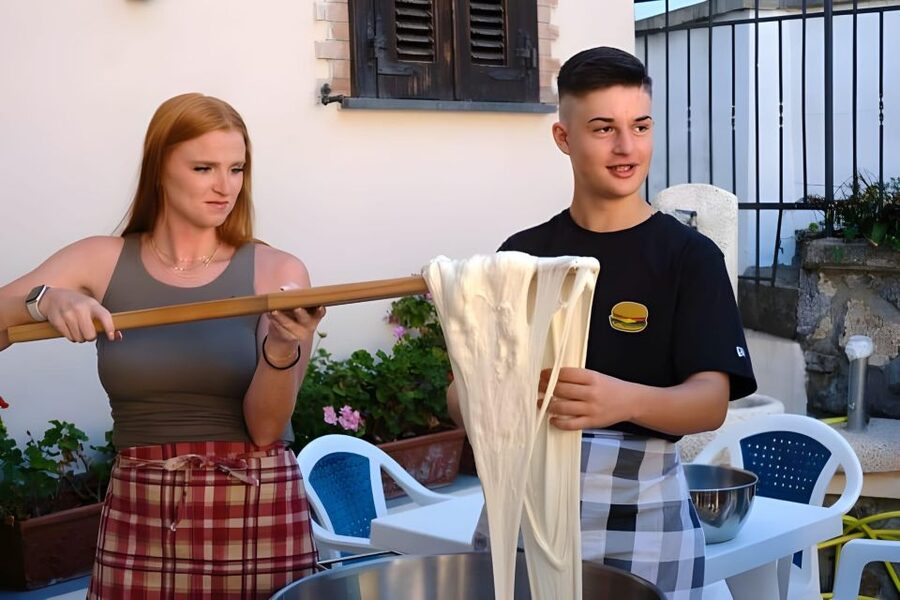
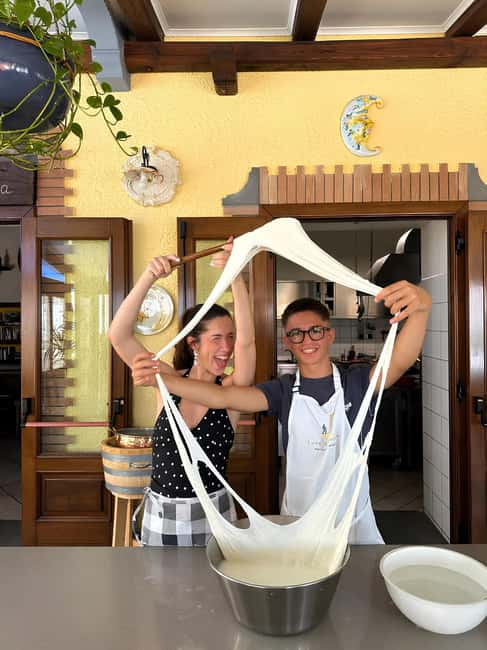
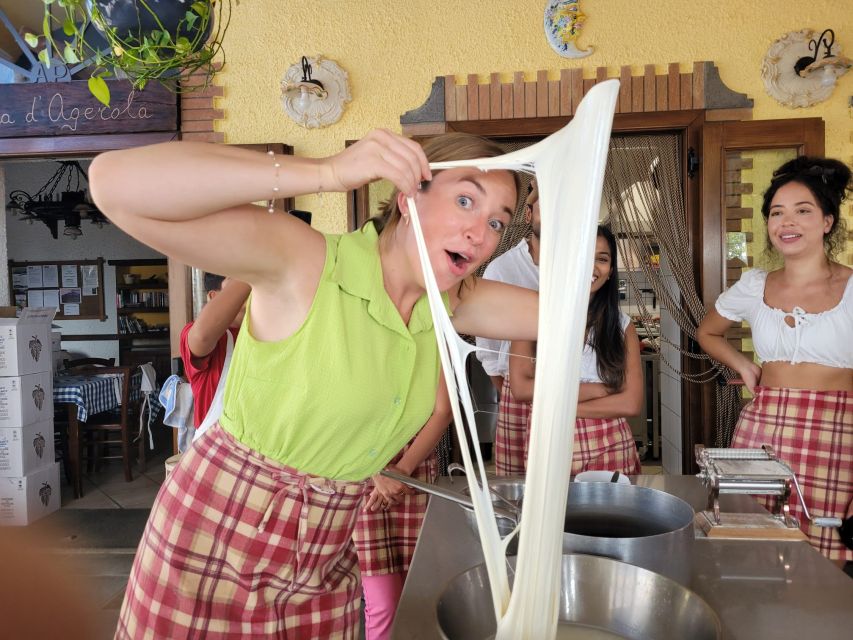
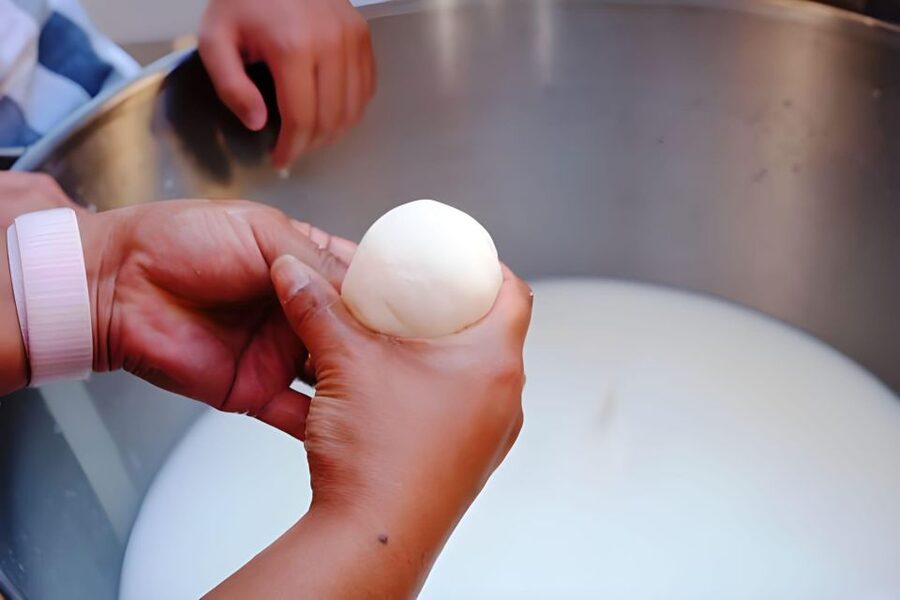
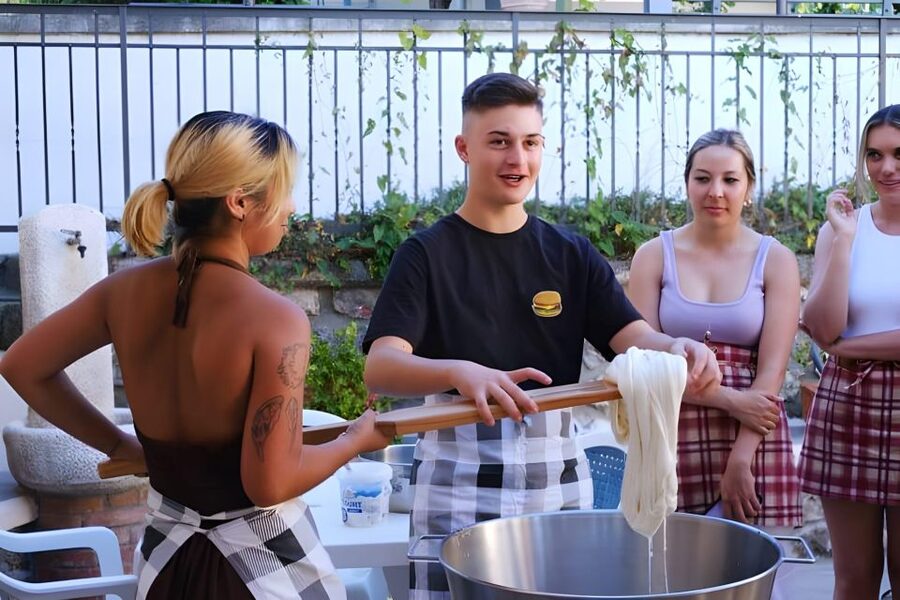
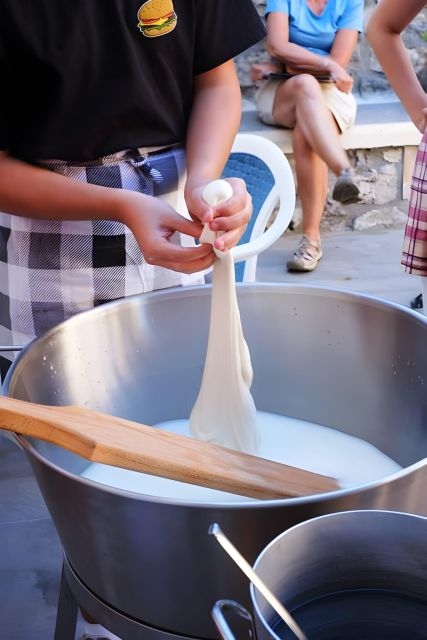
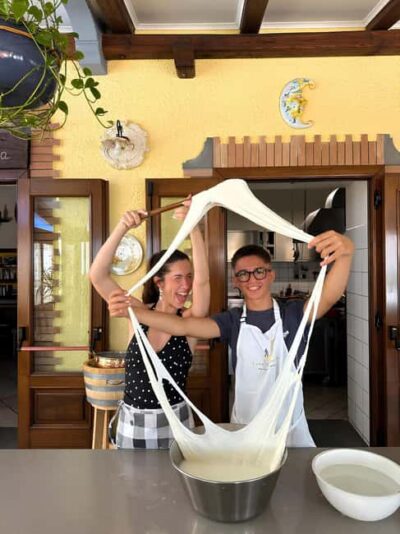
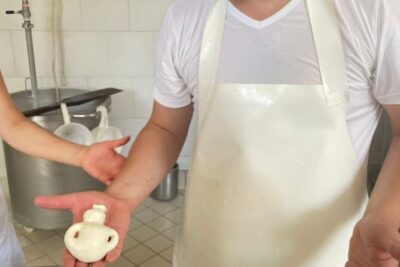
Next comes the mozzarella. The cheese is made with milk from a cow raised and cared for on the farm, giving this part of the class a direct connection to the property. You see the cheese change from a soft curd into the familiar smooth shape as it is worked and stretched.
This is probably the most unusual part of the lesson. Plenty of Italian cooking classes teach pasta, but fewer include cheese making with milk produced on the same farm. The work is tactile and a little messy, which is exactly why it appeals to children and adults alike.
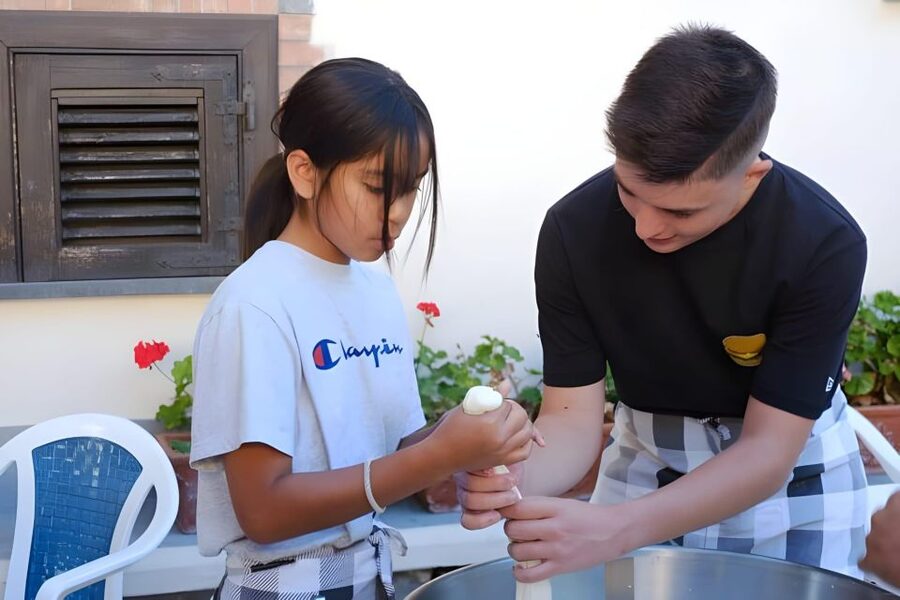
The shaping takes some practice. One child described needing to work on making the ball shapes, and that is a fair warning: your mozzarella may not look perfect on the first try. That does not affect the taste, and the uneven results are part of the fun.
The cheese is served as part of the final meal, while it is still fresh. I would pay close attention during this section if you enjoy food production. It is the clearest example of how this class differs from a standard pasta workshop.
Rolling the dough for tagliatelle
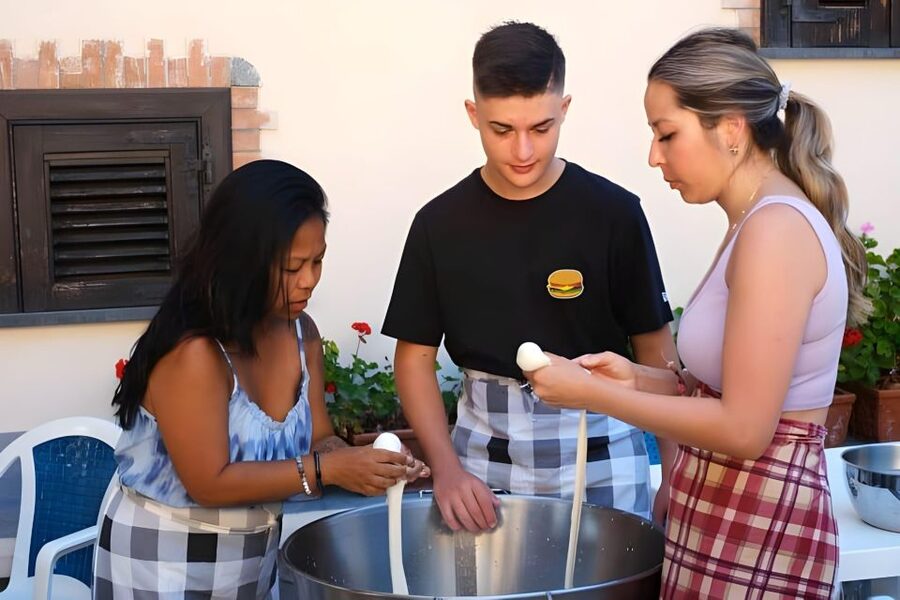
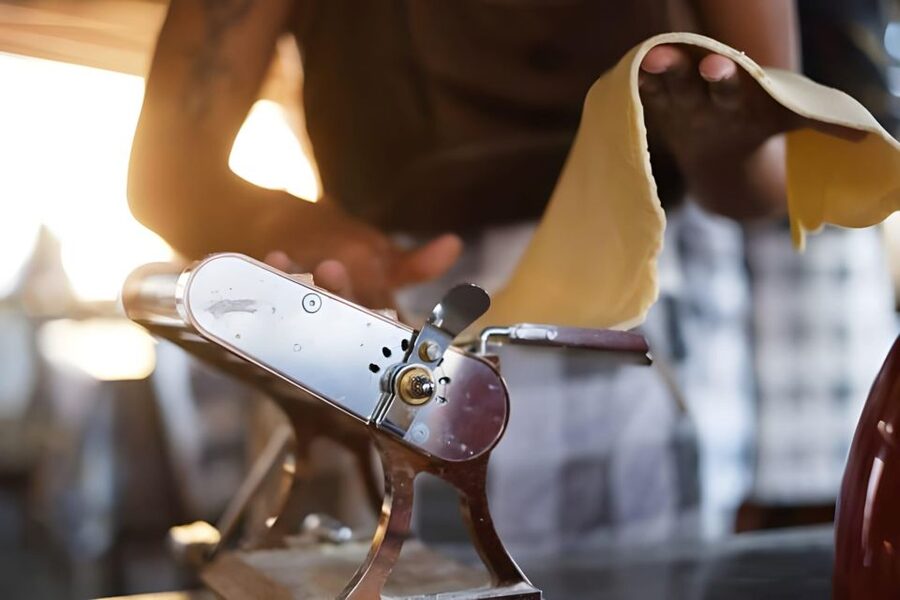
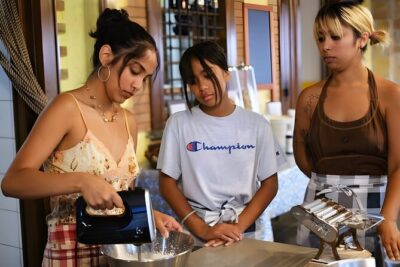
The pasta portion focuses on fresh noodles, often described as tagliatelle. You work with dough from the beginning, then shape it into noodles using the family method. The activity is practical rather than technical, so you can join in even if you have never made pasta before.
This part tends to be the most familiar Italian cooking experience, but it still earns its place. Fresh pasta has a different texture from dried pasta, and eating it soon after making it helps you understand why the effort is worthwhile.
The instructors keep the tone light. Giovanni, Valentino, and Giuseppe are described as funny and welcoming, and their good English makes the instructions easier to follow for international visitors. The class is social, too. You may work alongside your own family or meet other people at a shared table.
The size of the group can change the feel of the class. A four-person session can give you more one-to-one time, while a group of 26 adults becomes a more communal event. A private group is available if you want more control over the pace and atmosphere, but you should check the option you book because the meeting point and group setup can vary.
More mozzarella and buffalo dairies in Italy:
- Amalfi: Prepare fresh pasta, mozzarella and tiramisu
★ 5.0 · 315 reviews - Mozzarella Experience – Cheese Tour and tastings to Masseria Fragnite
★ 5.0 · 266 reviews - Puglia: Masseria Seppunisi Tour, Cheese, Burrata Tasting
★ 4.8 · 177 reviews - Puglia: Mozzarella Experience at an Apulian Farm
★ 4.6 · 135 reviews
Sitting down to eat what you made
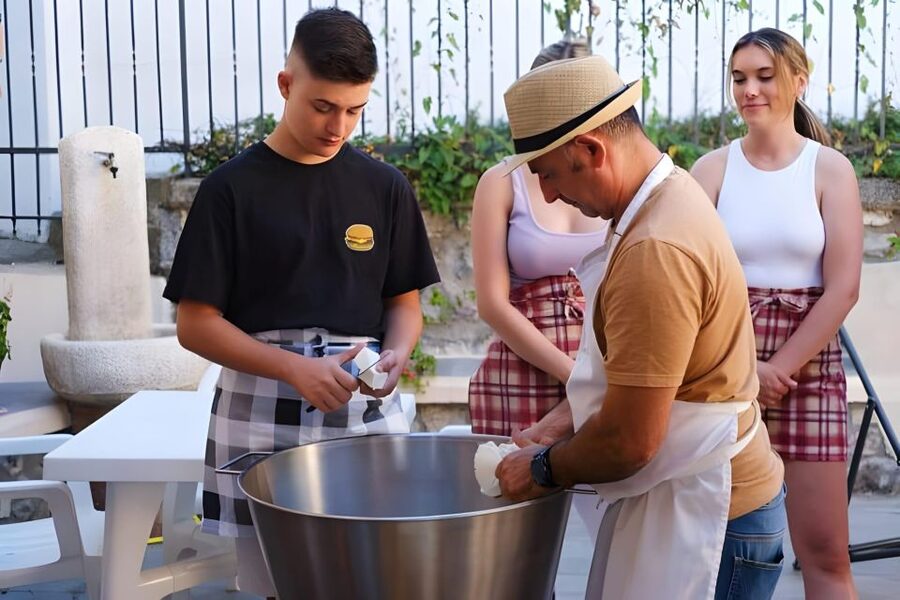
The reward comes at the end, when the pasta, mozzarella, and tiramisu are served as a meal. This is not a quick taste at a counter. The food is presented together, with organic wine from the farm and plenty of time to enjoy the results.
The meal is a useful part of the value. At $34 per person, you are paying for instruction, ingredients, the farm visit, wine tasting, parking, and lunch or dinner. A similar cooking class can cost much more in a famous coastal town, especially when a meal and drinks are added separately.
The food also gives the class a clear purpose. You are not making dishes simply for photographs. You get to taste the mozzarella while it is fresh, eat the handmade pasta, and finish with your own tiramisu. The meal can be generous, so arrive hungry.
The wine is homemade and organic. It is included as a tasting, and bottles may also be available to buy for about €10. Since the class includes alcohol, you should plan your return journey sensibly, especially if you are driving the mountain roads.
Why the family setting matters
The Acampora family has looked after the farm for centuries. That family connection is felt in the way the class links recipes, ingredients, and local life. You are not only learning a generic Italian menu. You are cooking in the family’s home setting, using a recipe from Nonna Maria and mozzarella made from milk produced on the property.
That does not mean every moment is formal or polished. The experience has a relaxed, sometimes busy quality. Several instructors may help, and the class may feel more like a family gathering than a professional culinary school. For many people, that is the appeal. If you want precise knife skills, restaurant-level technique, or a long lesson focused on culinary theory, this is probably not the right choice.
If you want a friendly introduction to Italian food with plenty of participation, it fits well. Giovanni is known for keeping the energy high, while Valentino has a welcoming approach and clear English. Giuseppe is also involved as a chef and guide. The exact instructor may depend on the day.
Getting there and planning your time
The biggest practical issue is access. The farm is not on the main waterfront, and some people find it slightly difficult to locate. Driving is the simplest option when available because parking is provided on the property, but you should allow extra time for the journey.
Do not schedule this class too tightly against a ferry, train, or another fixed activity. The advertised duration is 1 to 2 hours, but the drive up to the farm can take longer than expected depending on where you start. Meeting points can also vary by booking option, so read the instructions carefully before setting off.
A few people have paired the food class with a short walk to a nearby castle and viewpoint after eating. That can be a pleasant extra if your schedule allows, but it is not listed as a formal part of the cooking class. The essential experience is the farm, the food, the meal, and the view.
Tell the provider about food restrictions when you book. The team has accommodated dietary needs, but advance notice is required. Do not wait until you arrive, especially if your restrictions affect dairy, eggs, gluten, or alcohol.
Who should book this cooking class?
I would choose this for families, couples, and small groups who want an activity that is social and easy to join. Children have enjoyed the class, including children aged 6, 9, and 15. The mix of kneading, stretching, shaping, and tasting gives younger participants something to do at nearly every stage.
It also suits people who want a break from crowded coastal towns. The farm setting offers a slower change of pace, and the meal gives you a proper reason to spend time there rather than simply stopping for a view.
The class is less suitable if you need a fully private lesson but have not selected the private option. It is also not ideal if you are looking for a long, advanced cooking course. The session is short, friendly, and hands-on, with the emphasis on making and eating rather than mastering every technical detail.
At $34, the value is hard to dismiss. You receive a farm visit, three cooking activities, wine, a meal, parking, and a striking coastal setting. Even allowing for the drive and possible group size, that is a strong package for the Amalfi Coast.
Should you book it?
Book this experience if you want food, family hospitality, and views in one stop. The mozzarella made from farm milk is the most distinctive feature, while the pasta and tiramisu make the class familiar and accessible.
I would book it as a planned outing rather than an activity to squeeze into a busy day. Allow extra travel time, tell the farm about dietary restrictions, and check the group option before paying. If you do that, Luna d’Agerola offers a useful taste of rural Campania at a notably modest price.
FAQ
How long does the Amalfi cooking class last?
The experience lasts approximately 1 to 2 hours. Starting times depend on availability.
What dishes will I make?
You will prepare tiramisu from scratch, make mozzarella, and prepare fresh pasta, usually tagliatelle or fresh noodles.
Is a meal included?
Yes. You eat the food prepared during the class as part of the experience.
Is wine included?
Yes. An organic wine tasting is included. Homemade wine bottles may also be available to purchase separately.
Where does the class take place?
It takes place at the Luna d’Agerola farmhouse, an Acampora family property overlooking the upper Amalfi Coast and the Gulf of Salerno.
Is parking available?
Yes. Parking on the property is included.
Is hotel pickup included?
No. Hotel pickup and drop-off are not included.
Can I book a private group?
Yes. A private group option is available, though the meeting point may vary depending on the option selected.
What languages are spoken?
The class is offered in Italian and English.
Can the class accommodate food restrictions?
You must advise the provider about food restrictions at the time of booking.
More pasta and cheese classes in Italy
- Sorrento Farm by Tuk Tuk: Cheese, Limoncello & Hands-On Pizza
★ 5.0 · 628 reviews - Sorrento: Farm Tour with Cheese Tasting & Pizza Making Class
★ 5.0 · 503 reviews - Florence: Flambé Cheese Wheel Truffle Pasta Class & Tiramisù
★ 5.0 · 190 reviews - Amalfi Coast: Pizza & Mozzarella Class with Farmhouse visit
★ 5.0 · 98 reviews
Freshly cut around Italy
- Wine Tasting with Cured Meats & Cheeses in Florence★ 5.0 · 2 reviews
- Vico Equense: Tour in the dairy “Mozzarella Experience”★ 5.0 · 19 reviews
- Turin: Gastronomy tasting through oil, wine and cheese★ 5.0 · 2 reviews
- From Parma/Cinque Terre: Truffle & Parmesan Picnic (Tasting)★ 5.0 · 2 reviews
- Tuscany: Ripalte Design Winery Wine and Cheese Tasting Tour★ 4.7 · 15 reviews
- Prosecco Hills Wine and Cheese Gourmet Discovery★ 5.0 · 6 reviews
- The Valpolicella food & wine driving tour: cheese factory+ winery★ 5.0 · 6 reviews
- Premium Cheeses and Gins Tour in the Prosecco hills. Full lunch!★ 5.0 · 3 reviews
Mozzarella and Buffalo Cheese Tours, plate by plate.
Mozzarella Experience – Cheese Tour and tastings to Masseria Fragnite
Read our review →
Cheese lists with this tasting