
Review · PARIS
Paris Wine and Cheese Tastings Class near Le Marais
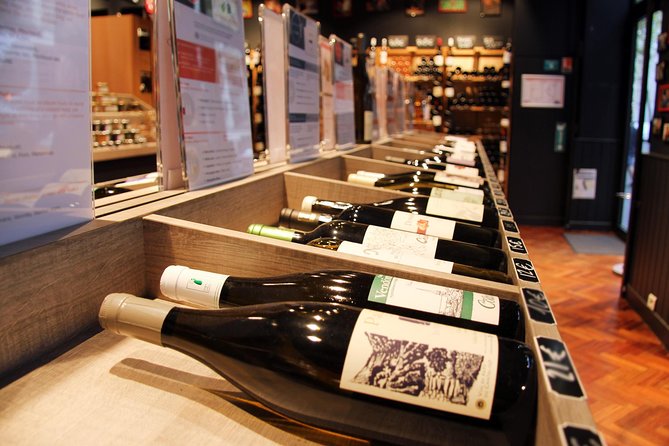
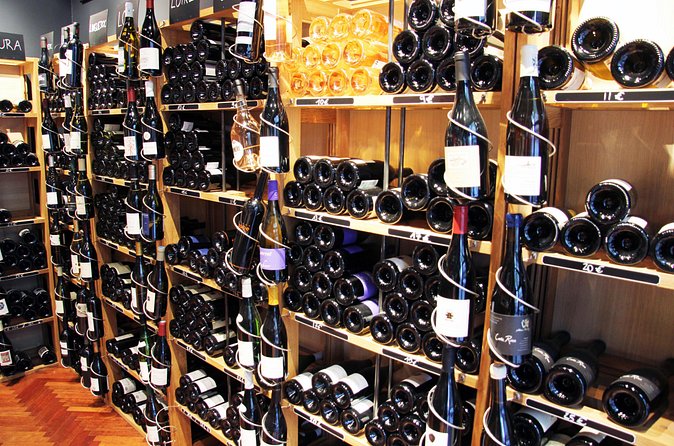
French wine makes more sense when you can taste it beside the cheese it was meant to accompany. At Le Vin qui parle, an intimate wine boutique at 30 Rue Faidherbe, you’ll spend about 90 minutes with an oenologist, regional maps, soil samples, several French wines, and cheeses from a nearby artisan shop.
I like the small maximum of eight people, which leaves room for questions, and I like the practical teaching style. Alex, one of the wine experts, is happy to discuss French regions, wine bouquets, and your own favorite bottles. The main drawback is that this is a wine shop rather than a restaurant, so toilets may not be readily available, and the tasting is not designed as a full meal.
Key points at a glance
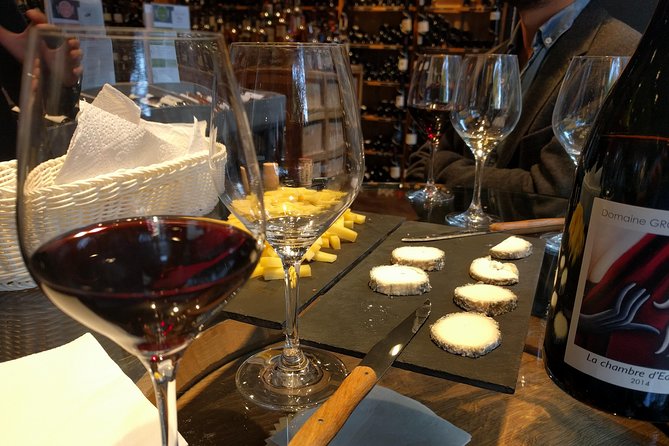
- French wine by region: Maps and real soil samples help explain why grapes taste different from one part of France to another.
- Cheese with every wine: Artisan cheeses let you compare how food changes the flavor of each pour.
- A small group setting: The class is limited to eight people, making it easier to ask questions.
- Alex’s thoughtful service: If you arrive without having eaten, fresh bread can be arranged to make the tasting more comfortable.
- Useful tasting tools: Bread, water, and a spittoon are supplied, so you can pace yourself and taste responsibly.
- Simple afternoon timing: The class begins at 3:30 pm and returns you to the same wine boutique.
What happens inside Le Vin qui parle
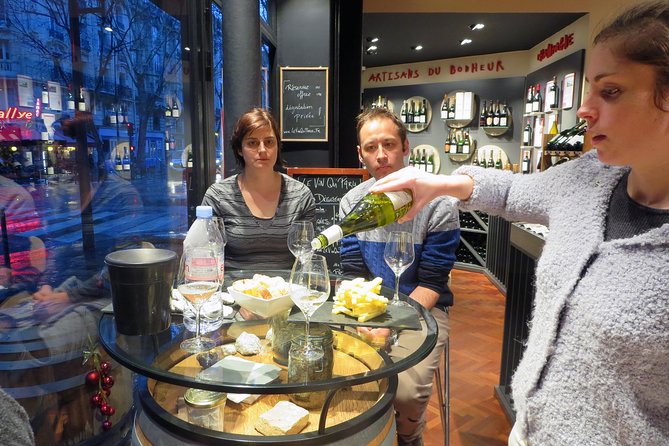
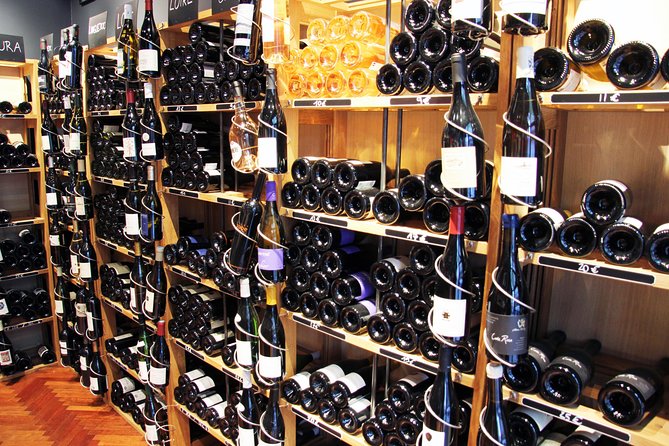
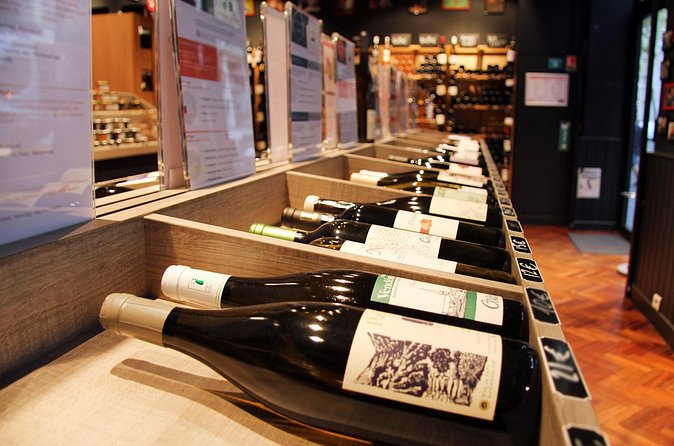
You’ll meet at Le Vin qui parle, a boutique wine shop at 30 Rue Faidherbe in Paris. The tasting area is prepared before you arrive, so you can settle in without the usual fuss of a large food tour or crowded bar.
The setting matters. This is not a formal restaurant with a long menu or a noisy dining room. It is a small wine-focused space where the central subject is what is in your glass. That makes the experience better suited to people who want to learn how to taste, not simply enjoy a drink with a snack.
The class lasts about 1 hour and 30 minutes. That is enough time for a clear introduction to French wine without taking over your entire afternoon. You begin at 3:30 pm, a useful slot if you have spent the morning sightseeing and want an indoor activity before dinner.
The group maximum is eight people. I consider that one of the strongest details here. Wine questions are often personal and specific. In a small group, you can ask why you prefer a certain grape, how to recognize a wine region, or what to order at a Paris restaurant without waiting for a large crowd to move along.
More Wine and Cheese Tastings in France
- Paris: Montmartre Cheese, Wine & Pastry Guided Walking Tour
★ 4.8 · 2,255 reviews - Private Montmartre Food Tour with Wine, Cheese & Pastries
★ 5.0 · 1,027 reviews - Paris Le Marais Food Tour With 10+ Tastings, Cheese, Wine & More
★ 5.0 · 985 reviews
Reading France through grapes, maps, and soil
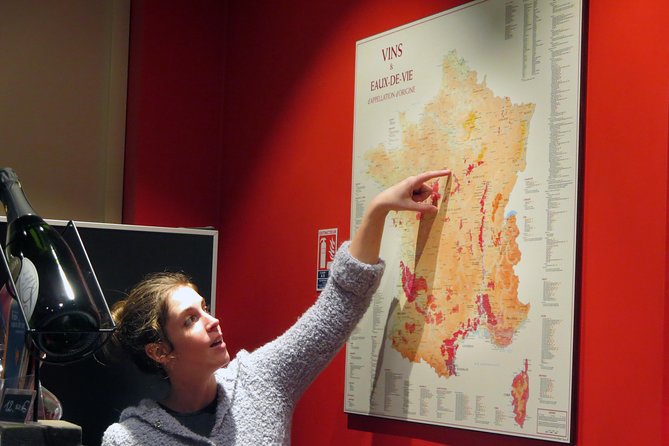
The teaching begins with an overview of French wine regions. You will use maps to place the major areas and see how widely French wine varies from region to region.
You will also handle authentic soil samples. This may sound like a small classroom touch, but it gives a physical meaning to the idea that soil affects wine. Instead of memorizing a list of regions, you can connect the geography with the ground beneath the vines and then compare that idea with what you taste.
The class explains how grape varieties and terrain contribute to France’s wide range of wines. That is valuable for a first-time wine drinker, because French bottles are often labeled by region rather than by grape. A lesson in the regional system can help you make more sense of a menu or a bottle shop later in your trip.
I like this part because it gives you a framework rather than a string of tasting notes. You are not only told that one wine is different from another. You are shown some of the reasons behind the difference.
Alex also discusses the categories of bouquet. That means the session goes beyond simply deciding if a wine tastes good. You learn to pay attention to aroma and the language used to describe it. You do not need to arrive with any wine knowledge. The point is to leave with a more useful set of questions and observations.
The red and white wine tasting
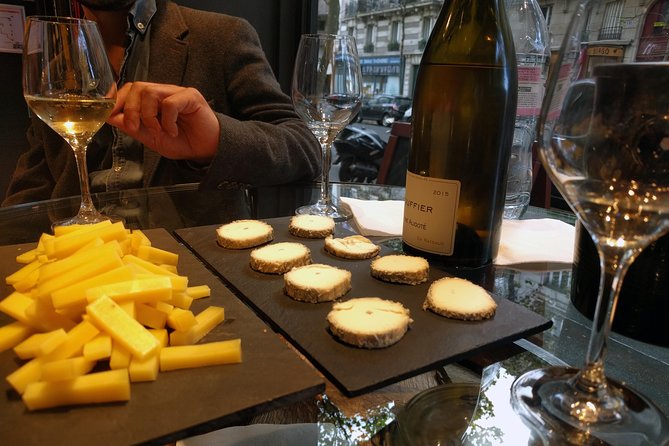
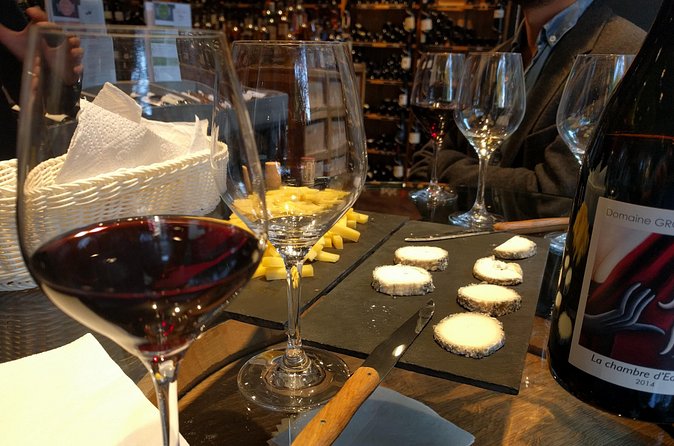
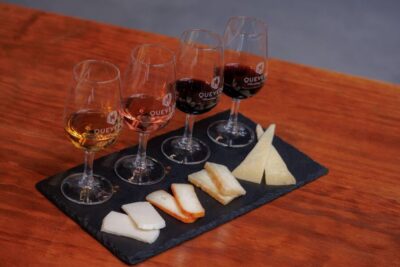
The sample tasting includes red wine and white wine, along with cheese pairings. The exact bottles can vary, so you should think of this as a lesson in French wine styles rather than a fixed list of famous labels.
You can request to taste and learn about your favorite French wines. This is a welcome feature. If you already have a region, grape, or style you like, mention it early. The expert can shape the conversation around your interests when possible.
The red wine offers a chance to discuss structure, aroma, and how the cheese changes the experience. The white wine gives you a useful contrast. Tasting different styles close together makes it easier to notice differences in body, acidity, sweetness, and scent than it would be if you drank one bottle alone over a full evening.
You do not have to finish every pour. A spittoon is provided for anyone who wants to taste without consuming everything. That is a sensible option during a class, especially if you have evening plans or want to keep your palate and judgment clear.
Water and bread are also supplied. Bread helps reset your palate between samples, while water lets you stay comfortable through the tasting. These details are basic but important. Wine tasting is more pleasant when you are not dealing with a dry mouth or the lingering flavor of the previous pour.
One practical point deserves attention. A tasting is not the same as dinner. The food is there to support the wine, not to provide a full meal. If you are arriving hungry, eat beforehand or plan a meal afterward. One especially considerate touch came when Alex learned that a participant had not eaten recently and went across the street for fresh bread. That suggests you should speak up if you need a little more food before continuing.
Why the cheese pairings matter
The cheese is not just a decorative plate. Each cheese is selected to accompany the wine, giving you a chance to see how a simple food pairing can change what you taste.
A wine that seems sharp by itself may feel rounder with cheese. A strong cheese can bring out different notes in a red or white wine. You will be able to compare the wine alone, then with food, and notice how the combination affects your impression.
The cheeses come from a nearby artisanal shop. That keeps the tasting connected to French food culture without turning the experience into a broad market tour. You receive enough food to explore the pairings, while the main focus remains the wine.
I find this approach more useful than a tasting where the food is simply offered as a snack. If you are planning to buy French wine during your trip, pairing practice can help you understand what to serve with it. It can also make restaurant wine lists less intimidating.
The experience is especially helpful if you enjoy cheese but are unsure how to match it with wine. You do not need to remember every rule. Pay attention to the pairings you prefer, then ask what kind of wine would create a similar effect at home.
More Wine and Cheese Tastings in Paris
- Paris: Wine and Cheese Lunch
★ 4.9 · 596 reviews - Cheese & Wine Tasting in Montmartre with Local Cheesemonger
★ 5.0 · 470 reviews - French Wine, Champagne And Cheese Tasting Paris SECRET WINE DOOR
★ 5.0 · 464 reviews - Paris Wine Tasting plus Cheese Lunch with an Expert Sommelier
★ 5.0 · 424 reviews
The value of a $80.48 afternoon class
At $80.48 per person, this is not the cheapest way to drink wine in Paris. You are paying for more than the alcohol, though. The price includes the tasting, cheese, bread, water, instruction, and the small-group format.
The maps, soil samples, and discussion of French regions add educational value that you would not get from simply ordering a glass at a bar. The expert’s attention also matters. With a maximum of eight people, you have a better chance to ask about your own preferences instead of listening to a one-size-fits-all speech.
The value depends on what you want. If you are looking for a long lunch, this is not the right purchase. If you want a compact lesson that helps you understand French wine for the rest of your trip, the price is easier to justify.
Bottle purchases are not included. You can buy wine separately if you find something you like, but you should treat that as an additional expense. The class is about tasting and learning, not a package that sends you home with a bottle.
The included spittoon also has value for visitors who want to learn without drinking every sample. You can take the class seriously, taste several wines, and still remain in control of your afternoon.
Timing, meeting point, and practical details
The meeting point is Le Vin qui parle, 30 Rue Faidherbe, 75011 Paris. The activity begins at 3:30 pm and ends back at the same location. Hotel pickup and drop-off are not included, so you will need to make your own way there.
The shop is near public transportation, which helps with planning. Build in enough time to reach the exact address, since arriving late could cut into a short 90-minute session. Your confirmation is provided at booking, so keep the meeting details available on the day.
The tasting is offered in English. That makes it a practical choice if you want to ask detailed questions about wine without worrying about a language barrier.
The minimum drinking age is 18. Most people can take part, but remember that alcohol is central to the experience. If you do not drink, this is not a good match, even though the spittoon lets you limit how much you consume.
Toilets may not be readily available or easy to access because the tasting takes place in a boutique rather than a restaurant. I would handle that before arriving. It is a minor issue, but one worth knowing before you commit to a seated tasting.
Who will enjoy this tasting most
I would recommend this class to anyone who wants a better grasp of French wine without signing up for a full-day excursion. It suits first-time wine tasters because the lesson starts with basic regional context and gives you concrete things to notice.
It also works for people who already have favorite French wines. You can request particular subjects and ask questions about the styles you enjoy. Alex’s willingness to discuss individual preferences makes the session more personal than a set lecture.
Cheese lovers will appreciate the pairings, especially if you want ideas for serving French wine at home. The combination of maps, soil, aroma, wine, and cheese gives the class a good balance of theory and tasting.
I would be less likely to choose it for a family with children, a person avoiding alcohol, or anyone hoping for a substantial meal. The 18-and-over rule is clear, and the food is designed for pairing rather than filling you up.
It is also not the best choice if you want a large social event. The small group is an advantage for questions, but the experience centers on seated instruction and tasting rather than entertainment.
How to get the most from the 90 minutes
Arrive with one or two questions. You might ask about a French region you plan to visit, a grape you already enjoy, or the difference between two styles you have seen on a restaurant menu.
Eat something beforehand if you tend to feel alcohol quickly. Bread is included, and more fresh bread may be arranged if needed, but you should not count on a wine tasting to replace lunch.
Use the maps and soil samples as prompts for questions. Ask how the regional setting connects to the wine in your glass. That turns the experience from passive tasting into a useful lesson.
Taste the wine before and after the cheese. Notice what changes. You do not need polished vocabulary. If a pairing tastes too sharp, too heavy, or simply more appealing, say so. The expert can use your reaction to explain what is happening.
Finally, pace yourself. Water and a spittoon are there for a reason. You can learn a great deal without finishing every pour.
Cancellation and booking flexibility
You can cancel for a full refund up to 24 hours before the start time. Cancellations made less than 24 hours before the 3:30 pm start are not refunded, and changes inside that window are not accepted.
The activity requires a minimum number of participants. If it is canceled because that minimum is not met, you will be offered another date or experience, or receive a full refund. Keep the timing rule in mind when making same-day plans.
Should you book this Paris wine and cheese class?
Book it if you want a focused, English-language introduction to French wine in a group of no more than eight. The strongest reasons are the regional maps, real soil samples, cheese pairings, and chance to ask an expert about your own favorite wines.
The $80.48 price makes sense for a visitor who values instruction and personal attention. It is less appealing if you mainly want a cheap drink or a full meal.
For the best experience, eat something first, handle practical needs before entering the boutique, and arrive ready to ask questions. If that sounds like your kind of Paris afternoon, this is a smart way to turn a glass of wine into a better understanding of France.
FAQ
Where does the wine and cheese tasting take place?
It takes place at Le Vin qui parle, located at 30 Rue Faidherbe, 75011 Paris, France.
What time does the tasting begin?
The tasting starts at 3:30 pm.
How long does the experience last?
The tasting lasts approximately 1 hour and 30 minutes.
Is the tasting offered in English?
Yes. The experience is offered in English.
How many people can join the tasting?
The activity has a maximum of eight participants.
What wines and food are included?
The tasting includes red wine, white wine, and cheese pairings. Bread and water are also provided.
Can I request a favorite French wine?
Yes. You can request to taste and learn about your favorite French wines.
Is a spittoon available?
Yes. A spittoon is provided for anyone who wants to taste without drinking every pour.
Can I cancel for a full refund?
Yes. You can cancel at least 24 hours before the start time for a full refund. Cancellations made less than 24 hours before the start are not refunded.
Freshly cut around Paris
- Paris: Wine and Cheese Pairing★ 5.0 · 4 reviews
- French Wine and Cheese Master Class Near the Eiffel Tower★ 5.0 · 6 reviews
- Paris Wine with Cheese Pairing & Tasting Small Group Class★ 5.0 · 6 reviews
- Private wine tour to Sancerre vineyards from Paris with Sommelier★ 5.0 · 11 reviews
- Paris Marché d’Aligre Walking Tour with Chocolate and Cheese Tasting★ 3.5 · 24 reviews
- Wine and cheese tasting in Bastille★ 5.0 · 5 reviews
- Paris Wine and Cheese Pairing Private Masterclass in a Bistrot★ 5.0 · 7 reviews
- Wine and cheese tasting at Latin Quarter★ 5.0 · 15 reviews
Wine and Cheese Tastings, plate by plate.
Paris: Montmartre Cheese, Wine & Pastry Guided Walking Tour
Read our review →
Paris Le Marais Food Tour With 10+ Tastings, Cheese, Wine & More
Read our review →Cheese lists with this tasting