Review · PARMA
Parma Food Tour: Parmigiano Reggiano & Prosciutto di Parma
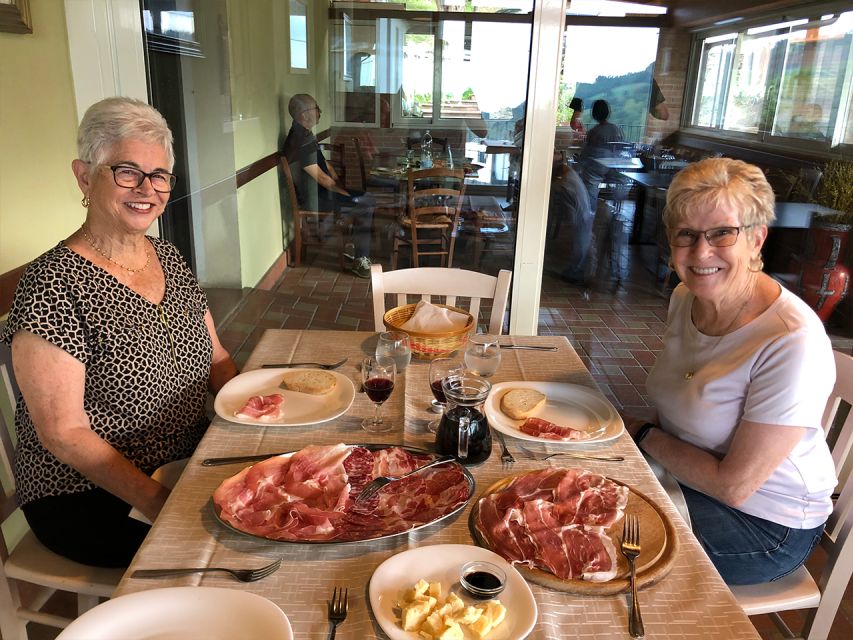
Parma’s finest foods are made in working places, not display cases. This small-group tour takes you from the city train station to a Parmigiano Reggiano dairy and a Prosciutto di Parma producer, where you see the real production rooms, aging areas, and careful work behind two famous Italian foods. The cheese tasting and the chance to stand among thousands of wheels make this more than a quick sample stop.
I like the tiny group size of five, which gives you room to ask questions and hear the producers clearly. I also like the local guides, including Valentina and Alessandro, who add practical insight about Parma and can point you toward lunch or nearby sights after the tour.
The main drawback is the schedule. The tour takes most of your day, starts at Parma’s train station, and visits working facilities with machinery and slippery floors. It is not suitable for people with mobility impairments, and you should confirm the exact departure time because the published timing varies.
Key points at a glance
- Parmigiano Reggiano at the source: Watch the cheese being made at the Agricultural Society Saliceto dairy and taste different ages.
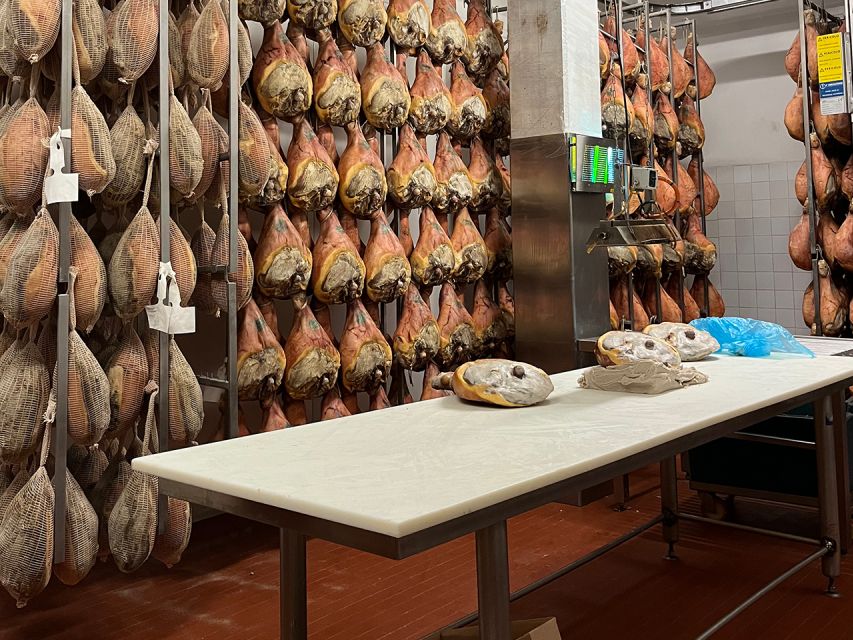
- Prosciutto in Langhirano Valley: Visit Salumificio Conti to follow Parma ham from raw meat through its aging stages.
- Small group of five: You get a more personal experience and a better chance to ask the guide questions.
- Easy train connection: Meet on the lower floor of Parma’s train station, a practical base if you arrive from Bologna, Modena, or Milan.
- A full morning and early afternoon: The main visits last about three hours altogether, with the whole activity taking roughly six to seven hours.
- Optional Parma add-ons: Afterward, you can explore the city, eat tortelli and torta fritta, or add a visit to Torrechiara Castle if available through your arrangements.
Why Parmigiano Reggiano and Parma ham belong together
Emilia-Romagna is Italy’s Food Valley, and Parma gives you a clear lesson in why. The region is known for certified traditional foods, careful farming, and a farm-to-table approach that treats production as part of local culture.
Parmigiano Reggiano and Prosciutto di Parma are different foods, but both depend on patience. The cheese must be made with close attention to ingredients and aging. The ham takes time, controlled handling, and skilled judgment before it reaches the table. Seeing both in one day helps you understand why the finished products cost more than ordinary supermarket versions.
I find food tours most useful when they explain the work behind a familiar product. You may already know the taste of Parmesan or prosciutto. Here, you learn why age, place, and method matter. The tastings are not an afterthought. They give you a chance to compare what you have just seen with what you are eating.
The small group matters, too. With only five participants, the guide can keep the pace personal. Guides such as Valentina and Alessandro have been praised for explaining both the production process and the Parma area, so you can expect the day to include local context as well as food facts.
More Cheese Walking and Food Tours in Italy
- From Parma: Parmigiano and Parma Ham Guided Food Tour
★ 4.8 · 144 reviews - Private Full Day Parma Food Tour: Parmesan Cheese, Parma Ham, Lunch, Vinegar
★ 5.0 · 127 reviews - Private Half Day Parma Food Tour: Parmesan Cheese, Parma Ham, Lunch
★ 5.0 · 44 reviews
Meeting at Parma’s train station
The tour begins at Piazza Carlo Alberto Dalla Chiesa, at Parma’s train station. More specifically, you meet on the lower floor in front of the Chiccotosto cafe. This is a useful arrangement if you are staying in another city or using Parma as a day trip.
Parma has train links with Bologna, Modena, and Milan. You will want to arrive with enough time to find the lower floor and the cafe, especially if you are unfamiliar with the station. The stated meeting time is 8:00 am, but the activity page also says to check availability for the starting time. Confirm the schedule when you book rather than relying on a general listing time.
Transport to and from the food producers is included. That saves you the trouble of arranging a car, which is a real benefit because the tour visits places outside central Parma. At the end, you return to the station area, near the city center.
The full experience is listed as six to seven hours. The detailed schedule describes the main visits as lasting about five to six hours, with a return around 1:00 or 1:30 pm. Treat this as a half-day to most-of-a-day outing, and leave room for timing changes at working food facilities.
Inside the Agricultural Society Saliceto dairy
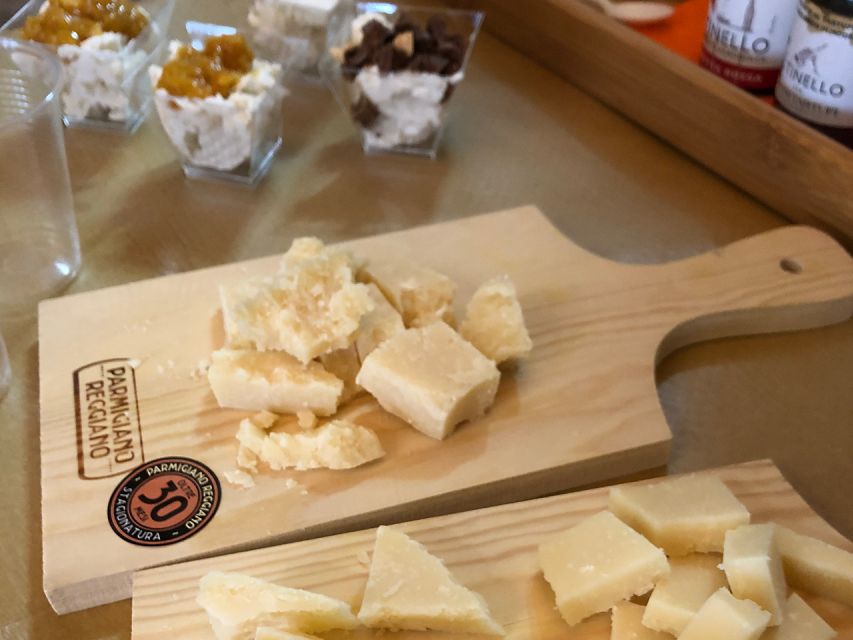
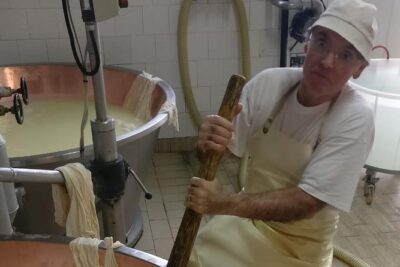
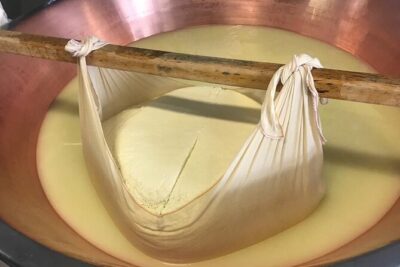
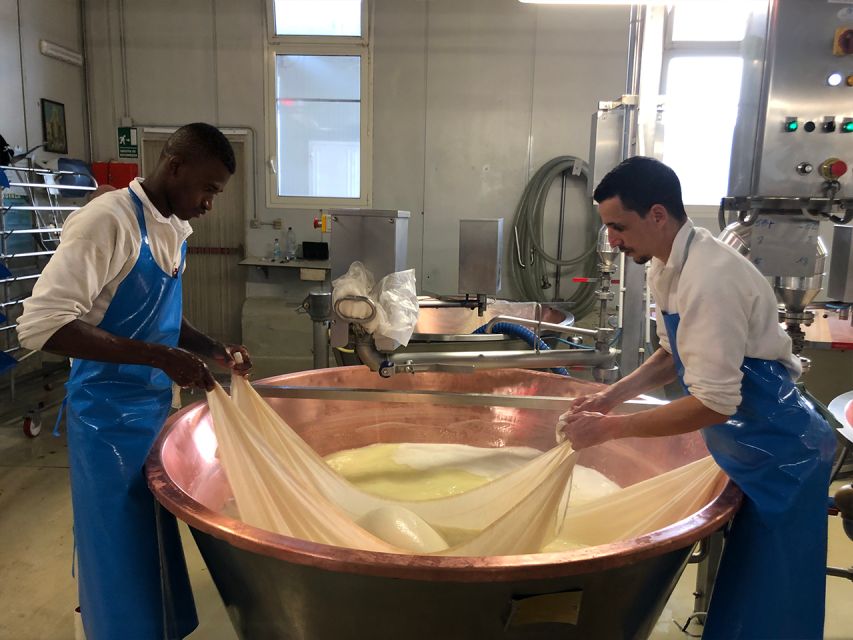
The first production visit is at the Agricultural Society Saliceto, a dairy that makes Parmigiano Reggiano. You get a guided look at how the cheese is produced, followed by a tasting.
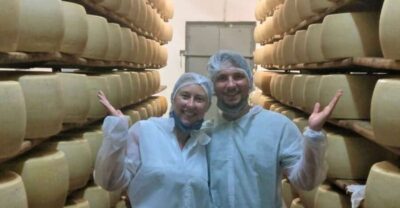
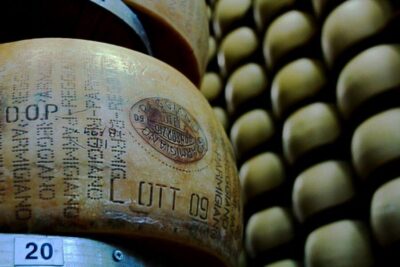
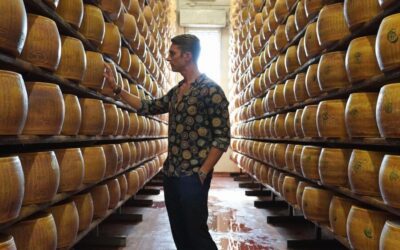
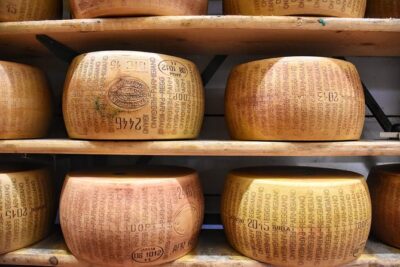
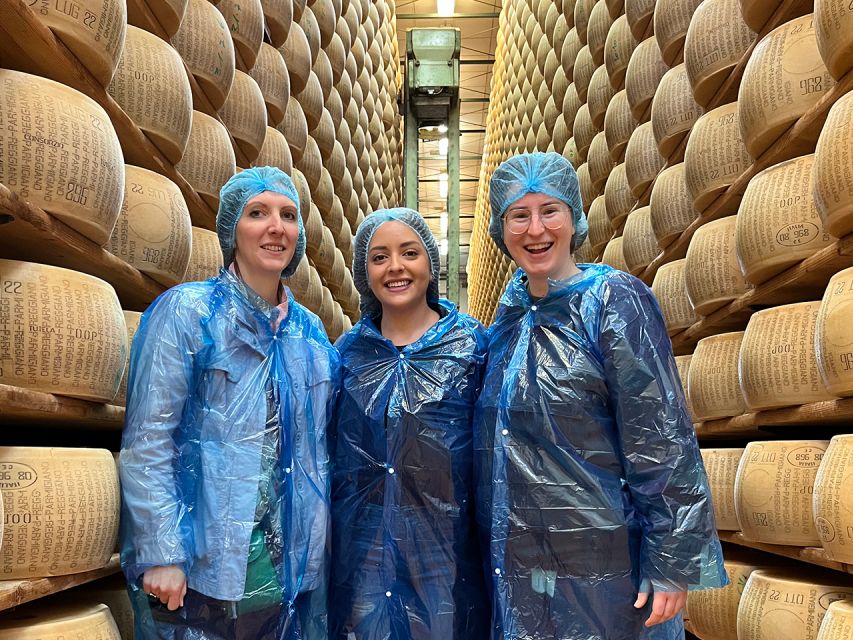
The attraction here is scale and repetition. Parmigiano Reggiano is made in large copper vats, then shaped into wheels and aged. The dairy visit lets you see the production environment rather than only the polished final product. You also get the chance to photograph yourself surrounded by stacks of cheese wheels, a much more memorable image than a standard tasting counter.
The tasting focuses on different ages of Parmigiano Reggiano. This is one of the best parts of the day because it trains your palate instead of treating the cheese as one fixed flavor. Younger and older cheese can differ in firmness, aroma, and intensity. The guide can connect those differences to the aging process you have just seen.
I suggest paying attention to texture as much as taste. Notice how the cheese changes as it ages, and ask which age the producer recommends for grating, serving in pieces, or pairing with other foods. The experience is designed to explain the process, so you should use the small group setting to ask direct questions.
This is a working dairy, not a museum. You must follow the guide closely and watch for machinery in action. Floors may be slippery, and the tour takes place rain or shine. Wear practical shoes and clothing that you do not mind wearing in a production setting.
Following Prosciutto di Parma at Salumificio Conti
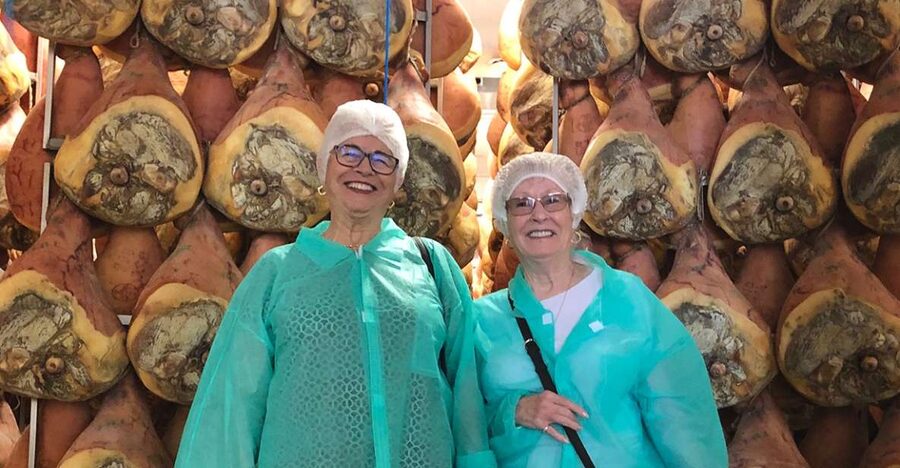
The second stop is Salumificio Conti in the Langhirano Valley, an area associated with Prosciutto di Parma. Here, you follow the ham through its production stages, from raw meat to the final aging room.
This visit gives the day a useful contrast. At the dairy, the focus is on milk, copper vats, and cheese wheels. At Salumificio Conti, you see how a cured meat is handled, prepared, and aged. The producers’ work depends on patience and precise judgment, and the visit shows why Parma ham is not simply ordinary ham with a famous name.
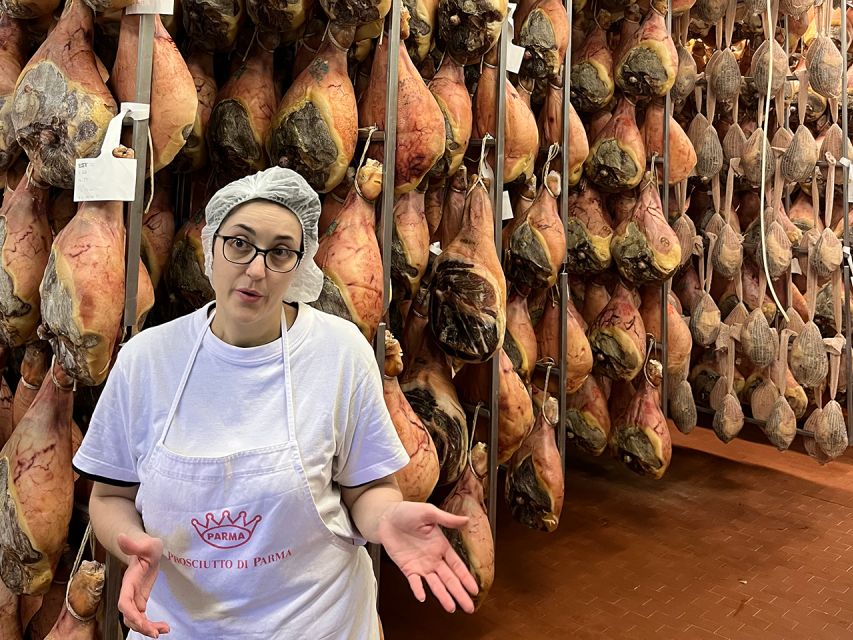
The aging room is likely to be the visual highlight. You can take a photo surrounded by rows of Parma hams, an unusual scene that makes the scale of production clear. The tasting then gives you a direct connection to what you have seen.
I like this stop because it keeps the emphasis on people and process. You meet local producers and hear about the care behind the product. The experience is not just a sequence of samples. It explains how a regional food becomes a protected specialty with a strong link to its place of origin.
As with the dairy, remember that this is a working environment. Follow the guide’s instructions, stay alert around machinery, and expect floors that may be slippery. Alcohol and drugs are not allowed, and you should bring a passport or identity card. A copy is accepted according to the tour information.
More Parmesan and Balsamic Tours in Parma
- Tour Parmigiano Reggiano dairy and Parma ham
★ 5.0 · 601 reviews - Parma: Parmigiano Production and Parma Ham Tour & Tasting
★ 4.9 · 554 reviews - Guided group tour TastyBus: Parmesan Cheese and Parma Ham
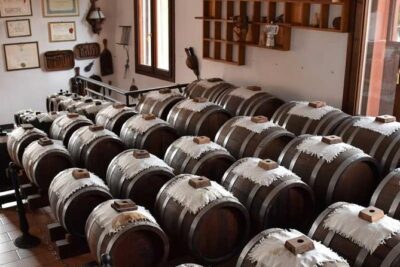
★ 5.0 · 241 reviews - From Parma: Parmesan, Parma Ham & Balsamic Vinegar Tour
★ 4.9 · 187 reviews
What you actually taste
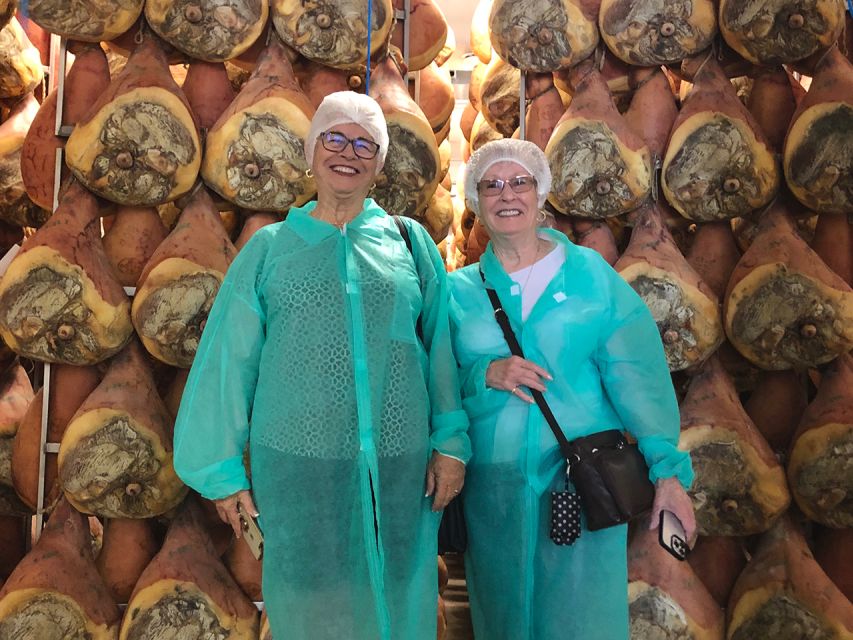
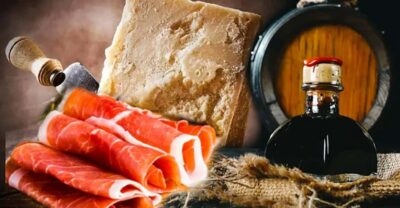
The included food experiences are guided tastings of Parmigiano Reggiano and Prosciutto di Parma. The cheese tasting includes different ages, which makes it the more comparative part of the day. You can learn to identify changes in flavor and texture instead of simply deciding that you like one piece more than another.
The ham tasting is tied closely to the production visit. You see the raw material and aging rooms, then taste the finished product. That order matters. It gives you a better sense of the time and labor behind a food that is often served casually on a sandwich or antipasto plate.
Do not expect the included tastings to function as a large lunch. They are part of the visits. If you want a full meal, the activity information points to a separate lunch option at a local trattoria, with Parma specialties such as tortelli and torta fritta.
Tortelli are filled pasta, usually served as a classic local dish. Torta fritta is fried dough made for filling with cured meats and cheeses. This is a good way to continue the food theme after the producers, but check whether the lunch is part of your selected arrangement because the core inclusions list does not include it.
Add lunch, Parma sightseeing, or Torrechiara Castle
The tour returns you to the train station near central Parma, so you can continue the day on foot. A guide can suggest traditional restaurants and nearby attractions. This is useful if you have not planned your afternoon, though you should not assume lunch is included in the base price.
You can also add more time in the area with a visit to Torrechiara Castle. The 15th-century castle is known for its architecture, romantic stories, and appearances in films. Its hilltop position offers broad views over the surrounding countryside.
The castle is not one of the two core production stops, so treat it as an optional extension rather than a guaranteed part of the standard tour. If your main interest is food, stay in Parma for lunch and city sightseeing. If you want history and views after the tastings, ask about the castle when arranging your day.
The station is walkable from Piazza Giuseppe Garibaldi, which makes it easy to spend a few hours exploring central Parma after the tour. That combination works well for a day trip: food production in the morning, local dishes for lunch, then a city walk.
Is the $198.25 price good value?
At $198.25 per person, this is not a cheap tasting tour. The price makes more sense when you consider what it includes: transport from Parma’s station, a local guide, producer explanations, admission to both facilities, and tastings at each stop.
You are paying for access to working producers outside the city, not just for plates of cheese and ham. The transport is especially useful if you do not have a car. A private rental would add cost and responsibility, while driving after tastings is not an attractive plan.
The value is strongest for people who care about how food is made. If you only want a quick snack in Parma, you can spend far less at a market or restaurant. If you want to understand two famous local products, meet producers, and taste different cheese ages in a small group, the price is easier to justify.
The group limit of five also improves the value. You are not being moved through a large coach group, and you have a better chance of hearing explanations and asking questions. Still, the price does not include everything. Lunch, extra sightseeing, and any activity not specifically listed as included should be budgeted separately.
Who will enjoy this day most?
I would choose this tour if you have a strong interest in Italian food, especially regional products with a long production process. It also suits couples, small families, and friends who prefer a personal guide rather than a large bus tour.
It is a good fit for a Parma day trip from Bologna, Modena, or Milan, provided the train schedule works with the early start. The station meeting point removes much of the local transport planning.
You should think twice if you have limited mobility. The tour is explicitly not suitable for people with mobility impairments, and the production sites may have slippery floors and active machinery. It also takes place rain or shine, so practical footwear and a flexible attitude are important.
This is not the best choice for someone seeking a relaxed restaurant meal with no walking or factory setting. The day is active, structured, and tied to production schedules. Its reward is access and explanation, not leisure at a long lunch table.
Booking details worth checking
Free cancellation is available up to 24 hours before the activity for a full refund. You can also reserve now and pay later, which helps if you are still adjusting train plans.
Tours are offered in English, Spanish, and Italian. The group is limited to five participants. Bring a passport or identity card, with a copy accepted, and follow all instructions at the facilities.
The duration is listed as six to seven hours, while the detailed schedule suggests a return around 1:00 or 1:30 pm after roughly five to six hours. Starting times can vary, so check the exact date and departure time before you arrange a train connection or a castle visit.
Should you book this Parma food tour?
Book it if you want the behind-the-scenes side of Parma food. The strongest parts are the dairy visit, the comparison of aged Parmigiano Reggiano, the rows of hams at Salumificio Conti, and the chance to hear directly from local producers.
The experience is especially worthwhile for a first visit to Parma or for anyone who already loves cheese and cured meat but wants to understand the work behind them. The excellent guide support from people such as Valentina and Alessandro adds local color, while the five-person limit keeps the day personal.
Skip it if your budget is tight, you only want a brief tasting, or mobility issues make working facilities difficult. For everyone else, this is a focused and practical way to connect Parma’s famous foods with the people and places that make them.
FAQ
Where does the Parma food tour begin?
The meeting point is on the lower floor of Parma’s train station, in front of the Chiccotosto cafe, at Piazza Carlo Alberto Dalla Chiesa.
Where does the tour finish?
The activity ends back at the same meeting point near Parma’s train station and city center.
How long does the experience last?
The tour is listed as six to seven hours. The detailed schedule describes the main activity as lasting about five to six hours, with a return around 1:00 or 1:30 pm.
What food is included?
The tour includes a guided tasting of Parmigiano Reggiano and a tasting of Prosciutto di Parma. Different ages of Parmigiano Reggiano are included in the cheese tasting.
Is lunch included?
Lunch is not included in the core list of inclusions. An additional trattoria lunch may be available, featuring foods such as tortelli and torta fritta.
Which languages are available?
The live guide service is available in English, Spanish, and Italian.
Is the tour suitable for people with mobility impairments?
No. The activity is not suitable for people with mobility impairments. It takes place in working facilities where you may encounter machinery and slippery floors.
More Cheese Walking and Food Tours in Parma
- Discover Parma’s Flavors: Parmigiano & Prosciutto Food Tour
★ 4.5 · 17 reviews - Parma Food Tour with Sightseeing and Parmesan Tasting
★ 4.5 · 14 reviews - Paris: Montmartre Cheese, Wine & Pastry Guided Walking Tour
★ 4.8 · 2,255 reviews - Private Montmartre Food Tour with Wine, Cheese & Pastries
★ 5.0 · 1,027 reviews
Freshly cut around Parma
- Parmigiano Cheese Factory Visit and Tasting★ 5.0 · 22 reviews
- Parmesan and Ham Factory Tour★ 4.5 · 21 reviews
- Parmigiano-Reggiano Tour and tastings★ 4.5 · 6 reviews
- Parmigiano and Culatello Private Tour with Lunch and Farm Visit★ 5.0 · 2 reviews
- Parmigiano-Reggiano Cheese Factory Small group Tour From Parma★ 3.5 · 15 reviews
- Parmigiano Reggiano and Parma ham tour★ 5.0 · 9 reviews
- Parmigiano Reggiano Parma Ham and Castle Private Tour & Tasting★ 5.0 · 9 reviews
- Parma Food Tour with Sightseeing and Parmesan Tasting★ 4.5 · 14 reviews
Parmesan and Balsamic Tours, plate by plate.