
Review · ITALY
Parma: Parmigiano Reggiano Museum Ticket
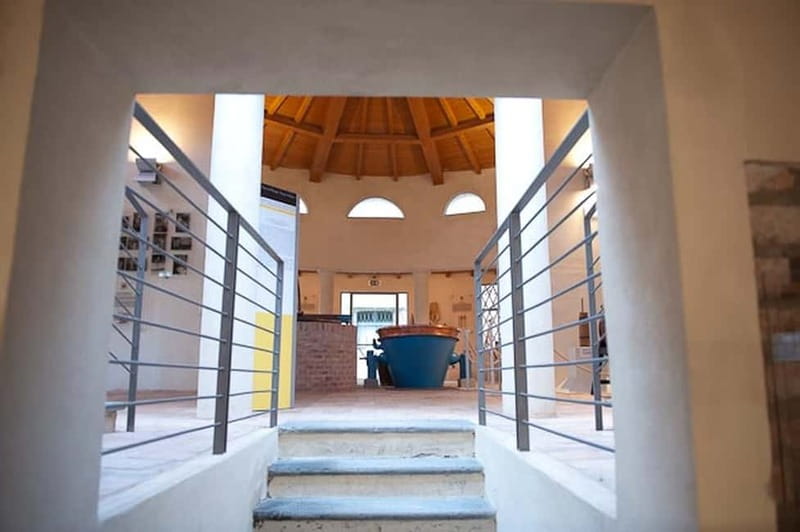
Parmigiano Reggiano is more than a topping for pasta. At this small museum in Parma, you can see how the cheese shaped local work, buildings, and daily life. The best part is the setting: original 17th-century stables, an old hay barn, and a circular cheese plant form part of the visit.
I like the mix of authentic farm buildings and practical equipment. I also like that the tasting is optional, so you can keep the visit to the low $8 entry price or add a flavorful finish. The main drawback is that the ticket alone does not include cheese, drinks, or a guided tour, so visitors hoping for a full hands-on production experience should set their expectations carefully.
Key points at a glance
- 17th-century farm buildings: Walk through original vaulted stables and an ancient hay barn at the Castellazzi complex.
- Cheese-making from past to present: See tools and equipment used in both historic and modern production.
- A circular cheese plant: The old production area helps explain how milk became Parmigiano Reggiano.
- Optional tasting: Add cheese tasting if you want to sample the product after seeing how it was made.
- Good value at $8: The low entry price makes this a practical stop for food lovers and families.
- Wheelchair accessible: The activity is listed as accessible, though the historic setting may still require practical planning.
Why Parmigiano Reggiano deserves its own museum
Parma is closely tied to Parmigiano Reggiano, and this museum gives you a useful way to understand that connection. Instead of treating the cheese as a simple souvenir, the visit places it in the buildings and work spaces where cheese production took place.
I find that helpful because cheese-making can seem abstract when you only see a finished wedge in a shop. Here, the tools, rooms, barns, and work areas show the physical side of the process. You get a clearer sense of the labor behind a product that has become famous far beyond Emilia-Romagna.
The museum also looks at the cultural meaning of Parmigiano Reggiano. You are not just seeing old objects behind glass. You are learning how a local food became part of the identity of Parma and the surrounding region.
The experience is compact enough to fit into a day of sightseeing. It does not require you to give up an entire afternoon, and the one-day ticket gives you flexibility around the available starting times. Check the schedule before booking, since the exact entry time depends on availability.
More Parmesan and Balsamic Tours in Italy:
- Tour Parmigiano Reggiano dairy and Parma ham
★ 5.0 · 601 reviews - Parma: Parmigiano Production and Parma Ham Tour & Tasting
★ 4.9 · 554 reviews - Guided group tour TastyBus: Parmesan Cheese and Parma Ham
★ 5.0 · 241 reviews
Entering the Castellazzi complex
The Castellazzi complex gives the museum much of its character. Its architecture is a major part of the visit, so take time to look beyond the displays and notice the structure itself. The complex includes the original stables, an old hay barn, and other spaces connected with cheese production.
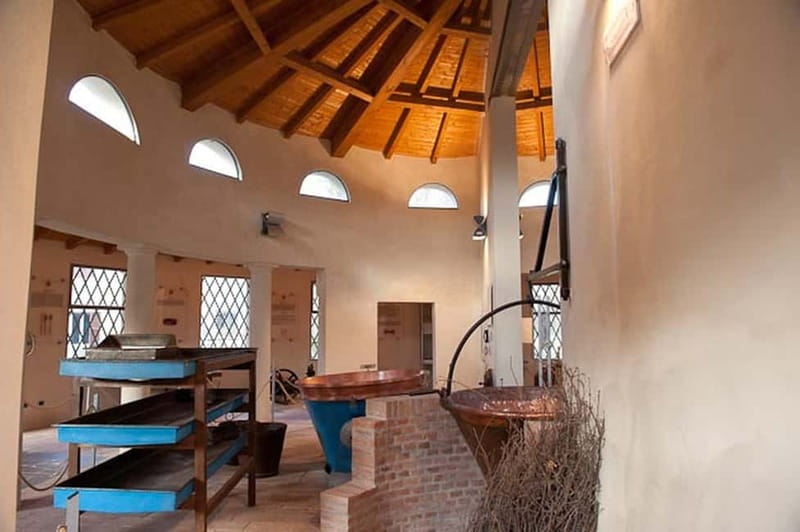
The vaulted roofs in the stables are especially important. They show the age of the buildings and help you picture how the site once functioned as a working agricultural setting. This is not a modern exhibition hall designed to imitate a farm. The old rooms are part of the story.
The complex also gives you a chance to take photographs of its distinctive arch and surrounding buildings. If you enjoy architectural details, this may be as appealing as the cheese displays. The setting has a quieter, more local feel than a large city museum.
I would plan a little extra time to notice the construction, doorways, ceilings, and changes between the older and newer rooms. The museum is about cheese, but the buildings explain why this place feels connected to the land and to traditional farm work.
The stables, hay barn, and circular cheese plant
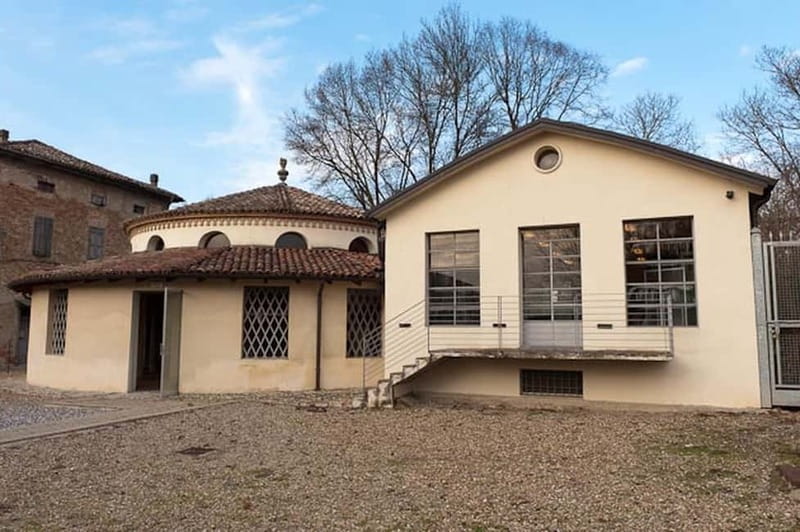
The original stables are among the most memorable parts of the visit. Their vaulted roofs and preserved structure make the past easier to understand than a written explanation alone. You can see how agricultural buildings were arranged and how cheese production belonged to a larger farm system.
The ancient hay barn adds another piece to that picture. Hay was part of the working cycle of the farm, and its presence helps connect the cheese plant with the animals, workers, and storage needs that supported it.
The circular cheese plant is another unusual feature. It gives you a look at the kind of space used for production rather than simply presenting finished cheese. For anyone interested in food, farming, or traditional crafts, this is where the museum feels most concrete.
You should not expect to watch a full batch of cheese being made during a standard museum visit. The information provided describes historic and modern tools and equipment, along with the rooms where production took place. Think of the experience as an interpretive museum visit, not a live dairy workshop.
From milk room to salting room
The museum includes newer additions such as the basement milk room and salting room. These areas help fill in the steps between receiving milk and storing the finished cheese.
The milk room is useful because it brings the story back to the beginning. Before Parmigiano Reggiano reaches a market or restaurant, milk must be handled and prepared as part of a careful process. The salting room then shows another stage in the cheese’s development.
These rooms may appeal most to visitors who want practical detail. The stables and hay barn provide atmosphere, while the milk and salting rooms make the production story more complete. Together, they let you compare old spaces with later changes made for dairy work.
I like this balance. You get the charm of a historic complex, but you also see rooms tied to the more technical side of cheese-making. It keeps the visit from becoming only an architecture stop.
More cheese and food museums in Italy:
- Day Tour Parmigiano, Ferrari Museum, Balsamic, Lambrusco, Lunch with Transfer
★ 5.0 · 45 reviews - Parmesan and Balsamic Food Tour with Ferrari Museum
★ 5.0 · 28 reviews - Parmesan and Balsamic Food Tour with Ferrari Museum
★ 4.8 · 25 reviews - Ferrari Museum, Parmesan Cheese, Balsamic Vinegar Food Tour
★ 5.0 · 2 reviews
Tools that explain the work
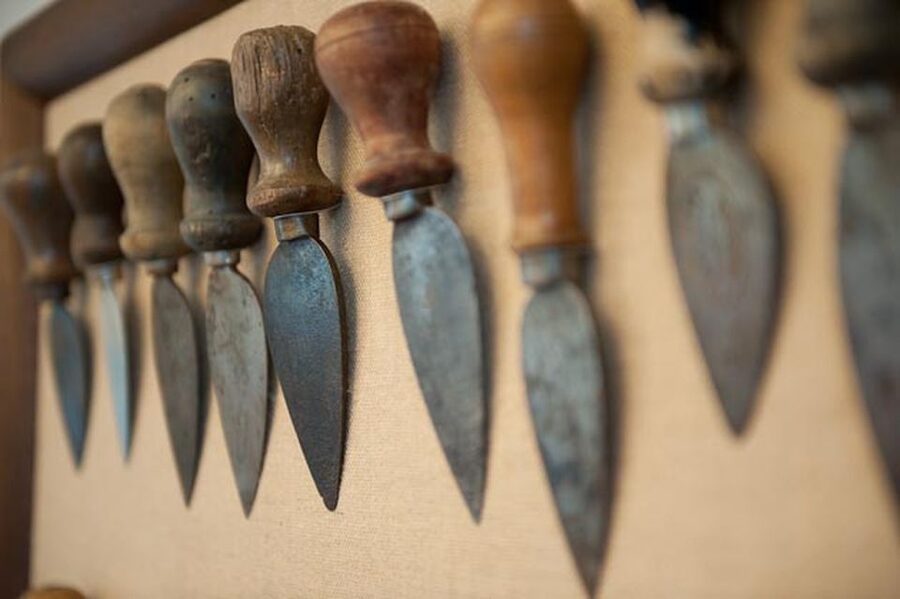
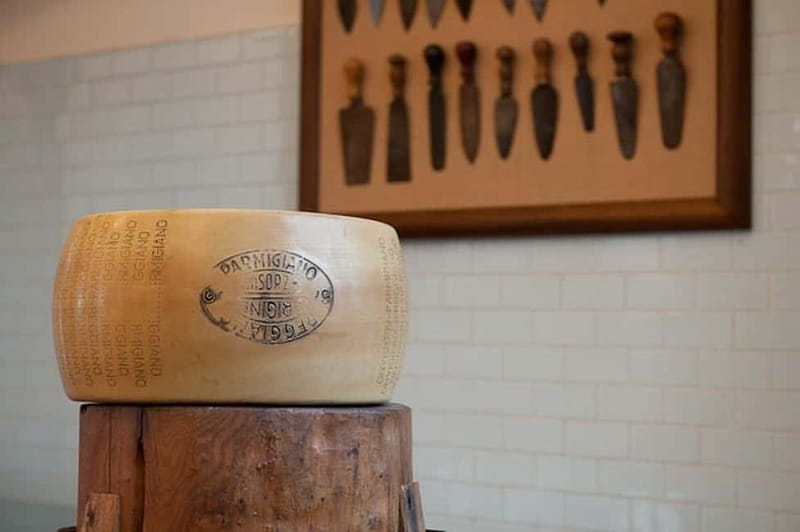
The museum displays different tools and types of equipment used for cheese-making in both earlier and more recent periods. This is one of the strongest reasons to visit if you want more than a quick tasting.
Tools show scale and effort. A finished piece of Parmigiano Reggiano can look simple, but the equipment makes clear that production depended on repeated physical work and specialized knowledge. Comparing older tools with later equipment also helps you see how the process changed over time.
You may find the collection especially useful if you are visiting with children. The objects give younger visitors something concrete to look at, while the historic rooms provide a setting that feels less formal than a traditional art museum.
The collection is also good for food-minded adults. I enjoy seeing the equipment behind familiar products because it changes the way I understand what I eat. After this visit, a piece of Parmigiano Reggiano feels less like a generic ingredient and more like the result of a defined local tradition.
Adding the Parmigiano Reggiano tasting
The cheese tasting is an add-on, not part of the basic $8 admission. You choose the museum ticket with or without tasting, which makes the experience flexible for different budgets and interests.
I would strongly consider adding it if you enjoy regional food. Tasting the cheese after seeing the production spaces connects the display to your senses. You can look at the tools and rooms, then sample the product they helped create.
The tasting is also a practical choice if you want to buy cheese to take home. The experience can lead naturally to a purchase, though the information provided does not specify prices, packaging, or travel rules for carrying cheese.
If you are traveling with someone who is not interested in food museums, the basic ticket may be the better choice. At $8, it keeps the visit inexpensive, and the historic complex provides more than a single tasting counter.
Drinks are not included. Keep that in mind when comparing the ticket choices, especially if you expect a larger food-and-drink experience. The tasting option focuses on Parmigiano Reggiano itself.
How much time should you allow?
The ticket is valid for one day, and the available starting times should be checked before you book. A specific visit length is not provided, so I would avoid building a tightly timed schedule around it.
The museum is best treated as a focused stop rather than an all-day attraction. You can examine the rooms, read about the cheese, look at the tools, and add the tasting without making the visit feel rushed. The exact amount of time you need will depend on how closely you study the displays and whether you include the tasting.
For a food-focused day in Emilia-Romagna, the museum works well as one part of a larger plan. It gives you context before or after meals, and it adds a local connection to the Parma area. If your schedule is already packed with major sights, the modest admission price makes it an easier stop to fit in.
Check the starting time when you reserve. The flexible one-day validity is useful, but it does not mean you can ignore the operating schedule.
Service and atmosphere
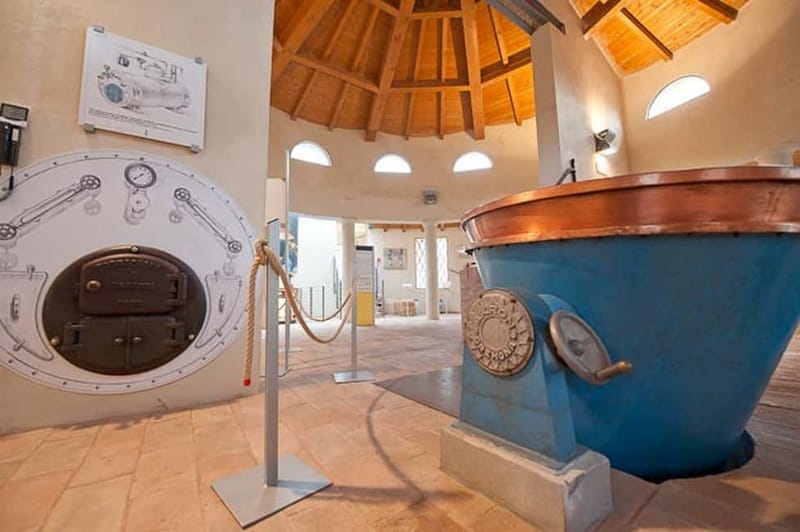
The atmosphere is described as quaint and charming, and the service is friendly. That suits the museum well. This is a small-scale cultural visit where a warm welcome can make the exhibits easier to approach.
The setting feels more personal than a large institutional museum. You are visiting an old working complex, not just walking through a sequence of modern rooms. That gives the experience a strong sense of place.
The museum also works well for families. The buildings, old tools, and cheese tasting offer several points of interest, even if each person comes for a different reason. One family member can focus on the history of the cheese, another on the architecture, and another on the food.
The overall rating is 3.7 out of 5 from 34 reviews, which suggests a good but not universally perfect experience. I would read that as a sign to book it for its specific strengths: historic buildings, local food culture, and the optional tasting. Do not book it expecting a large, theatrical attraction or a long guided production demonstration.
Is the $8 ticket good value?
At $8 per person, the museum offers good value if you care about Parmigiano Reggiano, historic farm buildings, or the food culture of Emilia-Romagna. The price is low enough that the visit does not need to fill half a day to feel worthwhile.
The value improves if you take time with the rooms and equipment rather than treating the museum as a quick photo stop. The combination of original stables, a hay barn, a circular cheese plant, milk room, salting room, and cheese-making tools gives you several different angles on the subject.
The tasting costs extra, so compare the options before booking. If you want a food sample, include it from the start. If you simply want the museum and historic setting, the basic ticket keeps the cost down.
The ticket also includes free cancellation up to 24 hours before the visit and allows you to reserve now and pay later. Those terms are useful if your Parma plans may change, but the main value still comes from the museum itself rather than the booking flexibility.
Who should visit this museum?
I would recommend the Parmigiano Reggiano Museum to:
- Food lovers who want to understand the product beyond its name
- Visitors interested in traditional farming and cheese-making tools
- Families looking for a short cultural stop with an optional tasting
- Architecture fans who enjoy old agricultural buildings
- Anyone planning a food-focused visit around Parma
- Visitors who want an inexpensive activity with a strong local connection
I would be more cautious if you want a fully guided, hands-on class. The information provided describes entry to the museum and an optional tasting, but it does not promise a named guide, a live demonstration, or a cheese-making lesson.
The museum is also less suitable for someone who dislikes food-related displays or has no interest in the history of local production. The low price reduces the risk, but it is still a specialized attraction.
Practical details before you book
The entry ticket costs $8 per person. Tasting and drinks are not included unless you choose the ticket option that adds the Parmigiano Reggiano tasting.
The activity is valid for one day, with starting times based on availability. Reserve a time that fits your schedule rather than assuming open entry at any hour.
The museum is wheelchair accessible. Since the complex includes historic buildings, you may still want to confirm any specific access needs before arriving, but the activity is listed as accessible.
You can cancel up to 24 hours in advance for a full refund. You can also reserve and pay later, which helps if your Parma schedule is not settled.
Should you book the Parmigiano Reggiano Museum?
Book it if you want a reasonably priced, local experience that connects Parma’s famous cheese with real historic buildings and working equipment. The preserved stables, old hay barn, circular cheese plant, and optional tasting give the visit enough variety to justify the short stop.
I would choose the tasting option if food is a main reason you are visiting Emilia-Romagna. I would choose the basic ticket if you are mainly interested in the buildings, tools, and cultural background.
Skip it only if you need a full production class or a large-scale attraction. For a modest $8, this is a practical way to understand one of Parma’s best-known foods in the place where its story belongs.
FAQ
Where is the Parmigiano Reggiano Museum?
The museum is in Parma, in the Emilia-Romagna region of Italy.
How much does admission cost?
The museum ticket costs $8 per person.
Is cheese tasting included in the basic ticket?
No. Tasting is optional, and you must choose the ticket option that includes it.
Are drinks included?
No. Drinks are not included.
How long is the museum ticket valid?
The ticket is valid for one day.
Does the museum have set entry times?
Starting times depend on availability. Check the available times before booking.
Can I cancel my booking?
Yes. You can cancel up to 24 hours in advance for a full refund.
Can I reserve now and pay later?
Yes. The activity allows you to reserve your spot and pay later.
Is the museum wheelchair accessible?
Yes. The activity is listed as wheelchair accessible.
What historic buildings can I see?
You can see original 17th-century stables with vaulted roofs, an ancient hay barn, the Castellazzi complex, and a circular cheese plant.
Freshly cut around Italy
- Wine Tasting with Cured Meats & Cheeses in Florence★ 5.0 · 2 reviews
- Vico Equense: Tour in the dairy “Mozzarella Experience”★ 5.0 · 19 reviews
- Turin: Gastronomy tasting through oil, wine and cheese★ 5.0 · 2 reviews
- From Parma/Cinque Terre: Truffle & Parmesan Picnic (Tasting)★ 5.0 · 2 reviews
- Tuscany: Ripalte Design Winery Wine and Cheese Tasting Tour★ 4.7 · 15 reviews
- Prosecco Hills Wine and Cheese Gourmet Discovery★ 5.0 · 6 reviews
- The Valpolicella food & wine driving tour: cheese factory+ winery★ 5.0 · 6 reviews
- Premium Cheeses and Gins Tour in the Prosecco hills. Full lunch!★ 5.0 · 3 reviews
Parmesan and Balsamic Tours, plate by plate.
Private Full Day Parma Food Tour: Parmesan Cheese, Parma Ham, Lunch, Vinegar
Read our review →Cheese lists with this tasting