
Review · MODENA
The art of Parmigiano Reggiano and real Balsamic vinegar
The best part of this Modena experience happens before breakfast: you watch cheese makers turn milk into Parmigiano Reggiano by hand, then stand among huge aging wheels and smell balsamic vinegar maturing in wooden casks. This is food production at its source, not a polished city tasting room.
I like the early start because you see the dairy workers in action, and I like the clear lesson on the difference between Balsamic Vinegar of Modena IGP and traditional DOP vinegar. The main drawback is practical: the two countryside sites require your own car or separately arranged transport.
Key points to know before booking
- Cheese making begins at 8:30 a.m., when the dairy is active and the production process is easier to follow.
- Everything at Caseificio Bio Reggiani happens on site, from growing alfalfa for the cows to aging the finished cheese.
- The balsamic stop explains IGP versus DOP, two products with similar names but very different rules, ingredients, aging, and production methods.
- Laura and Alessia may lead the visit, with a friendly, clear approach and plenty of time for questions.
- The two stops are in the countryside near Castelfranco Emilia, so transport is essential and not included in the $154.13 price.
- Plan space in your luggage, because the cheese and balsamic available to buy make useful souvenirs.
Why this food tour is different from a standard tasting
Modena is famous for food, but the strongest way to understand that food is to see where it begins. This four-hour experience takes you away from the city center to two working producers in the countryside around Castelfranco Emilia.
You are not simply handed samples and told a few facts. At the cheese factory, you see the animals, the milking area, the cooking and shaping of the curds, and the long wait that turns fresh cheese into Parmigiano Reggiano. At the acetaia, you see why traditional balsamic vinegar is a slow family craft rather than an ordinary condiment.
That difference matters. You leave with a better sense of why these products cost what they do, why labels matter, and why the best local foods are tied to farms, patience, and strict production rules.
The tour lasts about four hours, with roughly an hour and a half at each producer. Snacks, bottled water, and coffee or tea are included. The group can have up to 15 people, though the format can feel quite personal when attendance is low.
More Parmesan and Balsamic Tours in Italy:
- Tour Parmigiano Reggiano dairy and Parma ham
★ 5.0 · 601 reviews - Parma: Parmigiano Production and Parma Ham Tour & Tasting
★ 4.9 · 554 reviews - Guided group tour TastyBus: Parmesan Cheese and Parma Ham
★ 5.0 · 241 reviews
Starting early at Caseificio Bio Reggiani
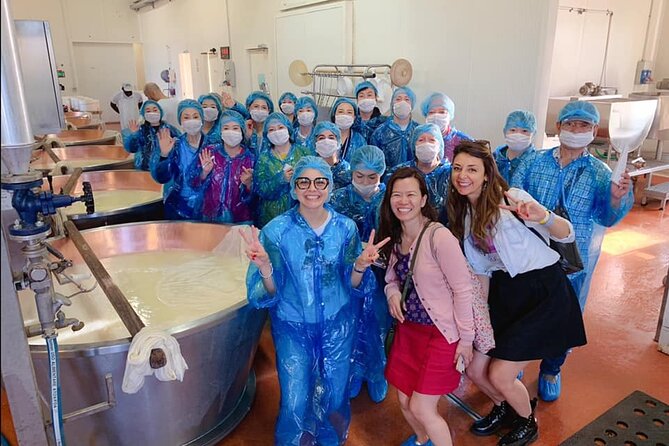
The first stop begins at 8:30 a.m. at Caseificio Bio Reggiani, on Via Francesco Baracca in Castelfranco Emilia. That early hour is not a minor detail. It is chosen so you can see the cheese makers working rather than arriving after the important tasks are finished.
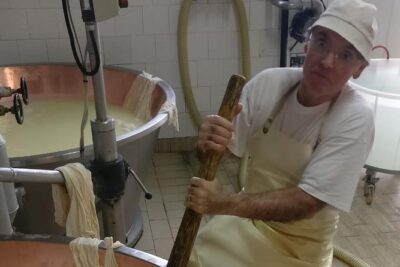
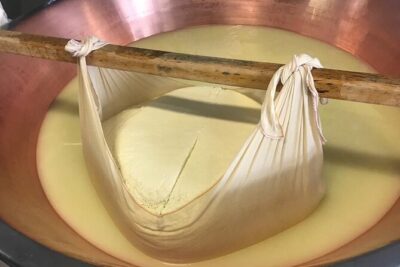
Parmigiano Reggiano is made in large copper kettles. The milk is handled, heated, and worked by hand before the cheese is shaped and sent off to age. The process takes skill and physical effort, and seeing it underway gives the visit a stronger sense of place than a display of finished products ever could.
You also see the animals behind the food. The farm includes cows, calves, and bulls, along with the milking parlor. The production chain is unusually complete: the farm grows alfalfa for the cows, milks the animals, makes the cheese, and ages it at the same site.
I like this kind of setup because it links the final taste to the whole farm. The wedge on your plate is not an abstract regional specialty. It began with feed, animals, milk, labor, and years of storage.
The cheese library and the value of time
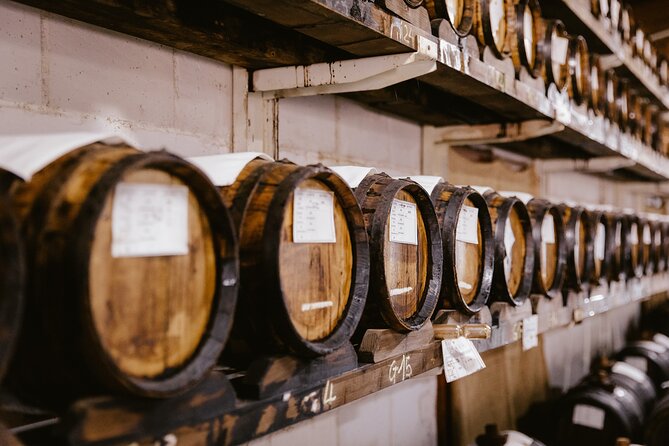
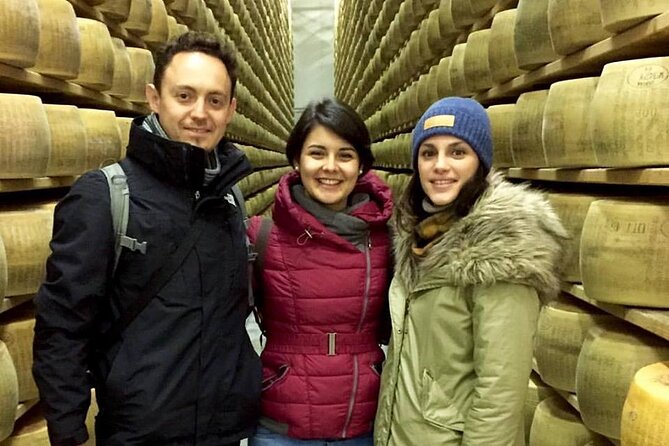
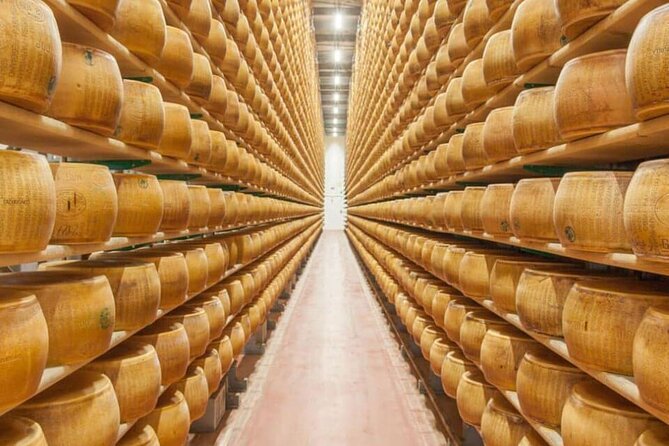
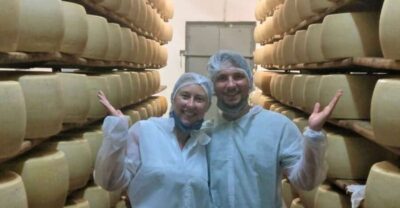
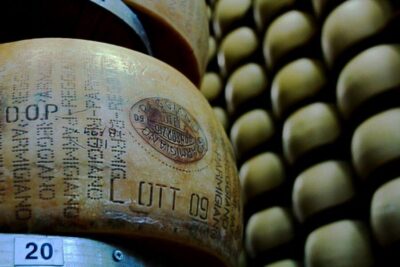
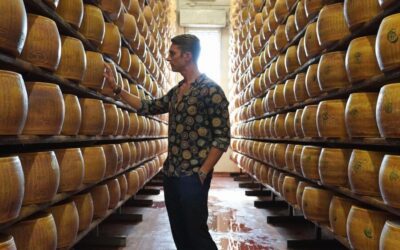
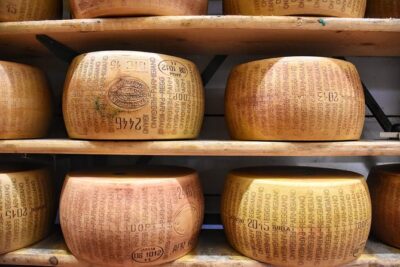
One of the memorable spaces is the room where the cheese wheels age. Rows of Parmigiano Reggiano create what feels like a library made of cheese. It is a useful visual lesson in aging: hundreds of wheels sit in quiet rows while time does much of the work.
The sight also explains the price better than a label can. Each wheel represents months or years of storage, regular care, and money tied up before it can be sold. The cheese factory is not rushing the product to market.
The tasting gives you a chance to connect the production steps with flavor and texture. Specific tasting details can vary, but the point is to understand how a finished wheel reflects the process you have just seen.
This stop is especially good for people who like to know how food is made. Children can enjoy the animals and the dramatic rows of wheels, while adults may appreciate the farming and production details. It is also a useful stop for anyone who has bought Parmigiano Reggiano in a supermarket and wants to understand what the name really means.
Dress for a working farm, not a fashion shoot. Comfortable clothing and sturdy shoes make sense. Heels and flip-flops are specifically discouraged.
Moving between the two countryside producers
The tour does not move as a single vehicle from the dairy to the acetaia. You need transport to reach Caseificio Bio Reggiani and to continue to Acetaia Malagoli Daniele. You also need transport afterward unless you have arranged another plan.
This is the biggest logistical issue. If you have a rental car, the arrangement is straightforward, though you should allow time to follow directions to two rural addresses. If you are staying in Modena, Bologna, or traveling by train, arrange a transfer before the morning of the tour.
The stated transportation prices are €65 from Castelfranco Emilia train station, €106 from Modena, and €165 from Bologna. These amounts are paid directly to the driver and are separate from the tour price.
That extra cost changes the value calculation. At $154.13 per person, the experience is already a serious food-tour purchase. For a couple or family without a car, the transfer can add a substantial amount. For a small group splitting the cost of a vehicle, it may be easier to justify.
Do not assume that a taxi or ride service will be waiting in the countryside. The practical move is to settle transport in advance and confirm where you will meet the driver. The operator can arrange a transfer for an added charge if you need one.
More cheese tours around Italy:
- Authentic Farm Tour with Pizza, Cheese, Wine & Limoncello Tasting
★ 5.0 · 698 reviews - Sorrento Farm by Tuk Tuk: Cheese, Limoncello & Hands-On Pizza
★ 5.0 · 628 reviews - Cooking class with Pasta, mozzarella and Tiramisu with wine
★ 5.0 · 549 reviews - Sorrento: Farm Tour with Cheese Tasting & Pizza Making Class
★ 5.0 · 503 reviews
Understanding Modena’s two balsamic products
The second stop is Acetaia Malagoli Daniele on Via Celeste, also in Castelfranco Emilia. Here, the focus shifts from milk and copper kettles to grape must, wooden casks, and years of aging.
This is where the tour earns its price for many food-minded visitors. The words balsamic vinegar of Modena can refer to two different products:
- Balsamic Vinegar of Modena IGP, which follows one set of rules and is widely sold.
- Traditional Balsamic Vinegar of Modena DOP, which follows stricter rules and is aged in a traditional way.
The names sound close, but the products are not interchangeable. They differ in ingredients, grape origin, production method, aging period, and certification. A bottle labeled Modena balsamic is not automatically traditional DOP balsamic.
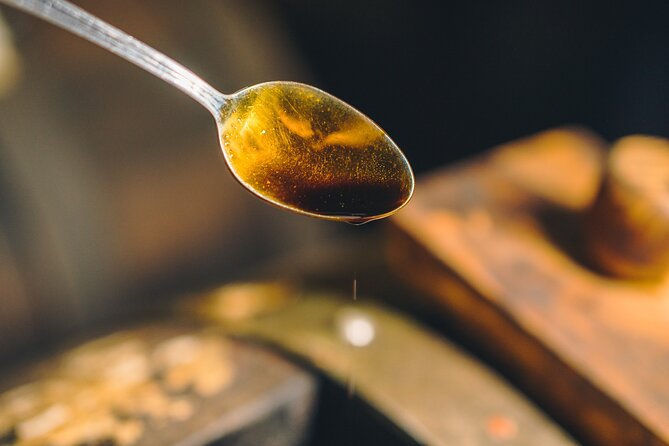
The DOP version has long been tied to family production and local practice. It is not simply a mass-market sauce made to resemble an old recipe. The visit helps you understand why this product is harder to find and why a small bottle can command a high price.
You do not need to be a food expert to follow the explanation. Guides such as Laura and Alessia are known for making technical points easy to grasp, answering basic questions without making you feel foolish, and adding humor when the subject gets detailed.
Inside Acetaia Malagoli Daniele
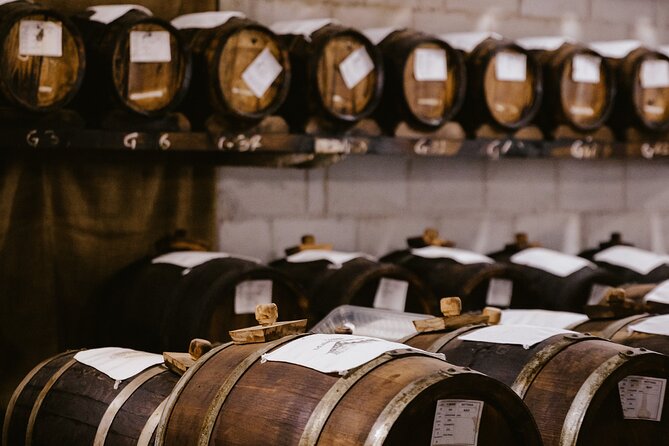
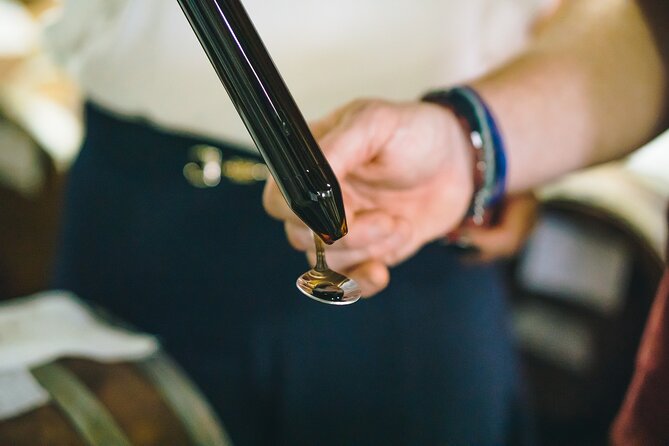
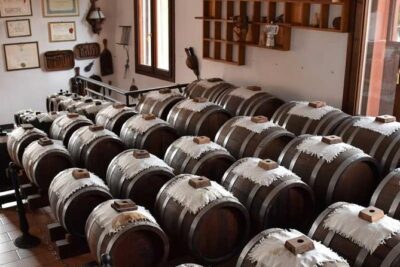
The acetaia is a place of waiting. Traditional balsamic vinegar matures in wooden barrels over many years, and the room has the smell to prove it. The casks are part of the story, not mere decoration.
A good visit here should change the way you read a label. Before this tour, you may have treated all dark, sweet balsamic vinegar as roughly the same. Afterward, you will have a clearer reason to compare the certification, ingredients, and aging information before buying.
The tasting is the payoff, but it works best when you take it slowly. Notice the difference between a product intended for everyday cooking and a traditional vinegar meant to be used in very small amounts. The point is not to pour it over everything. Traditional balsamic is carefully made, intensely concentrated, and often treated more like a finishing ingredient.
The acetaia also offers gourmet food gifts and products to take home. Leave room in your luggage. A small bottle is easier to carry than a large souvenir, but you may still want more room than you expect after tasting the products.
Guides who make the difference
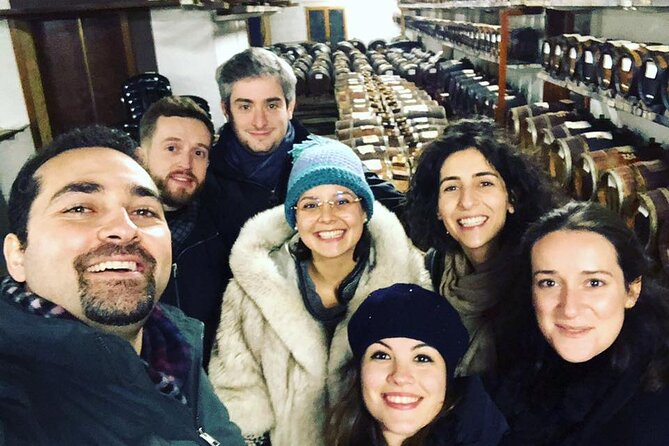
The guide can shape this experience as much as the food. Laura is particularly associated with this visit and brings a warm, engaging manner to both stops. Alessia may also lead the tour, with a relaxed style that encourages questions.
The strongest quality to look for is not a long lecture. It is the ability to connect farming, local customs, economics, and taste in plain language. The guides are expected to explain why the products are made in these ways, not just recite dates and labels.
That matters at the cheese factory, where the work can seem complicated at first. It matters even more at the acetaia, where IGP and DOP can sound like confusing legal shorthand. A good guide turns those terms into practical buying advice.
The tour can also suit families. The animals, large cheese wheels, and tastings give children something concrete to see, while adults can focus on the production details. Keep in mind that the tour begins early and takes place at working facilities, so comfortable clothing and attention to instructions are important.
Is $154.13 a fair price?
The price is not a bargain basement tasting. You are paying for access to two producers, a four-hour visit, guided explanations, tastings, snacks, and drinks. The value is strongest if you care about how Parmigiano Reggiano and traditional balsamic vinegar are made, rather than simply wanting a plate of local food.
The price also includes the benefit of seeing production at the source. You do not have to piece together two separate visits or work out how to compare the two balsamic categories on your own.
Still, you must add transportation if you do not have a car. From Bologna, the listed transfer price is €165, and from Modena it is €106. That can make the total cost high, especially for one person.
I would compare it with the cost of arranging two separate farm visits, the difficulty of reaching the countryside, and how much you value a guide who can connect the stops. For a dedicated food enthusiast, the price can be sensible. For someone looking for a cheap morning activity, it probably is not the right pick.
Timing, group size, and what to bring
The tour begins at 8:30 a.m. and lasts about four hours. You should keep the rest of the morning flexible, especially if traffic or rural roads slow the transfer between stops.
The maximum group size is 15 people. That is small enough for questions and close viewing, though the exact feel depends on how many people book that day. A small group can make the visit feel almost private, while a full group may require a little more patience around the production areas.
The experience is offered in English and uses a mobile ticket. Confirmation is sent at booking. Most people can take part, but you should tell the operator in advance if you need a lift.
Bring:
- Comfortable clothes
- Shoes suitable for a farm and countryside setting
- A phone with your ticket available
- Space for food purchases
- A transport plan for both locations
The tour includes snacks, bottled water, and coffee or tea, so you do not need to plan a full breakfast stop during the visit. The early start still means you may want to eat something beforehand.
Who should book this experience?
I would choose this tour if you want to see the working side of Modena’s food culture. It is a strong fit for people who enjoy markets, farms, cooking, regional products, and the small details behind famous foods.
It also suits anyone confused by balsamic labels. The IGP and DOP distinction is easy to miss in a shop, and the acetaia gives you a clear explanation before you spend money on a bottle.
Families can enjoy it, as can couples and small groups. The tour is less suitable if you dislike early mornings, cannot arrange transport, or prefer a relaxed city-center activity with no rural travel.
The tasting is important, but this is not mainly a meal. Think of it as a working food lesson with samples. You will see more than you eat, and that is exactly why it has lasting value.
Should you book it?
Book it if you want the real production story behind two of Modena’s best-known foods. The cheese factory offers the strongest visual experience, with animals, workers, kettles, and long rows of aging wheels. The acetaia adds the essential lesson about traditional DOP balsamic and why it differs from ordinary supermarket vinegar.
Before paying, solve the transport question. If you have a car, the tour is much easier to recommend. If not, add the transfer fee to the $154.13 price and decide if a half-day focused on local food is worth the total.
For food lovers, curious families, and anyone who wants more than a quick city tasting, I would book it. If your main goal is a low-cost activity close to Modena’s center, choose something simpler.
FAQ
Where does the tour begin?
It begins at 8:30 a.m. at Caseificio Bio Reggiani, Via Francesco Baracca 6, 41013 Castelfranco Emilia, Italy.
Where does the tour end?
It ends at Acetaia Malagoli Daniele, Via Celeste 9, 41013 Castelfranco Emilia, Italy.
Is transportation included?
No. You need transportation to reach the first countryside location and to move between the two stops. Paid transfers can be arranged separately.
How much do arranged transfers cost?
The stated prices are €65 from Castelfranco Emilia train station, €106 from Modena, and €165 from Bologna. Payment is made directly to the driver.
What is included in the experience?
The tour includes snacks, bottled water, coffee or tea, admission to both producers, and the guided visits. It is offered in English.
Can I cancel for a full refund?
Yes. You can cancel at least 24 hours before the local start time for a full refund. Cancellations or changes made less than 24 hours before the start are not accepted for a refund.
Freshly cut around Italy
- Wine Tasting with Cured Meats & Cheeses in Florence★ 5.0 · 2 reviews
- Vico Equense: Tour in the dairy “Mozzarella Experience”★ 5.0 · 19 reviews
- Turin: Gastronomy tasting through oil, wine and cheese★ 5.0 · 2 reviews
- From Parma/Cinque Terre: Truffle & Parmesan Picnic (Tasting)★ 5.0 · 2 reviews
- Tuscany: Ripalte Design Winery Wine and Cheese Tasting Tour★ 4.7 · 15 reviews
- Prosecco Hills Wine and Cheese Gourmet Discovery★ 5.0 · 6 reviews
- The Valpolicella food & wine driving tour: cheese factory+ winery★ 5.0 · 6 reviews
- Premium Cheeses and Gins Tour in the Prosecco hills. Full lunch!★ 5.0 · 3 reviews
Parmesan and Balsamic Tours, plate by plate.
Private Full Day Parma Food Tour: Parmesan Cheese, Parma Ham, Lunch, Vinegar
Read our review →Cheese lists with this tasting