
Review · CHEESE COUNTRY
Zadar Walking Tour sponsored by Gligora Cheese and deli.
Zadar’s old town is a compact puzzle of Roman stones, Venetian defenses, medieval churches, and modern life. This tour helps you read that puzzle, from the wells that once protected the city’s water supply to the Roman columns reused inside St. Donatus Church.
I like the central meeting point on Narodni trg, and I like the mix of major sights with useful local advice. Guides such as Melina, Jasmina, Sara, Lucinja, and Inez have been praised for clear storytelling, humor, and patience with questions. The tour may also include a stop connected with Pag cheese, a tasty link between Zadar and the wider Dalmatian region.
The main drawback is simple: 100 minutes goes quickly. You see many places, but several stops last only five to ten minutes. Finding the guide can also require care, so arrive early and check the meeting instructions closely.
Key points at a glance
- Roman ruins meet daily life: See the Forum, recycled Roman columns, churches, and public squares within a short walk.
- A useful first-day tour: The route gives you a clear map of central Zadar and helps you plan later meals and sightseeing.
- Local food is part of the story: The route includes the main market, and some tours include Pag cheese tasting or a cheese-shop visit.
- Flexible departure times: Three morning or afternoon departures make it easier to fit around a day in port or a busy holiday schedule.
- A small enough group to ask questions: The maximum group size is 30 people, while some departures have been much smaller.
- Good value at $18.14: You get a guided introduction to ten historic stops without paying separate admission for the listed sights.
Why Narodni trg is a smart place to begin
The tour starts at Narodni trg, Zadar’s People’s Square. This is a practical meeting point because it sits in the heart of the old town, rather than out by a hotel district or transport hub.
The square began in the Middle Ages as Platea Magenta, the center of public life. On its northern side, you’ll see the City Guard building, designed by Venetian architect Michele Sanmicheli and built in 1562. That detail gives you an early sense of Zadar’s long connection with Venice and the Adriatic trade network.
The first stop is short, about ten minutes, but that is enough to understand the square’s role. I like this opening because it sets up the city as a place where Roman, medieval, Venetian, Austrian, and modern Croatian layers sit close together.
The nearby Church of St. Lawrence adds another piece. Its remains date to the 11th century and are reached through Cafe Lovro on the square. The setting is easy to miss if you walk past on your own, so this is one of the tour’s more useful little discoveries.
More Cheese Walking and Food Tours in the world:
- Paris: Montmartre Cheese, Wine & Pastry Guided Walking Tour
★ 4.8 · 2,255 reviews - Private Montmartre Food Tour with Wine, Cheese & Pastries
★ 5.0 · 1,027 reviews - Paris Le Marais Food Tour With 10+ Tastings, Cheese, Wine & More
★ 5.0 · 985 reviews
St. Simeon and the story inside the silver casket
At St. Simeon’s Church, the guide explains the story of Simeon the God-receiver, the biblical elder who held the infant Jesus. His mummified body is kept in Zadar, inside a silver casket regarded as one of Croatia’s most important medieval goldsmith works.
You have about ten minutes here. That is enough for the basic story and the religious context, though anyone especially interested in church art may wish to return later with more time.
This stop also shows why a guided walk helps in Zadar. The exterior alone does not tell you why the church matters. A local guide can connect the object, the saint, and the city’s identity in a few clear minutes.
Five Wells and Zadar’s water supply
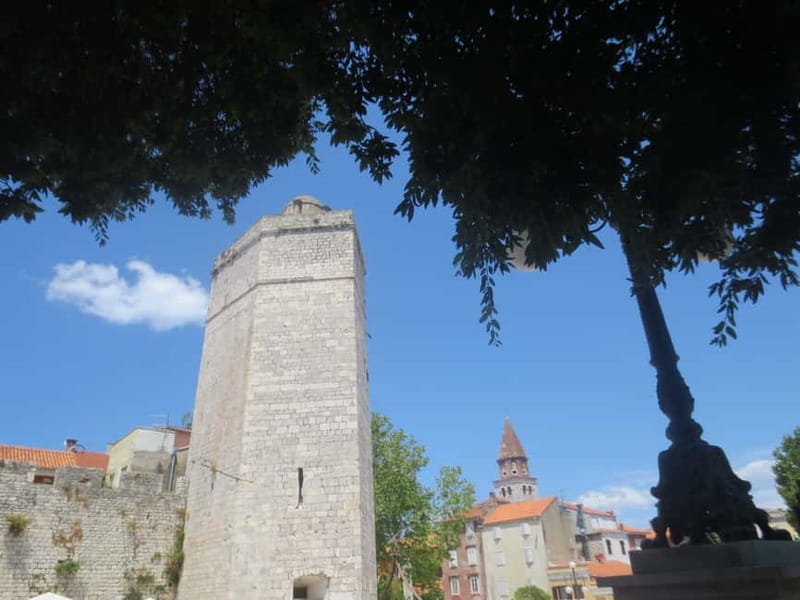
Five Wells Square is one of the route’s most memorable outdoor stops. The name is literal: five ornamental wellheads line the square beside the old city walls.
The wells were built in the 16th century when the Venetians helped Zadar prepare for Turkish attacks. A defensive ditch below the walls was converted into a large water cistern, giving the city an important supply during sieges.
That practical detail makes the square more than a photo stop. You can see how military planning shaped ordinary life. The surrounding walls, bastion, and wells explain how a city survived when fresh water and safe shelter were matters of daily concern.
Expect roughly ten minutes here. In hot weather, the open stone surfaces can feel warm, and one review specifically noted that walking between buildings in September was uncomfortable. A morning departure may be the better choice if you dislike heat.
Queen Jelena Madijevka Park above the bastion
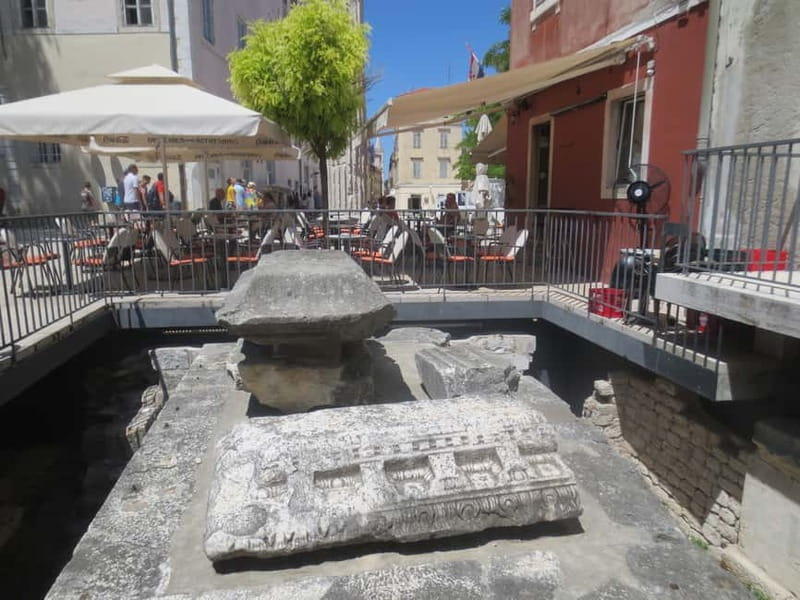
Next comes Queen Jelena Madijevka Park, built on top of the Grimaldi bastion. The park was founded in 1829 by Austrian commander Baron Franz Ludwig von Welden, a botanist who admired Dalmatian plant life.
The idea is unusual: a public garden placed on a military structure. It was the first public park in Dalmatia, and it gives the route a welcome change from stone streets and church interiors.
I appreciate this stop because it shows Zadar in a quieter, greener setting without requiring a separate excursion. You see how an old defensive site was given a new civic purpose. The stop lasts about ten minutes, so do not expect a long rest in the park, but it breaks up the historical material nicely.
More cheese tours around the world:
- Amsterdam Classic Saloon Boat Cruise with Drinks and Cheese
★ 5.0 · 31,825 reviews - Amsterdam: Classic Saloon Boat Cruise with Cheese & Wine
★ 4.6 · 27,035 reviews - Krakow–Zakopane: Cable Car, Chocholow Baths, Cheese & Vodka
★ 5.0 · 10,720 reviews - Krakow–Zakopane: Cable Car, Chocholow Baths, Cheese & Vodka
★ 4.8 · 8,989 reviews
Zadar Market brings the city into the present
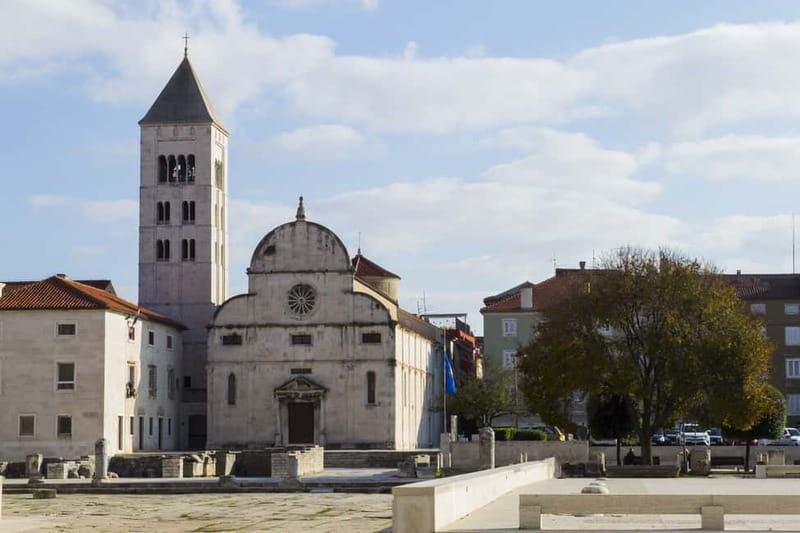
The main market, Trznica Zadar, is where the tour shifts from monuments to everyday food. The market occupies the old peninsula and includes a covered fish market.
Its current location dates from 1952, though Zadar’s principal market once operated around the ancient Roman Forum. The stalls feature fruit, vegetables, fish, meat, local products, and souvenirs. This is a useful stop for anyone planning to cook, picnic, or buy edible gifts.
Some guides also take the food discussion further with a Pag cheese tasting or a visit to a well-known cheese shop. The tour is sponsored by Gligora Cheese and deli, and several guides have included cheese in the experience. Still, the exact tasting format is not fully specified, so I would treat it as a possible feature rather than a guaranteed formal meal.
This is also where local recommendations matter. Guides have offered advice on where to eat and shop in Zadar, which can save you from choosing a restaurant at random in the busiest part of the old town.
St. Chrysogonus and a lost Benedictine complex
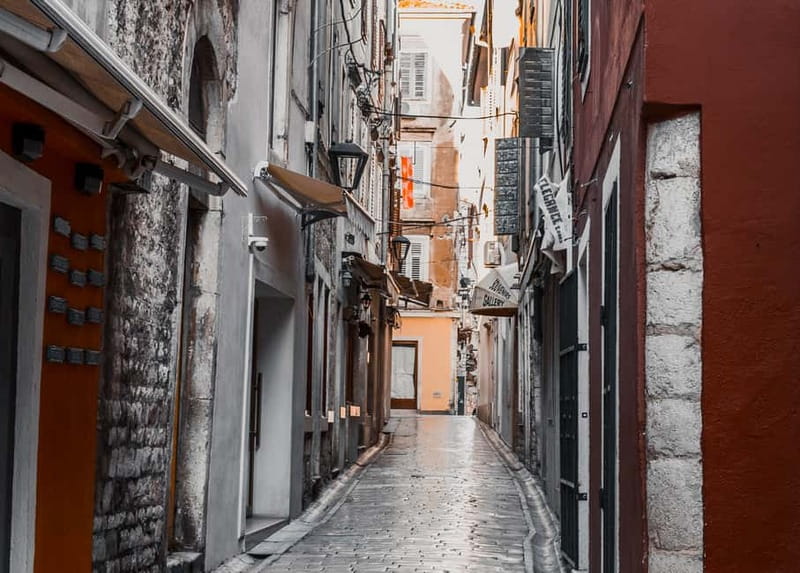
The Church of St. Chrysogonus is a Romanesque church consecrated in 1175. It occupies the site of a Roman emporium and is the remaining part of a much larger medieval Benedictine abbey.
The church has a dramatic past. Elizabeth of Bosnia, queen dowager of Hungary and Dalmatia, was secretly buried here in 1387. Her body stayed in the church for three years before being moved to the basilica at Székesfehérvár.
A bell tower was begun in 1485 but abandoned in 1546. That unfinished project is a small reminder that historic cities are full of plans that never reached completion.
You spend about ten minutes at this stop. The value lies less in a long interior visit and more in understanding what survives, what disappeared, and how Zadar’s religious buildings were tied to regional politics.
Cathedral of Saint Anastasia in five focused minutes
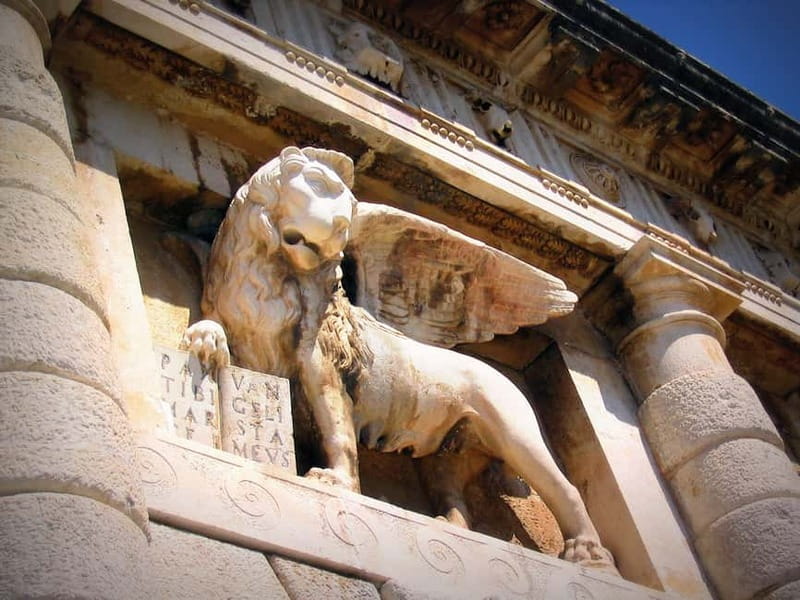
The Cathedral of Saint Anastasia dates from the 12th and 13th centuries. Its facade is richly carved, while the three-nave interior contains traces of frescoes in the side apses.
The cathedral suffered heavy bombing during World War II and was later rebuilt. In the left apse, a marble sarcophagus holds the relics of Saint Anastasia. The choir has carved stalls, though the short stop may not allow much time to study them.
The cathedral is sometimes closed. A glass vestibule lets you look inside when that happens, which is a practical feature for a walking route built around quick stops.
Only about five minutes are assigned here. I would not choose this tour as your only cathedral visit if religious art is your main interest. For a first orientation, though, the stop gives you the essentials and points you toward a possible return visit.
The Roman Forum and St. Donatus
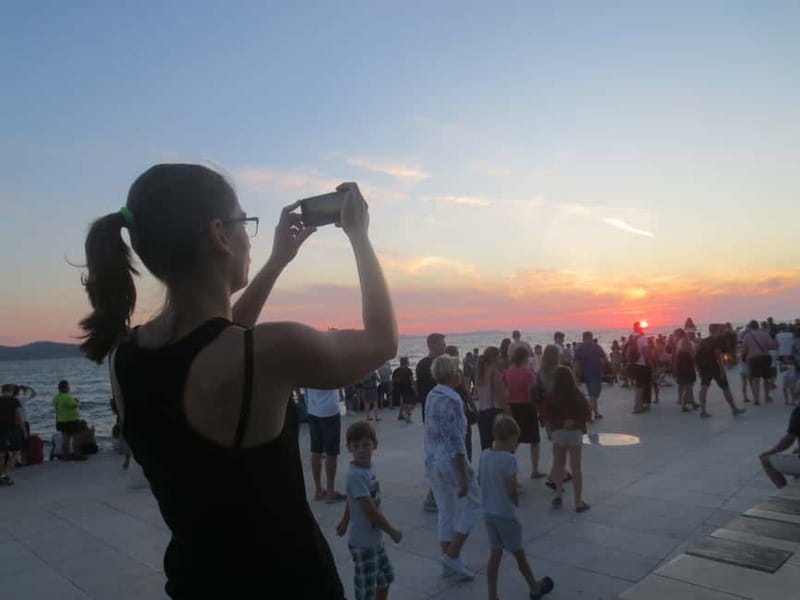
The Roman Forum is one of Zadar’s central sights. Built between the 1st century BC and the 3rd century AD, it remains an open civic space where ancient stones sit beside later buildings.
This is the point where Zadar’s layers become especially easy to see. Roman columns, paving, and fragments share space with the Church of St. Donatus and other parts of the old town. The guide can help you distinguish what belongs to the Roman city from what was added later.
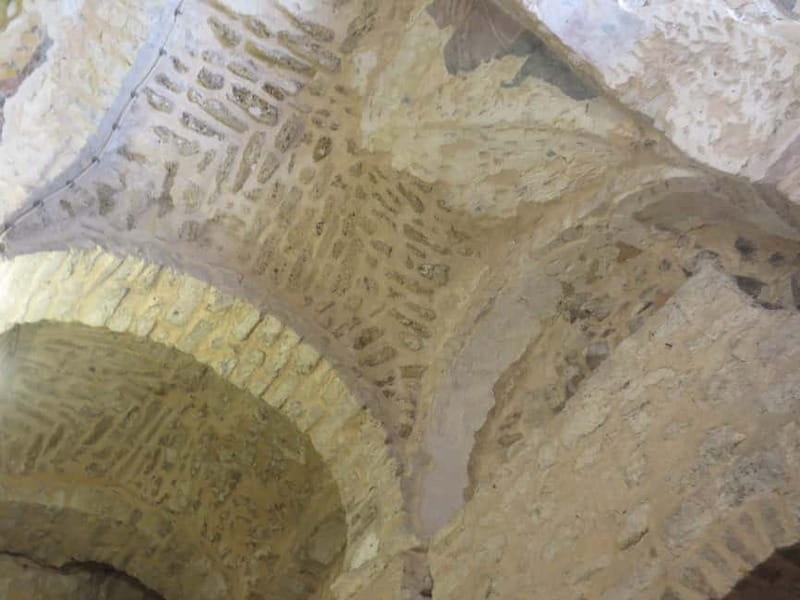
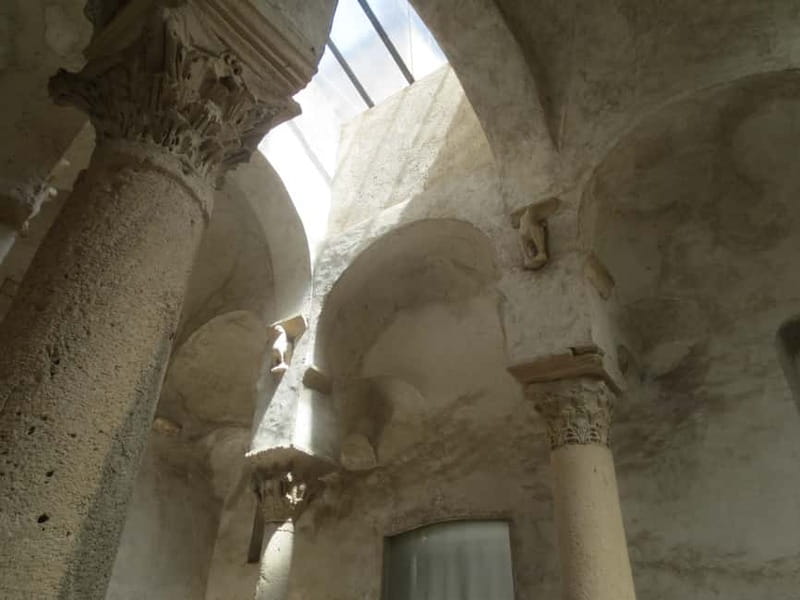
St. Donatus is the visual anchor. The church dates from the early 9th century and has a circular Byzantine-style design. It is one of the few surviving buildings from the early Croatian kingdom and avoided destruction during the Mongol invasion of the 13th century.
Inside, the design is spare. Two complete Roman columns were reused in the church, and paving slabs from the Forum appear beneath the present floor. That reuse is not a minor detail. It shows how later builders treated the ancient city as both a source of materials and a foundation for new religious life.
The church has not been used for services for around 200 years. Today, it often serves as a concert hall or exhibition space. The route gives St. Donatus two short stops, around seven minutes each, first for the Forum setting and then for the church itself.
What the guides add to the walk
The quality of this experience depends heavily on the guide. The names appearing most often in the supplied material include Melina, Jasmina, Sara, Lucinja, Inez, Angela, Mirena, Milena, Hadji, Zendka, and Sarasvati. You should expect the assigned guide to vary by departure.
The strongest pattern is clear storytelling paired with practical help. Melina has been especially good at answering questions from children and family groups. Jasmina has been praised for humor, local places, and food suggestions. Lucinja has led history-focused walks and shared local stories. Sarasvati has kept a 10-year-old engaged by asking questions during the tour.
That matters because the route covers a lot in little time. A guide who simply recites dates would make the walk feel crowded with facts. A guide who explains why a well, church, or market matters gives you a usable understanding of the city.
The group maximum is 30 people, but some departures have had only six people or even one person. A smaller group makes it easier to ask questions and follow the guide through narrow streets. The group size can change, so do not book solely on the expectation of a private-style tour.
Is $18.14 good value?
At $18.14 per person, this is a fair price for a 100-minute introduction to central Zadar. The listed stops do not require admission fees, so the cost mainly pays for the guide’s time, route planning, explanations, and local suggestions.
The value is strongest if this is your first day in Zadar. You get a practical orientation, a list of places to revisit, and ideas for food and shopping. The market and possible Pag cheese connection add something beyond a standard procession of churches.
The price is less compelling if you have already studied Zadar’s main monuments and prefer to explore slowly. The short timings mean you will not linger long at any one church. In that case, a self-guided walk followed by a paid interior visit may suit you better.
Timing, meeting point, and comfort
You can choose from three morning or afternoon departures, which is helpful if you arrive by ship, have a meal booked, or want to avoid the hottest part of the day.
The tour begins and ends at Narodni trg. Since one person had trouble locating the guide, I would arrive early and confirm the exact meeting instructions before setting out. The meeting point is central and easy to reach once you are in the old town, but busy squares can still create confusion.
The tour is conducted in English and uses a mobile ticket. Service animals are allowed, public transportation is nearby, and most people can take part. Wear comfortable shoes for old-town streets, carry water in warm weather, and remember that the route has limited time for shade.
Free cancellation is available up to 24 hours before the start time for a full refund. Changes or cancellations made less than 24 hours ahead are not accepted for a refund.
Who should book this Zadar walk?
I would recommend it most strongly to first-time visitors, history fans, families, and anyone with only a short stay. It is also a good choice if you explored Zadar alone and now want the context behind the stones you saw.
The tour suits families particularly well when the guide takes questions and adjusts the explanation. It is less suitable if you want a slow photography walk, extended church interiors, or a focused food tour.
Book it early if your schedule is tight. The tour is booked, on average, 21 days ahead, which suggests that popular departure times may fill before arrival.
Should you book the Zadar Walking Tour?
Book this tour if you want a clear, affordable first look at Zadar with history, market life, and practical food advice in one compact route. The best parts are the Roman Forum, St. Donatus, Five Wells, and the market, where the city’s past and present meet.
Skip it if you already know the old town well or prefer to spend an hour and 40 minutes inside one or two major buildings. For most first-time visitors, though, $18.14 buys useful orientation, local guidance, and enough historical context to make the rest of your time in Zadar more rewarding.
FAQ
Where does the Zadar Walking Tour begin?
The tour begins at People’s Square, Narodni trg, in Zadar’s old town.
Where does the tour end?
The activity ends back at the meeting point on Narodni trg.
How long does the tour last?
The tour lasts approximately 1 hour and 40 minutes.
What language is the tour offered in?
The tour is offered in English.
How much does the tour cost?
The listed price is $18.14 per person.
How many people can join the tour?
The maximum group size is 30 people.
Are the main sights included with admission?
The listed stops show admission as free. The tour includes exterior and brief visit points at the churches, squares, market, park, and Forum.
Can I cancel for a full refund?
Yes. You can cancel at least 24 hours before the experience start time for a full refund. Cancellations or changes made less than 24 hours before the start time are not accepted for a refund.
Freshly cut around the world
- Zurich Open-top Tour and Chocolate and Cheese Countryside★ 3.5 · 11 reviews
- Zurich: Lucerne Trip, Igloo Fondue and Titlis Rotair Option★ 4.9 · 5 reviews
- Zermatt: Outdoor fondue “group experience under the stars”★ 4.7 · 3 reviews
- Amsterdam: Zaanse Schans E-Bike Tour with Windmills & Cheese★ 4.5 · 12 reviews
- Zaanse Schans & Volendam Private Tour: Windmills and Cheese★ 5.0 · 5 reviews
- Wine Tasting with Cured Meats & Cheeses in Florence★ 5.0 · 2 reviews
- Yeppoon: Sunset Cruise w/ Cheese Platter & Champagne★ 4.3 · 19 reviews
- Wine Masterclass & Cheese Tasting Workshop in Bordeaux★ 5.0 · 2 reviews
Cheese Walking and Food Tours, plate by plate.

Paris: Montmartre Cheese, Wine & Pastry Guided Walking Tour
Read our review →

Paris Le Marais Food Tour With 10+ Tastings, Cheese, Wine & More
Read our review →


Paris St Germain Food Tour with Cheeses, Foie Gras, Wines & More
Read our review →
Cheese lists with this tasting