
Review · MADRID
Gourmet Experience: Tasting of Spanish Cheese and Exclusive Wines
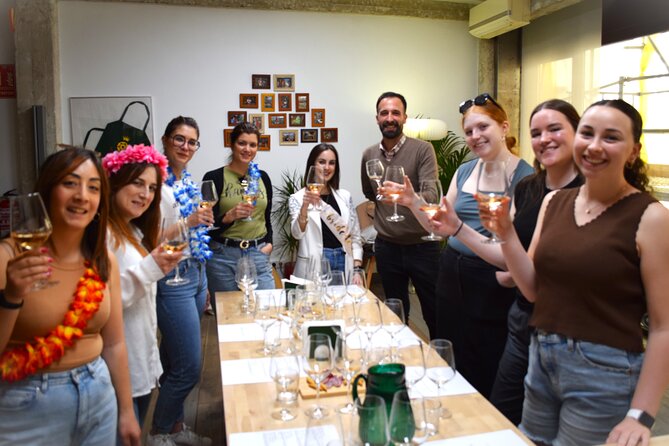
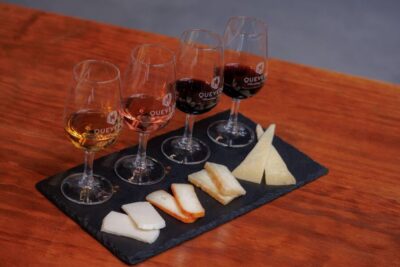
Madrid’s best food lessons often happen around a small table, and this Spanish cheese and wine tasting gives you a tidy introduction to the country’s many food regions in about 70 minutes. You sample four protected-designation cheeses, pair them with selected Spanish wines, and hear why the same cheese can taste different with a different pour.
I like the strong regional focus, especially the chance to compare Mahón, Manchego, Murcia cheese in wine, and San Simón da Costa side by side. I also like that guides including Carlos, Jesus, and Marcos bring in stories, ham, and practical pairing advice rather than treating the tasting like a formal lecture.
The main consideration is the price: at $72.01 per person, this is not a quick snack. It makes better sense if you value instruction, generous portions, and a comfortable indoor setting. The tasting is also held at 6 p.m., so it may compete with dinner plans.
Key points at a glance
- Four Spanish cheeses with protected designation: Compare products from distinct regions instead of tasting one general cheese plate.
- Pairings are part of the lesson: You learn how wine changes the taste of each cheese and how to repeat the combinations later.
- Guides add personality: Carlos, Jesus, and Marcos have been singled out for regional knowledge, humor, and personal stories.
- Generous food portions: The tasting can include nuts, fruit, sweets, jamón ibérico, and Spanish bruschetta alongside the listed cheeses.
- Central Madrid meeting point: Meet at C. de Carretas 14, go to the second floor, and look for door A.
- Small enough for conversation: The maximum group size is 20, with English-language service and mobile tickets.
Four cheeses, four parts of Spain
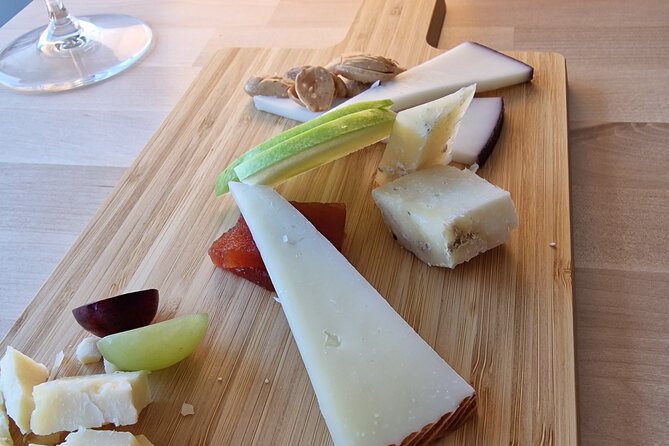
The heart of the experience is a table of four cheeses with protected designation of origin status. This label matters because it ties a product to a defined place and method of production. You are not simply tasting four random cheeses. You are tasting a small map of Spanish food traditions.
The first cheese is Mahón D.O.P., from Menorca in the Balearic Islands. Its inclusion gives the tasting a taste of island Spain, not just the mainland. Your guide explains the cheese’s character and regional background before showing you how it works with the wine poured beside it.
Next comes Manchego D.O.P., perhaps the best-known name on the plate. Made in La Mancha, it is a useful reference point for the rest of the tasting. You can focus on its texture and flavor, then compare it with the other cheeses rather than judging it in isolation.
The third selection is Murcia D.O.P. cheese in wine. The name points to one of the most distinctive details of the menu: wine is part of the cheese’s character, not only its table companion. This gives you a clear example of how production methods and regional ingredients can shape a cheese before any pairing begins.
The final cheese is San Simón da Costa D.O.P., from Galicia. It adds another regional voice to the plate and helps show how varied Spanish cheese can be. The point is not to declare one cheese the winner. It is to notice how milk, aging, local habits, and wine alter the whole tasting.
More Wine and Cheese Tastings in Spain
- Tacoronte: Guided Winery Tour with Wine and Cheese Tastings
★ 4.6 · 481 reviews - Tenerife Bodegas Monje Winery Tour with Wine and Cheese Tasting
★ 4.5 · 121 reviews - Visit and wine tasting with sausage and BODEGA PIRINEOS cheese
★ 5.0 · 73 reviews
How the wine pairing works
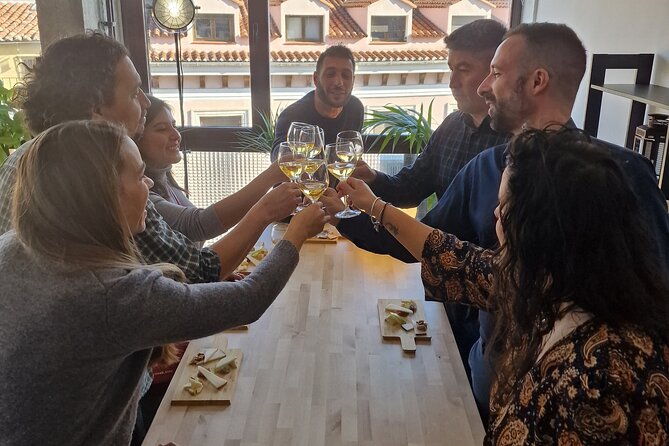
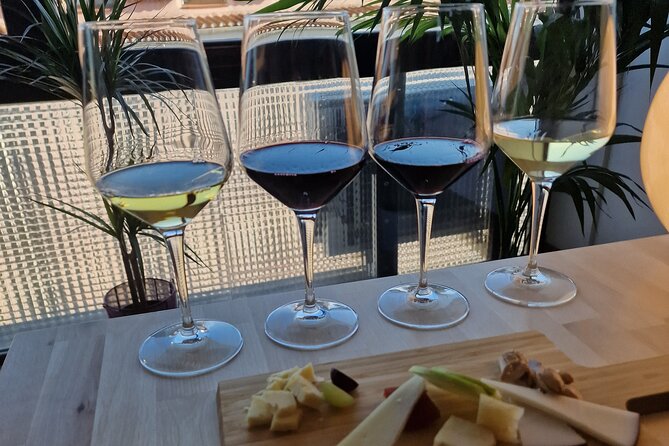
You are not handed a plate and left to guess. The guide presents the wines with the cheeses and explains why particular combinations work. A sip of wine can make a cheese seem creamier, sharper, saltier, or sweeter, and the tasting gives you a chance to notice those changes while they are fresh.
This is especially useful if wine menus usually leave you guessing. You learn a few practical rules without needing to memorize a long list of grape varieties. The regional explanations also give the wines a sense of place, linking the drink to the same food culture that produced the cheese.
The pours have been described as generous, and the wines are presented as distinct from one another. That matters because a tasting can feel thin when each sample is too small to examine. Here, you have enough wine to taste it alone, taste it with cheese, and return to a pairing that works.
The experience is called an exclusive wine and cheese tasting, but the supplied details do not list specific wine labels or vintages in advance. If you need to know the exact bottles before booking, ask the provider directly. The emphasis is on selected Spanish wines and their pairings rather than a fixed public wine list.
Stories from Carlos, Jesus, and Marcos
The guide can make or break a tasting. Here, Carlos has explained Spanish wine and cheese regions in clear terms, while Jesus has brought a welcoming, playful approach. Marcos has added personal anecdotes and kept the session lively while explaining the pairings.
That variety is worth noting because the host may affect the tone of your hour. You should expect an educational session, but not a stiff classroom. The strongest descriptions of the experience point to guides who explain without making beginners feel out of place.
This is a good setting if you want to ask basic questions. You do not need to know Spanish wine terminology before arriving, and you are not expected to identify every flavor on your own. The guide’s job is to give you a useful frame for tasting, then help you notice the differences.
The regional focus also gives you more than a list of food names. You hear which parts of Spain produce each item and why those areas matter to the taste. That context can make a later visit to a market, wine shop, or restaurant easier, since the names will not be entirely new.
More than cheese on the table
The published menu lists seasonal sweets and nuts, with fruit or traditional sweets accompanying each cheese. These small additions are not decoration. A nut can add crunch, fruit can sharpen or soften a bite, and a sweet can show how a salty cheese changes when placed beside sugar.
The tasting has also included jamón ibérico and Spanish bruschetta. The bruschetta has been especially well received, and the ham adds another classic Spanish product to the table. Because these extras are not spelled out as fixed parts of the main menu, I would treat them as possible additions rather than guaranteed items.
Portion size is another practical strength. The food served alongside the wine can be substantial enough that you may not want to plan a full dinner immediately afterward. Still, the duration is only about 70 minutes, and the experience is not presented as a complete evening meal. If you are hungry, check the current food plan before relying on it as dinner.
The seasonal accompaniments may vary. That is normal for a tasting built around food rather than a fixed theater performance, but it means you should not expect every small item to appear exactly as described in someone else’s session.
Same region, a different wheel:
- Guided Visit to the Estrella Galicia Museum with Cheese Pairing
★ 5.0 · 218 reviews - Fuerteventura: Tickets to Salt, Cheese and Windmill Museums
★ 4.4 · 129 reviews - Fuerteventura: Artisan Goat’s Cheese Making at Local Farm
★ 4.9 · 112 reviews - Menorca: Guided visit to the Subaida cheese factory,
★ 4.5 · 96 reviews
A comfortable central Madrid setting
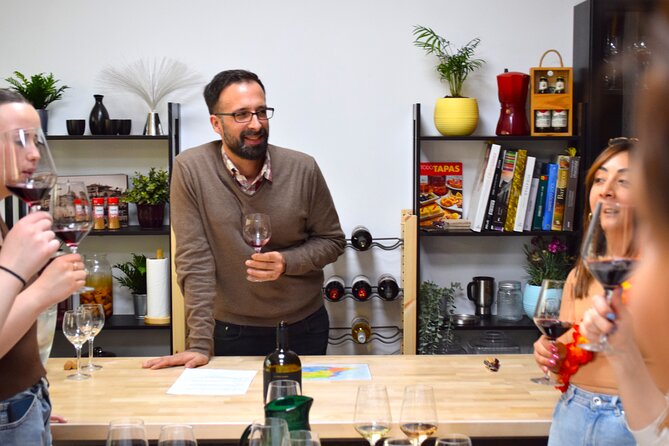
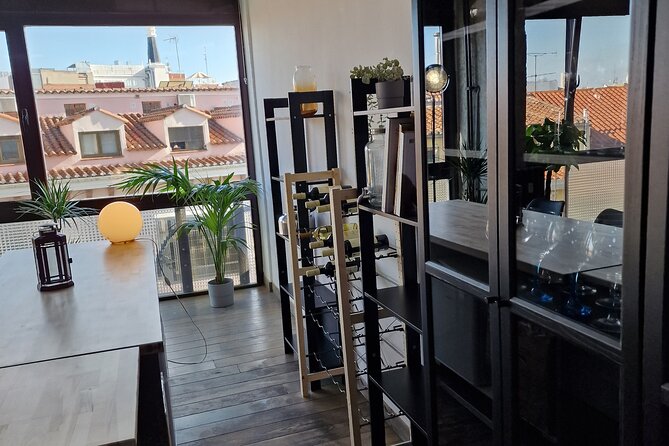
The meeting point is C. de Carretas, 14, second floor, door A, in Madrid’s Centro district. When you arrive at the address, go upstairs and look for that door. This is an indoor meeting point, not a street-side food walk, so take a moment to confirm the entrance before the 6 p.m. start.
The location is near public transportation, which is helpful if you are coming from another part of Madrid. Pickup is listed as an available feature, but the practical instructions direct you to the meeting address. Do not assume hotel collection. Plan to reach C. de Carretas 14 yourself unless the provider confirms another arrangement.
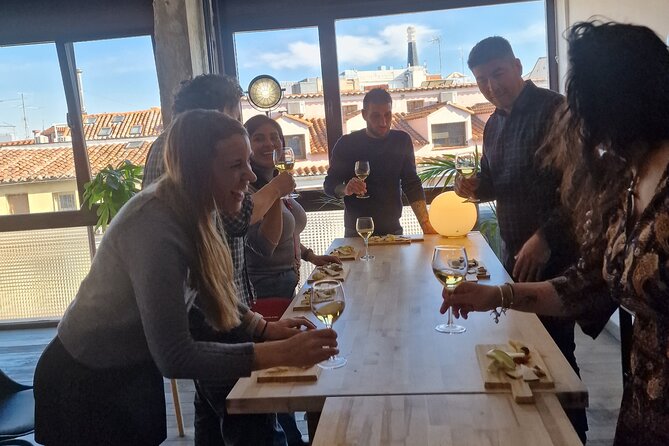
The setting has been described as modern, comfortable, and equipped with a pleasant view. That makes a difference during a wine tasting. You can concentrate on the guide and the plate without dealing with traffic, changing weather, or the noise of a moving group.
The maximum group size is 20. That is not a private tasting, but it is small enough for the session to remain focused. Your experience will depend partly on the final number of attendees. A full group may feel more social, while a smaller group may allow more questions.
Is $72.01 a fair price?
At $72.01 per person, this tasting costs more than buying Manchego and a bottle of wine at a shop. The comparison is not quite fair, though. You are paying for four protected-designation cheeses, several wine pairings, a guided explanation of regional food culture, a prepared setting, and the time saved by having someone organize the tasting for you.
The value is strongest if you are curious about Spanish food and want a clear introduction without committing to a long food tour. You get a concentrated lesson in roughly 70 minutes, which can fit neatly into a Madrid itinerary.
The value is weaker if you mainly want a large dinner or already know Spanish cheese and wine well. A serious wine enthusiast may want a longer tasting with bottle details, vintages, or a larger selection. Those specifics are not promised here.
Generous pours and food portions improve the equation. Past sessions have included enough wine, cheese, and ham to feel like more than a token sampling. Still, tips are not included, so budget for that extra cost if you choose to leave one.
Who will enjoy this tasting most?
I would recommend it to couples, friends, and solo visitors who like food with a bit of explanation. It also suits anyone who wants a gentle introduction to Spain’s regional products before visiting markets or ordering cheese and wine later in the trip.
It works well for people who prefer a settled indoor activity. You are not walking between stops or trying to keep up with a moving group. Instead, you spend the session at the meeting location, tasting and listening.
It is also a good choice for a mixed group. One person can focus on wine, another on cheese, and a third simply enjoy the food. The guide provides enough context to keep the experience useful even if you are new to both.
I would hesitate if you want a private event, a full meal, or a detailed bottle-by-bottle wine course. The group can reach 20 people, the duration is short, and exact wine selections are not provided ahead of time. Those limits are easy to accept if you see the session as a lively introduction rather than an advanced class.
Planning your 6 p.m. visit
The tasting begins at 6 p.m. and ends back at the meeting point after about 70 minutes. That timing works nicely before a later evening plan, but it is worth leaving enough time to reach the central Madrid address without rushing.
Your booking confirmation arrives at the time of booking, and a mobile ticket is available. Service animals are allowed, and the location is near public transportation. The experience is offered in English.
Free cancellation applies if you cancel at least 24 hours before the start time. Changes or cancellations inside that window are not accepted for a refund. The activity also requires a minimum number of participants, so if the provider cancels because that number is not met, you receive a different date or experience, or a full refund.
Should you book it?
Book this tasting if you want regional Spanish food explained clearly, with enough cheese, wine, and side dishes to make the hour feel worthwhile. The four named cheeses give the session a strong structure, and the guides’ personal stories and friendly teaching style add warmth.
Skip it if you are searching for a full dinner, a private tasting, or a technical wine seminar with fixed labels and vintages. For most curious food lovers, though, the $72.01 price is reasonable when you value instruction, generous servings, and an easy central location. Arrive at C. de Carretas 14 a little early, find the second-floor door, and come ready to taste the differences rather than simply eat a cheese plate.
FAQ
Where does the Spanish cheese and wine tasting begin?
It begins at C. de Carretas, 14, 2a, Centro, 28012 Madrid, Spain. Go to the second floor and look for door A.
What time does the tasting start?
The tasting starts at 6:00 p.m. and lasts approximately 1 hour and 10 minutes.
Which cheeses are included?
The listed cheeses are Mahón D.O.P., Manchego D.O.P., Murcia D.O.P. cheese in wine, and San Simón da Costa D.O.P.
Is wine and cheese included in the price?
Yes. The wine and cheese tasting is included. Tips are not included.
How many people can join the activity?
The maximum group size is 20 people.
Can I cancel for a full refund?
Yes, if you cancel at least 24 hours before the experience starts. Cancellations or changes made less than 24 hours before the start time are not refunded.
Freshly cut around Spain
- Cheese Factory Workshop with Wine Tasting in Requena, Valencia★ 4.5 · 3 reviews
- Guided Tour Montesdeoca Cheese Factory – Cheese and Wine Tasting★ 4.5 · 6 reviews
- Hike the Cork Oak trail and try some Delicious Cheese★ 5.0 · 12 reviews
- Discover the Art of Idiazabal Cheese in the Basque Country★ 4.5 · 9 reviews
- Private Basque Cheese & Txakoli Wine Tour from San Sebastian★ 5.0 · 20 reviews
- Menorca: Cheesemaking and Farm-Fresh Product Tasting★ 5.0 · 29 reviews
- Madrid Bike Tour with Churros and Wine, Ham, and Cheese Upgrade★ 5.0 · 8 reviews
- Mallorca Wine and Cheese Tasting★ 5.0 · 29 reviews
Wine and Cheese Tastings, plate by plate.
Paris: Montmartre Cheese, Wine & Pastry Guided Walking Tour
Read our review →
Paris Le Marais Food Tour With 10+ Tastings, Cheese, Wine & More
Read our review →Cheese lists with this tasting