

Review · PARIS
Paris: French Wine and Cheese Guided Tasting
Paris has plenty of wine tastings, but this one turns the usual pour-and-nod routine into a practical lesson. At L’Oeno’Vice, Simon guides you through five wines and five cheeses, then uses perfume samples to help you recognize the scents in your glass. I especially like the family Champagne at the end and the clear focus on skills you can use at dinner afterward.
I also like the small size, with no more than eight people, and Simon’s easy way of adjusting the talk for complete beginners and experienced drinkers. The main consideration is that $70 for two hours is not a bargain if you only want a few sips. You are paying for instruction, food pairings, and a proper tasting lesson, not simply an evening drink.
Key points to know before booking
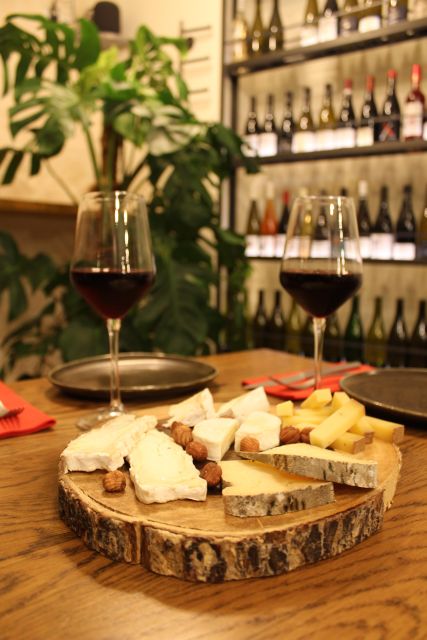
- Five wine pours: Two whites, two reds, and one Champagne make up the tasting.
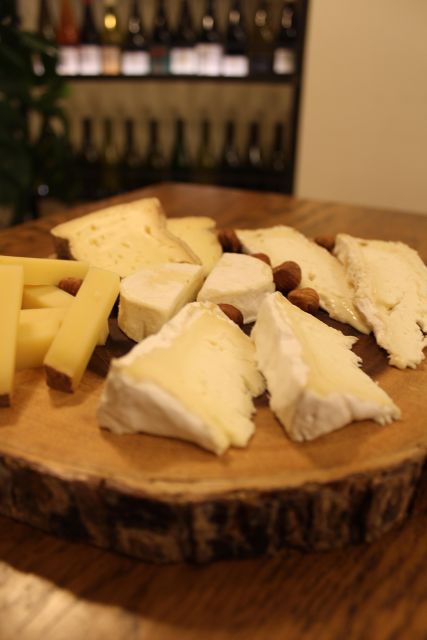
- Five cheese pairings: Each wine is served with a different cheese so you can compare how food changes the flavor.
- Simon leads the session: He owns L’Oeno’Vice and explains French wine in English or French.
- Perfume samples sharpen your nose: Scent comparisons make the tasting more hands-on and less technical.
- Small group setting: The experience is limited to eight people, leaving room for questions and conversation.
- Adults only: It is not suitable for children under 18 or pregnant women.
Starting at L’Oeno’Vice with Simon
You meet Simon at L’Oeno’Vice, his wine bar in the Île-de-France region. The setting is more personal than a large cellar tour or a formal wine school. You sit down, meet the other people in your group, and begin with a short introduction to wine before the glasses arrive.
Simon’s background gives the session a useful personal angle. He comes from a wine-producing family, and the special Champagne served during the experience comes from his family. That bottle is not just another item in a lineup. It gives you a direct connection to the people and places behind the drink.
The first few minutes also help set the right tone. You do not need to arrive with a trained palate or a long list of favorite grapes. Simon first works out how much the group already knows, then explains the subject in plain language. If you know very little about wine, you can ask basic questions without feeling out of place. If you already attend tastings, you still have room to ask about regions, food, and technique.
The group limit of eight matters here. It allows Simon to pause, answer questions, and bring different opinions into the discussion. A larger group would make the perfume exercise and food comparisons harder to manage. With a small table, you get a more social class and a better chance to speak up.
More Wine and Cheese Tastings in France
- Paris: Montmartre Cheese, Wine & Pastry Guided Walking Tour
★ 4.8 · 2,255 reviews - Private Montmartre Food Tour with Wine, Cheese & Pastries
★ 5.0 · 1,027 reviews - Paris Le Marais Food Tour With 10+ Tastings, Cheese, Wine & More
★ 5.0 · 985 reviews
French regions, grapes, and the taste in your glass
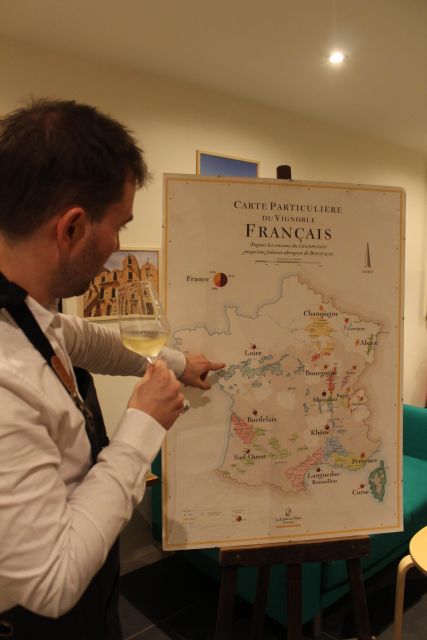
Before tasting, Simon lays out the main ideas that shape wine. You learn how geography, climate, and grape variety affect what you taste. That sounds basic, but it gives you a useful framework for understanding why two wines made from similar grapes can taste very different.
The geography lesson is also a history lesson, though the focus remains practical. Simon connects French regions with the wines they produce and explains why location matters. You are not expected to memorize every appellation. Instead, you begin to see how a bottle’s origin can tell you something about its likely character.
This is one of the strongest parts of the session for anyone who has found French wine labels confusing. French bottles often put the region ahead of the grape name, which can make choosing wine difficult if you are used to labels built around varieties. The more you understand the places, the easier it becomes to make a sensible choice at a restaurant or shop.
The material works for mixed groups, too. Simon has related explanations to different countries represented at the table, helping each person connect French wine with familiar examples. You get context without being buried under specialist language.
Learning to taste wine in four simple steps
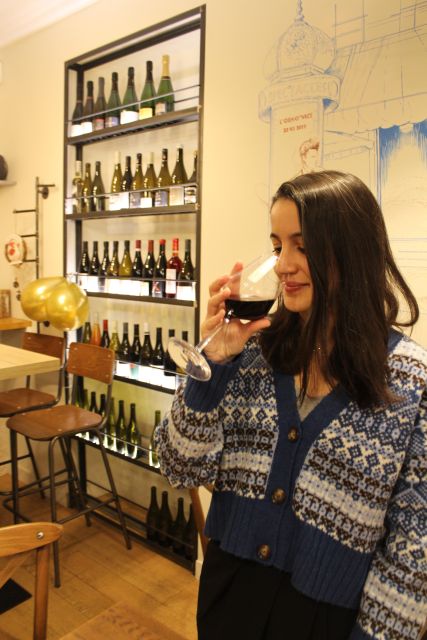
The tasting itself follows a clear order. First, you look at the wine and note its color. Next, you smell it. Only then do you taste it. This sequence slows you down and makes you notice more than sweetness, acidity, or strength.
That method is valuable because many people drink wine quickly and judge it after a single sip. Here, you get a repeatable routine you can use at home. Look at the color, pay attention to the scent, take a sip, and think about what changes as the wine moves across your palate.
The perfume samples make the smell stage more memorable. Simon presents different scents and asks you to compare them with what you find in the wine. This is not a test you can fail. It is a way to train your nose by giving an unfamiliar smell a clear reference point.
You might recognize a scent quickly, or you might need several attempts. The point is to build awareness, not to show off. The exercise also keeps the session lively. Instead of listening to a long lecture, you take part in small guessing games and discuss what you notice with the group.
For beginners, this is a friendly introduction to tasting language. For experienced wine drinkers, it offers a reminder to use the nose more carefully. Either way, you leave with a better sense of how to approach a glass.
Two whites, two reds, and a family Champagne
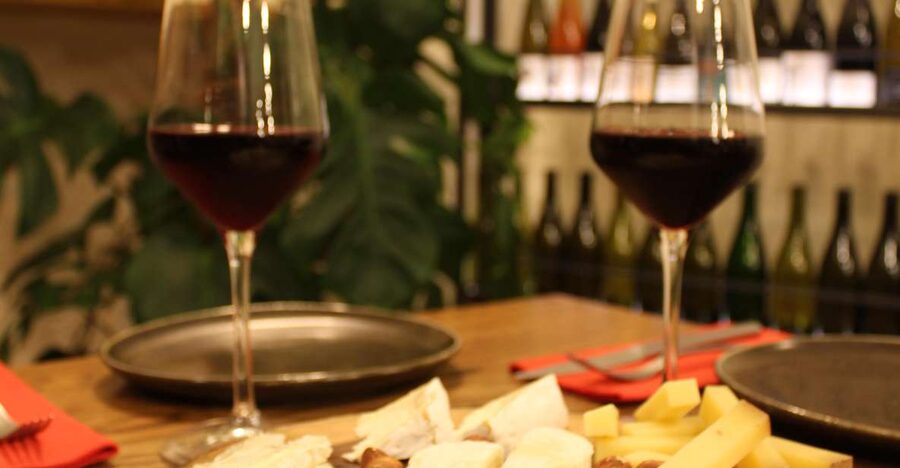
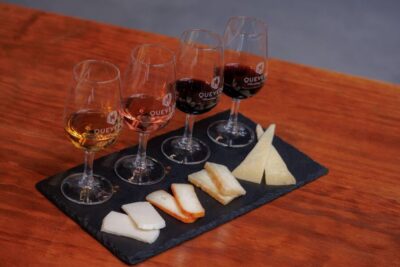
The tasting includes two white wines, two red wines, and one Champagne. The order lets you compare different styles instead of judging a single bottle in isolation. Each wine has a different cheese pairing, so you are tasting both the drink and its relationship with food.
The white wines come early, when your palate is fresh. You can focus on their color, smell, and feel before moving on to the reds. The reds then give you a chance to notice how a different structure works with cheese. The Champagne finishes the official tasting and adds a celebratory note without turning the session into a simple drinking stop.
The special Champagne is made by Simon’s family. That detail gives the final glass extra meaning, particularly if you are interested in the human side of wine production. You are not only sampling a category of wine. You are tasting something tied to Simon’s own family background.
The portions are intended for proper tasting, rather than a token splash. You have enough wine to compare it with the cheese and return to the glass as the discussion continues. Bread and water are also provided, based on the way the tasting is set up, which helps keep the pairings comfortable.
Keep in mind that five glasses in two hours can add up. Even with tasting portions, you should treat this as an alcohol-focused activity. It is not suitable for pregnant women, and anyone who does not drink should choose another Paris experience.
More Wine and Cheese Tastings in Paris
- Paris: Wine and Cheese Lunch
★ 4.9 · 596 reviews - Cheese & Wine Tasting in Montmartre with Local Cheesemonger
★ 5.0 · 470 reviews - French Wine, Champagne And Cheese Tasting Paris SECRET WINE DOOR
★ 5.0 · 464 reviews - Paris Wine Tasting plus Cheese Lunch with an Expert Sommelier
★ 5.0 · 424 reviews
Five cheeses and why pairing changes everything
The cheese is not an afterthought. You taste five kinds of cheese, with a different cheese alongside each wine. Simon explains how the combination changes your impression of both items.
A wine you find sharp or heavy on its own may seem more balanced with food. A cheese that tastes mild at first may bring out a new quality in the wine. This is why the pairing lesson is more useful than simply sampling five popular bottles. You are learning how to judge wine in the setting where most people actually drink it, at the table.
Simon also explains how to choose wine for a meal. You do not need to remember a strict rule for every dish. The useful lesson is to pay attention to how the food and wine affect each other, then use that information when ordering.
This section suits people who are unsure about wine. Several participants have arrived with little interest in wine and left with a better idea of what they like. You may not suddenly want to collect bottles, but you can become more confident about ordering one with dinner.
The cheese also makes the event feel substantial. At $70, you are not paying only for five pours. The five pairings, bread, water, teaching, and two hours of guided attention help explain the cost.
Simon’s teaching style and the atmosphere
Simon’s most important skill is making a technical subject approachable. He explains wine with humor, patience, and plenty of room for questions. That matters in a small group, where one person’s question can often clarify the subject for everyone else.
The session is interactive rather than a speech from start to finish. You look, smell, taste, guess, compare, and discuss. Simon encourages you to describe what you notice even if you do not know the formal wine terms.
I would not book this expecting a quiet, private tasting for two. The small group means you share the table and the conversation. That is part of the appeal, especially if you enjoy meeting people during a trip, but it may not suit anyone looking for a romantic or highly private setting.
The atmosphere at the bar is relaxed and welcoming. The tasting starts promptly, while the presentation remains informal. You get a structured lesson without the stiffness of a classroom.
One practical point: the main experience ends after two hours. If you want to continue drinking at the bar afterward, ask Simon about that possibility rather than assuming it is included. The tasting itself covers only the listed wines, Champagne, cheeses, and guidance.
Is $70 a fair price?
At $70 per person, this experience costs more than a casual glass of wine and cheese in Paris. It also gives you far more than a casual snack. You receive five pours, five cheeses, a Champagne finish, a two-hour lesson, and direct access to the owner of the wine bar.
The value is strongest if you want to understand what you are tasting. Simon covers French regions, wine history, tasting steps, scent recognition, and food pairing. Those lessons can help you order with more confidence for the rest of your trip and when you return home.
The price may feel high if you already know exactly what you like, want full glasses, or mainly want a relaxed drink. This is a guided educational tasting, not a wine-bar happy hour. You are paying for Simon’s time and instruction as much as for the contents of the glasses.
The small group improves the value. A limit of eight makes it easier to ask questions and receive an answer that fits your interests. It also prevents the session from feeling like a production line.
Who will enjoy this Paris tasting most?
I would choose this for first-time wine tasters, couples, food lovers, and anyone who wants a useful indoor activity in Paris. It also works well for people who think they do not like wine. The cheese pairings and gentle teaching may help you identify styles you enjoy.
It suits experienced drinkers too, especially if you want to refresh your tasting method or learn more about French regional wine. Simon’s family connection to Champagne adds a personal touch that is hard to get from a generic tasting menu.
The experience is less suitable for anyone who dislikes group activities or does not want alcohol. It is also not an option for children under 18 or pregnant women. Since the session is limited to eight people and available in English or French, check the starting time and language when you book.
Free cancellation is available up to 24 hours before the activity, and you can reserve now and pay later. The venue is wheelchair accessible, which makes this a practical choice for many visitors, though you should still confirm the exact arrangements when booking if you have specific access needs.
What you can use after the tasting
The best result is not a new list of French wine terms. It is greater confidence. After Simon’s lesson, you can look at a wine, smell it, taste it, and form an opinion without worrying that you are doing it wrong.
You also gain a better way to order with food. Instead of choosing the most familiar label, you can think about the meal, the style of wine, and how the pairing changes the taste. That is useful in Paris restaurants, where the wine list may offer many unfamiliar regional names.
You may also find a bottle or cheese you want to seek out later. Some people have returned to shops to buy wines they tasted during the session. If you plan to take bottles home, ask about shipping options before making a purchase, since international transport is not included in the activity.
Should you book it?
Book this tasting if you want more than a photo and a few sips. Simon offers a clear, friendly lesson built around five wines, five cheeses, scent exercises, and practical advice. The family Champagne gives the final glass a personal connection, while the eight-person limit keeps the talk focused.
Skip it if $70 feels too much for a two-hour activity, if you want full pours, or if you are seeking a private evening. For most food-minded visitors, though, the combination of instruction and generous pairings makes this a strong use of an afternoon or evening in Paris. You leave better prepared to choose wine, and with a good excuse to order cheese again.
FAQ
Where does the wine and cheese tasting take place?
The experience takes place at L’Oeno’Vice, Simon’s wine bar in the Île-de-France region.
How long does the tasting last?
The tasting lasts two hours. Starting times vary, so check availability when booking.
Which wines are included?
You taste two white wines, two red wines, and one Champagne, for five glasses in total.
How many cheeses are served?
Five kinds of cheese are included. Each cheese is paired with one of the wines.
Is the activity available in English?
Yes. Simon leads the experience in English or French.
Who should not book this experience?
The tasting is not suitable for pregnant women or children under 18. It is also an alcohol-focused activity, so it may not suit anyone who does not drink.
Freshly cut around Paris
- Paris: Wine and Cheese Pairing★ 5.0 · 4 reviews
- French Wine and Cheese Master Class Near the Eiffel Tower★ 5.0 · 6 reviews
- Paris Wine and Cheese Tastings Class near Le Marais★ 5.0 · 4 reviews
- Paris Wine with Cheese Pairing & Tasting Small Group Class★ 5.0 · 6 reviews
- Private wine tour to Sancerre vineyards from Paris with Sommelier★ 5.0 · 11 reviews
- Paris Marché d’Aligre Walking Tour with Chocolate and Cheese Tasting★ 3.5 · 24 reviews
- Paris Wine and Cheese Pairing Private Masterclass in a Bistrot★ 5.0 · 7 reviews
- Wine and cheese tasting in Bastille★ 5.0 · 5 reviews
Wine and Cheese Tastings, plate by plate.
Paris: Montmartre Cheese, Wine & Pastry Guided Walking Tour
Read our review →
Paris Le Marais Food Tour With 10+ Tastings, Cheese, Wine & More
Read our review →Cheese lists with this tasting