
Review · PARIS
Paris: Wine and Cheese Tasting
A good French wine tasting should do more than fill your glass. This one uses maps, soil samples, and three wines to show how France’s grapes and terrain shape what you taste. You meet in a small cave à vin, a boutique wine shop lined with bottles from independent producers.
I like the small group of eight or fewer, which gives you room to ask questions. I also like the practical cheese pairings: a hard cheese and a soft cheese, with bread and water to clear your palate. Hosts such as Camille, Julian, and Constance have helped make this a friendly, useful introduction for both beginners and regular wine drinkers.
The main thing to consider is the setting. This is a wine shop, not a restaurant, and toilet access may be limited. The meeting point can also vary by the option you book, so check the final details before setting out.
Key points at a glance
- Three wines from small producers: The selection comes from independent French makers rather than mass-market labels.
- Maps and real soil samples: You get a clear introduction to terroir and the reasons French wine varies so much by region.
- Cheese changes the wine: Hard and soft cheeses let you compare how food affects flavor in the glass.
- A genuinely small group: With no more than eight people, you can ask about grapes, regions, and tasting technique.
- Friendly named hosts: Camille, Julian, Constance, Leia, and other wine specialists have led sessions in English and French.
- Ninety minutes at $76: The price makes the most sense if you want guided learning, not simply a few pours.
A Paris wine shop instead of a formal restaurant
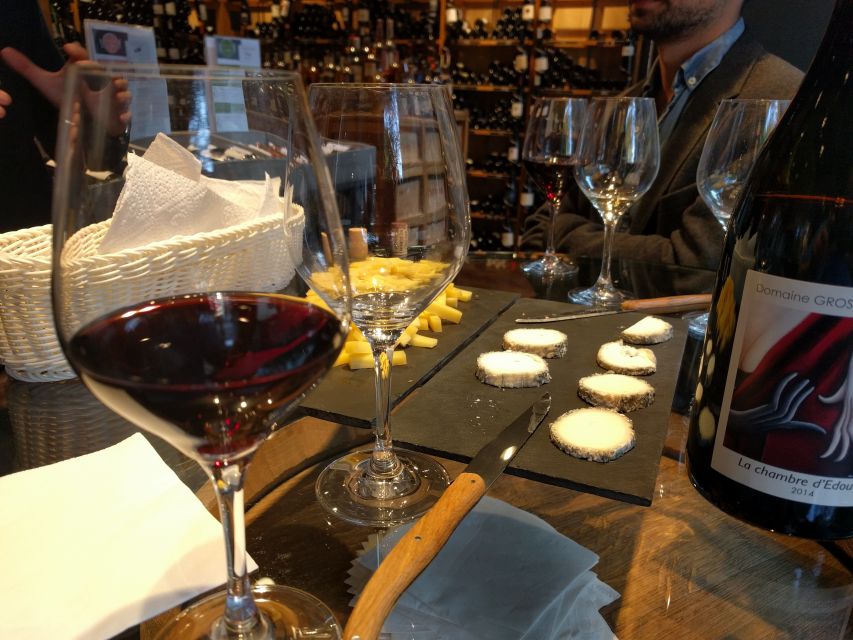
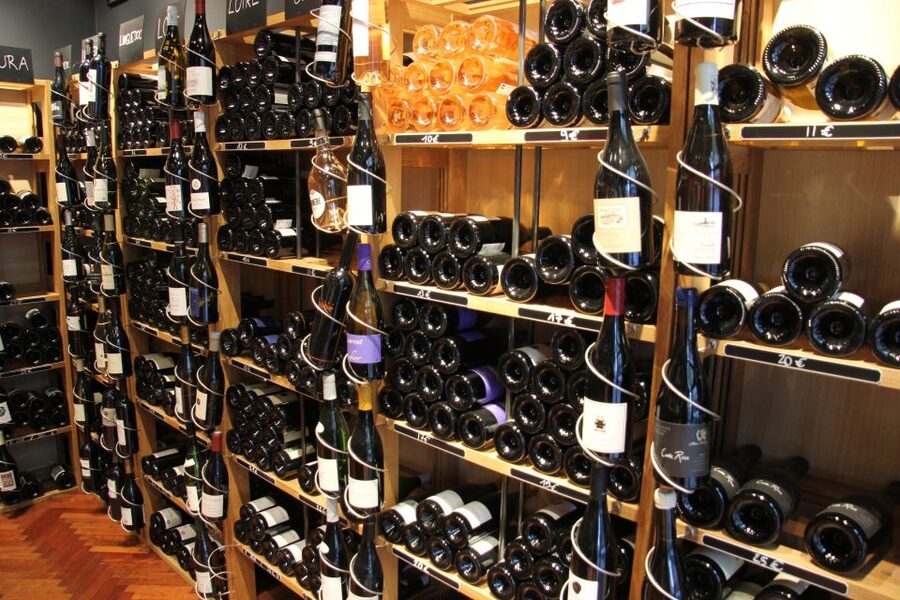
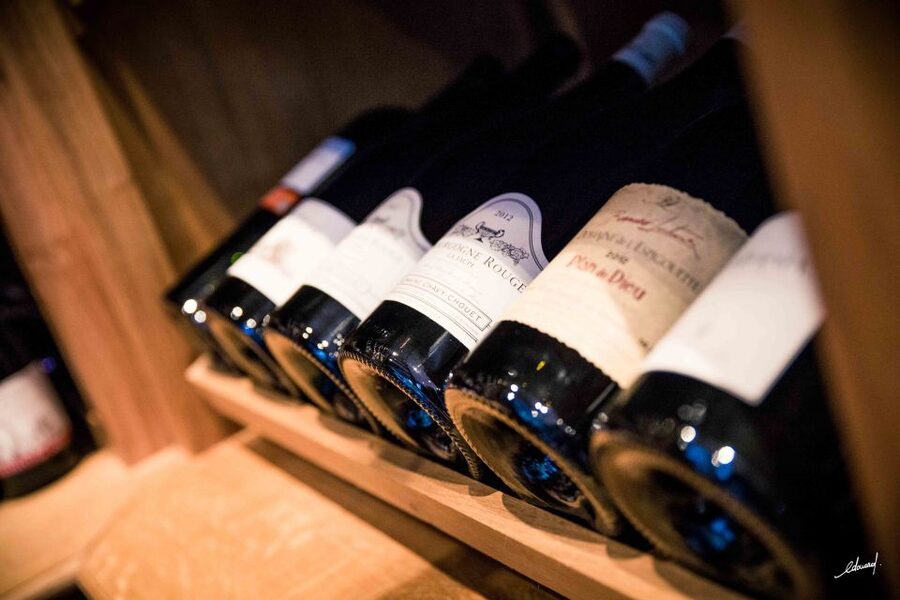
You arrive at a boutique wine shop, often called a cave à vin, with bottles filling the shelves from floor to ceiling. Reds, whites, and rosés from across France give the room a useful visual lesson before the tasting even begins.
This is a more relaxed setting than a grand dining room. You sit in a prepared tasting area, meet your wine specialist, and settle in for a guided session. The shop atmosphere also gives you a chance to look at bottles you might later buy, which several participants have done after finding a wine they liked.
The relaxed mood matters if you are new to wine. You do not need to arrive with a polished vocabulary or a strong opinion about French regions. The format is designed to help you notice differences, ask questions, and build confidence one glass at a time.
Still, keep your expectations in check. You are not coming for a full meal, a cellar tour, or a long evening of dining. It is a focused 90-minute tasting in a retail shop. The shop’s toilets may not be easy to reach or readily available, so plan ahead.
More Wine and Cheese Tastings in France
- Paris: Montmartre Cheese, Wine & Pastry Guided Walking Tour
★ 4.8 · 2,255 reviews - Private Montmartre Food Tour with Wine, Cheese & Pastries
★ 5.0 · 1,027 reviews - Paris Le Marais Food Tour With 10+ Tastings, Cheese, Wine & More
★ 5.0 · 985 reviews
The first lesson: why French wine tastes so different
The introduction focuses on French wine regions, grape varieties, and terroir. That last word can sound grand, but the basic idea is simple: wine reflects the place where its grapes grow, including soil, climate, terrain, and local traditions.
Maps help put the lesson in order. France produces wine in many areas, and each region has its own mix of grapes and growing conditions. The tasting connects those broad ideas to the wines in front of you, so the information does not remain an abstract geography lesson.
The soil samples are an especially useful touch. Seeing and handling examples of different soils gives you a more concrete sense of why vineyards are not all alike. You begin to understand that French wine is not one single style. It is a collection of regional expressions.
Your host explains how grapes affect aroma, flavor, and structure, then relates those traits to the wine you are tasting. If you are a basic wine drinker, this is the part that can make a real difference. Instead of simply deciding that you like or dislike a bottle, you start to ask why it tastes the way it does.
The lesson is not meant to turn you into a sommelier in an hour and a half. It gives you a working foundation. You learn the language of the bottle, the role of origin, and a few ways to taste with more attention.
Three wines, chosen around the group
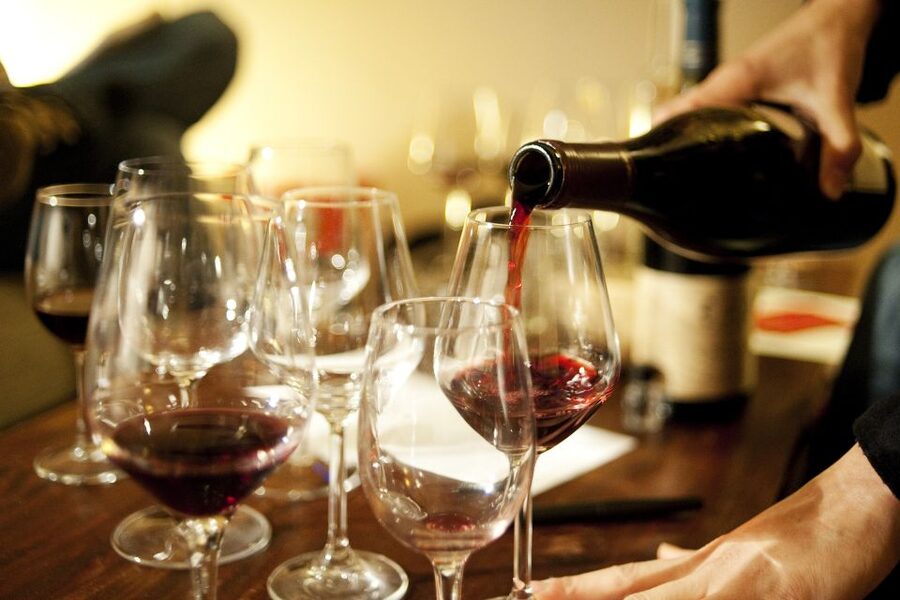
The main tasting includes three types of wine. The exact bottles can vary because the host selects wines from small, independent producers and may shape the lineup around your group’s interests.
That flexibility is one of the best features. You may be curious about reds, interested in white wine, or unsure what you usually enjoy. Tell your host. The point is not to march through a fixed list without discussion, but to use the wines as examples of French styles.
Past sessions have included unfamiliar grape varieties, which is good news if you already know the usual supermarket names. Julian, one of the hosts, has guided participants toward wines they had never tried before. Another participant ended up buying one of the bottles tasted during the session.
You should expect the host to explain where each wine comes from and what flavors to look for. The pace allows time to taste, compare, and ask questions rather than rushing from one pour to the next.
The listed format calls for three wines, though one session included four pours and a surprise taste at the end. Treat that as a possible bonus, not a promise. The reliable expectation is three wines.
A spittoon is provided. You can use it if you want to concentrate on tasting without drinking every sip. That makes the experience more comfortable for anyone who wants to sample several wines but does not want the alcohol to take over the afternoon.
Cheese pairings that make the lesson practical
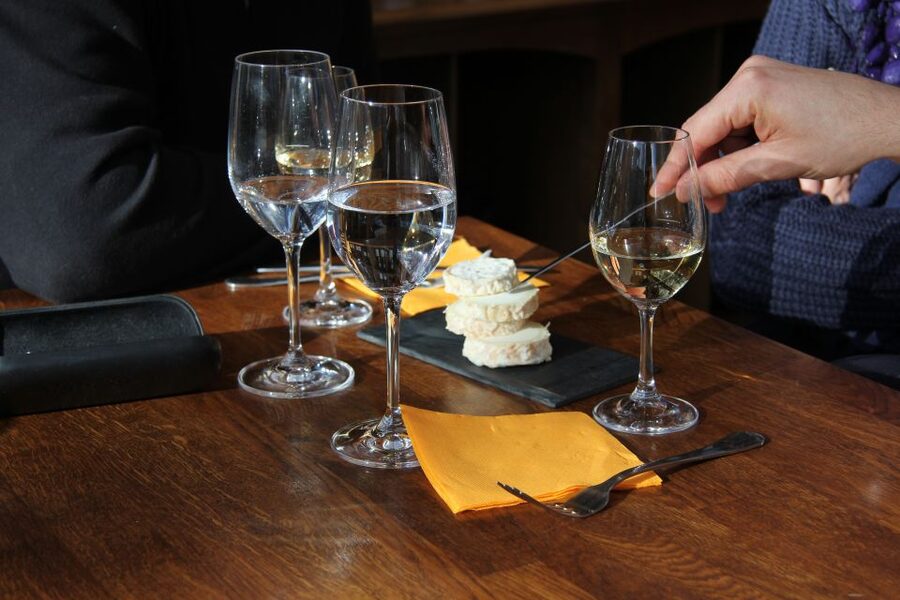
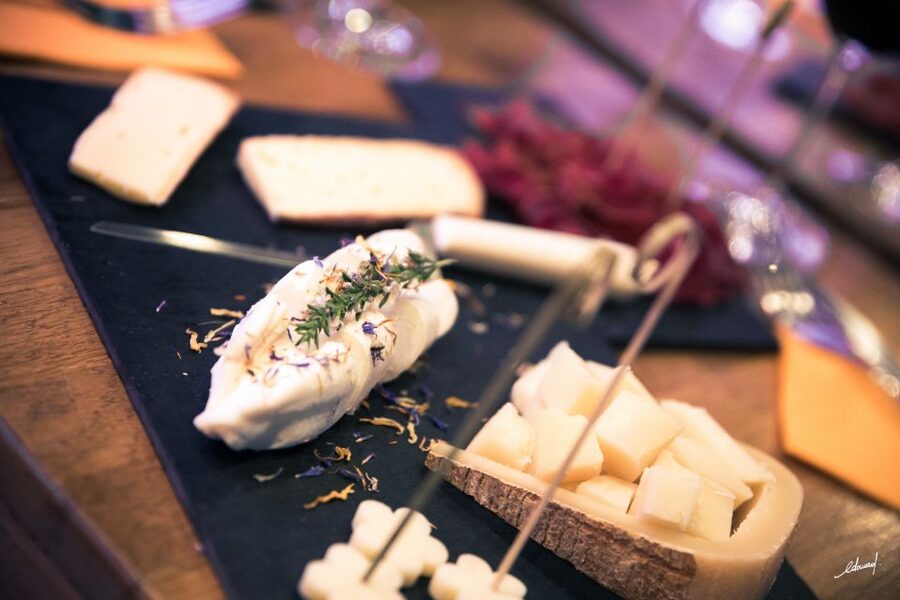
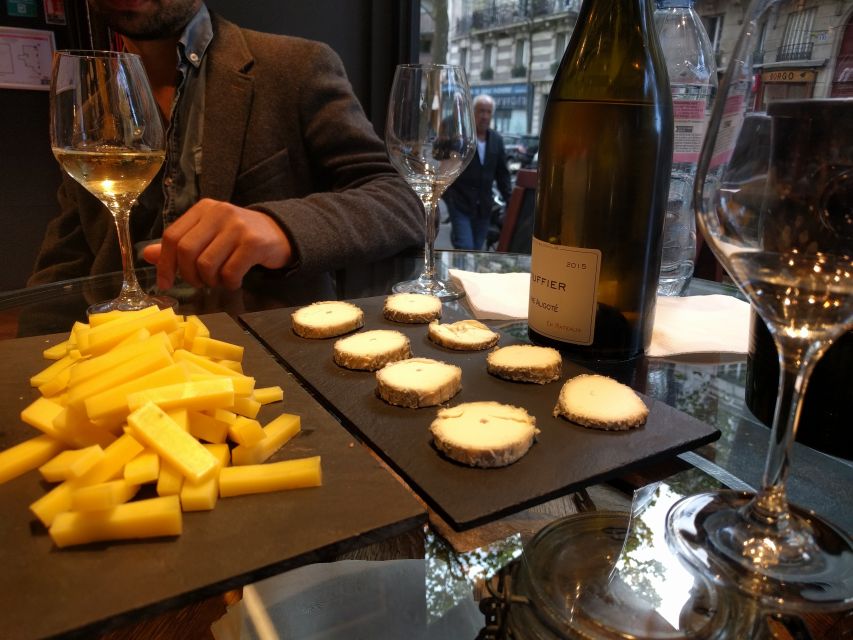
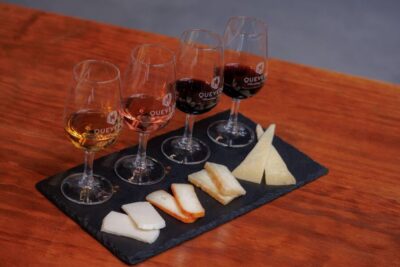
Wine theory becomes much easier to remember once food enters the picture. The tasting pairs the wines with artisan cheese from a nearby cheese shop, along with bread and water for cleansing your palate.
The program describes a hard cheese and a soft cheese, giving you two different textures and flavor profiles to compare. The inclusion details list three types of cheese, while the fuller description emphasizes the hard and soft pairing. If the exact number matters to you, confirm the current selection when booking.
The useful part is not simply eating good cheese. You taste the wine on its own, then with cheese, and notice how the combination changes. A wine that seems sharp by itself may feel rounder with food. Another may show more fruit or become less pleasant with a particular pairing.
Your host points out which choices work best together. George, for example, appreciated being shown the right wine for each cheese. That kind of direct guidance is more helpful than being handed a plate and left to guess.
Fresh bread and water keep the tasting comfortable and help reset your palate. This is a small detail, but it matters during a short session with several wines. The cheese also gives the experience more substance than a series of glasses alone, though you should not treat it as lunch.
More Wine and Cheese Tastings in Paris
- Paris: Wine and Cheese Lunch
★ 4.9 · 596 reviews - Cheese & Wine Tasting in Montmartre with Local Cheesemonger
★ 5.0 · 470 reviews - French Wine, Champagne And Cheese Tasting Paris SECRET WINE DOOR
★ 5.0 · 464 reviews - Paris Wine Tasting plus Cheese Lunch with an Expert Sommelier
★ 5.0 · 424 reviews
What the guide adds to the experience
The host is the key variable in any tasting, and this one has drawn strong praise for its warm, clear instruction. Camille has led sessions described as friendly and full of useful detail. Julian is known for explaining regional origins and grape differences. Constance has guided tastings in English with a calm, welcoming manner, and Leia has also led an informative session.
The important point is not memorizing names. It is the style of teaching. You get explanations about how wine is made, where it comes from, and how to taste it, without needing prior knowledge.
Several hosts have been especially good at answering questions. If you wonder why two wines made from different grapes taste unlike each other, or why a cheese changes the finish, this is the time to ask. The group size makes that possible.
English and French are available. English-language sessions have worked well for international visitors, but check the language shown for your selected time. The guide’s ability to adjust the conversation to the group is part of what makes the tasting suitable for beginners.
The session also works for people who do not usually drink wine. One participant who described himself as not a wine drinker still found the event useful because the host explained the styles and origins clearly. You do not have to arrive already interested in technical wine terms.
Is $76 a fair price?
At $76 per person, this is not the cheapest way to drink wine in Paris. You can buy a bottle and cheese for much less. The value comes from the instruction, the small group, the independent producers, and the chance to taste several styles with guidance.
For a first introduction to French wine, the price is reasonable if you would otherwise struggle to choose bottles or understand regional labels. You are paying for context as much as for the wine. Maps, soil samples, explanations, pairings, bread, and water all form part of the session.
It is also a good fit if you want to shop afterward. The boutique sells the wines, and you may find a bottle worth taking home. This gives the experience a practical ending: you can apply what you learned when choosing a souvenir or planning a bottle with dinner.
The value is weaker if you mainly want a large amount of wine or a substantial meal. The tasting lasts 90 minutes, and the food is cheese, bread, and water rather than a full restaurant menu. You should book it for learning and comparison, not quantity.
How the 90 minutes usually feels
The session has a clear rhythm. You arrive, meet the host, and settle in among the shop’s bottles. The opening explanation covers French regions, grapes, terroir, and the role of soil.
The wines then provide the examples. You taste three selections, listen to the explanation, and compare what you notice. The host may adapt the choices to the group’s interests, which keeps the session from feeling like a memorized speech.
Cheese enters as a working tool. You test how the hard and soft cheeses affect the wines, using bread and water between tastes. Questions can come throughout, and the small group means you are not simply listening from the back of a crowded room.
The final part leaves you with a better sense of what you prefer. You may even find a bottle to buy, as several participants have done. The session does not promise mastery, but it can replace vague impressions with a few solid reference points.
Because the timing is compact, pay attention from the start. You will get more from the session if you taste slowly and ask questions instead of treating it as a quick pre-dinner drink.
Who should book this tasting?
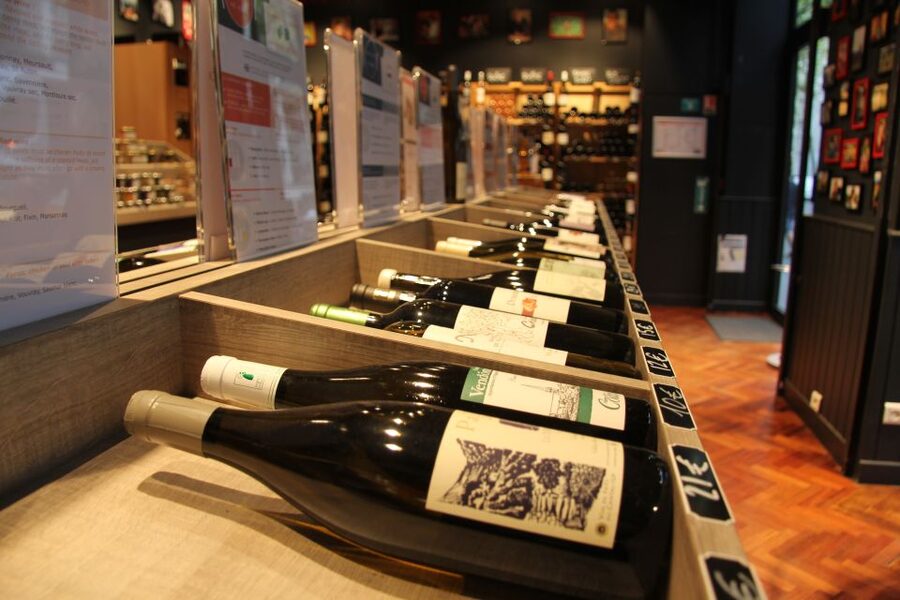
I would recommend it to first-time visitors who want a useful introduction to French wine without committing to a full-day excursion. It also suits couples, friends, and solo participants who enjoy food, conversation, and a small setting.
Basic wine drinkers may get the most from it. You learn enough to make future choices with greater confidence, but the tone remains approachable. You do not need to know French appellations or grape names before arriving.
It is also a good choice for someone who does not usually drink wine but wants to understand it better. The spittoon lets you taste without consuming every pour, and the guide can explain the wines at a comfortable level.
I would think twice if you need a full meal, easy toilet access, or a highly predictable wine list. The meeting point may vary by booking option, and the exact wines can change according to the group and the shop’s selection. Check those details before paying.
Cancellation is flexible up to 24 hours before the activity for a full refund, and you can reserve now and pay later. Those terms help if your Paris schedule is still shifting, but they do not replace checking the meeting point and starting time.
Should you book it?
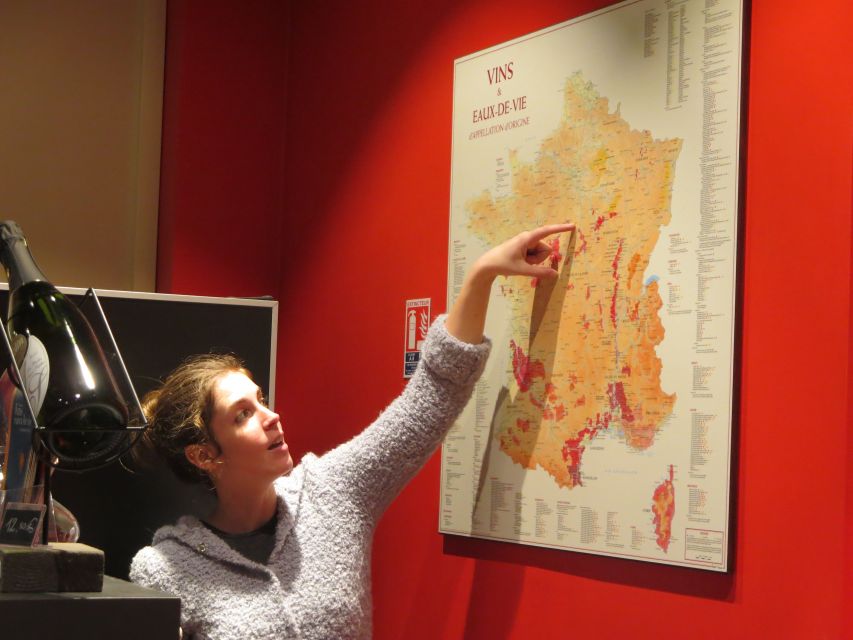
Book this tasting if you want to understand why French wine is so varied, taste bottles from small producers, and learn through food rather than a lecture alone. The maps, soil samples, cheese comparisons, and small group make the 90 minutes feel purposeful.
Skip it if you want a long restaurant meal or a broad tour of Paris. This is a compact wine lesson in a shop, with limited facilities and a flexible selection of bottles. For $76, it offers good value to curious beginners and food lovers who want to leave Paris able to choose French wine with more confidence.
FAQ
How long does the Paris wine and cheese tasting last?
The experience lasts 90 minutes.
How many wines are included?
The standard tasting includes three types of wine. A past session included four wines and an extra surprise tasting, but additional pours are not guaranteed.
How much does the tasting cost?
The listed price is $76 per person.
How many people are in the group?
The group is limited to eight participants.
Which languages are available?
The live guide can lead the experience in English or French.
What food is included?
The tasting includes French cheeses, bread, and water. The description specifies a hard cheese and a soft cheese, while the inclusion details list three types of cheese, so the exact number may vary.
Can I spit out the wine?
Yes. A spittoon is provided for anyone who prefers not to swallow every tasting pour.
Can I cancel for a refund?
You can cancel up to 24 hours in advance for a full refund. You can also reserve now and pay later.
Freshly cut around Paris
- Paris: Wine and Cheese Pairing★ 5.0 · 4 reviews
- French Wine and Cheese Master Class Near the Eiffel Tower★ 5.0 · 6 reviews
- Paris Wine and Cheese Tastings Class near Le Marais★ 5.0 · 4 reviews
- Paris Wine with Cheese Pairing & Tasting Small Group Class★ 5.0 · 6 reviews
- Private wine tour to Sancerre vineyards from Paris with Sommelier★ 5.0 · 11 reviews
- Paris Marché d’Aligre Walking Tour with Chocolate and Cheese Tasting★ 3.5 · 24 reviews
- Paris Wine and Cheese Pairing Private Masterclass in a Bistrot★ 5.0 · 7 reviews
- Wine and cheese tasting in Bastille★ 5.0 · 5 reviews
Wine and Cheese Tastings, plate by plate.
Paris: Montmartre Cheese, Wine & Pastry Guided Walking Tour
Read our review →
Paris Le Marais Food Tour With 10+ Tastings, Cheese, Wine & More
Read our review →Cheese lists with this tasting