
Review · SPAIN
Visit and wine tasting with sausage and BODEGA PIRINEOS cheese
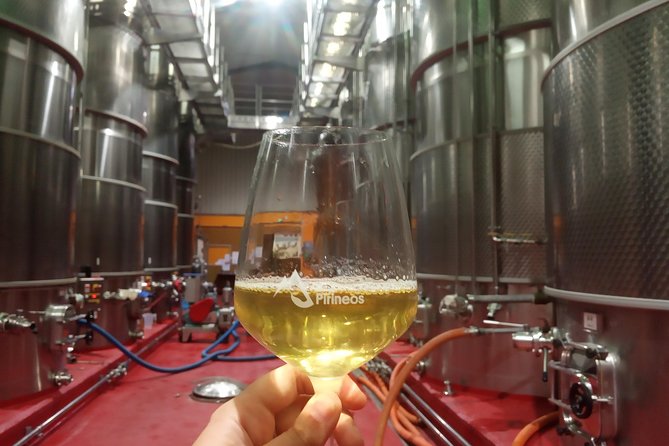
The best part of this Bodega Pirineos visit is its behind-the-scenes route through the working winery. You move from the grape entrance and processing area to the old cellar, barrel room, underground bottle racks, and bottling machine before sitting down to taste four wines.
I like two things here. First, the tour connects the wine in your glass to the equipment and rooms that produced it. Second, the tasting includes local cheese and sausage, so you get a better sense of how wine fits into Aragón’s food culture. The only drawback is the short 90-minute schedule, which leaves little room for a slow, leisurely cellar visit.
Key points
- Six working winery areas: See grape intake, processing, the old cellar, barrels, underground bottle storage, and bottling equipment.
- Four wines at the finish: Taste a rosé, a white, and two reds with commentary.
- Aragón on the tasting plate: Local cheese and sausage make this more than a drink-only stop.
- Small maximum group: The tour accepts no more than 20 people, a useful limit for a cellar walk.
- Named local guides: Jorge and Álvaro are among the staff associated with the visit.
- Good short-stop value: At $24.14 per person, the price covers the winery visit, four wines, and food pairings.
A practical winery visit near Barbastro
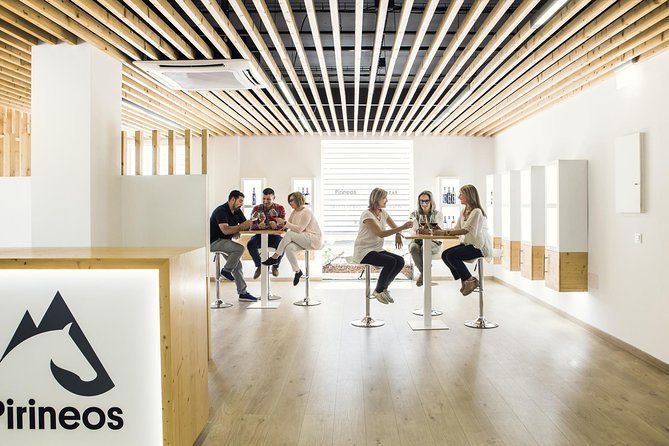
Bodega Pirineos sits on the road between Barbastro and Naval in Huesca Province, Aragón. The meeting point is Carretera Barbastro-Naval, A1232, kilometer 3.5, at Bodega Pyrenees, S.A.
This is a destination-style visit rather than a walking tour of Barbastro. You need to reach the winery on your own, and the activity starts and finishes at the same place. That arrangement works well if you are already exploring the Somontano wine area by car, but it is less useful if you are staying in town without transport.
The visit lasts about one hour and 30 minutes. That is enough time for a clear introduction to the winery and a proper tasting, without taking up an entire afternoon. I see the timing as a strength for a larger Aragón itinerary. You can fit it between other stops instead of building your whole day around wine.
The maximum group size is 20 people. That is not an intimate private tasting, but it is small enough to keep the guide’s explanation focused. The experience is offered in English, an important point if you do not speak Spanish.
More Wine and Cheese Tastings in Spain
- Tacoronte: Guided Winery Tour with Wine and Cheese Tastings
★ 4.6 · 481 reviews - Tenerife Bodegas Monje Winery Tour with Wine and Cheese Tasting
★ 4.5 · 121 reviews - Santiago de Compostela: Cheese and Wine Tasting Experience
★ 5.0 · 65 reviews
From grape intake to the processing area
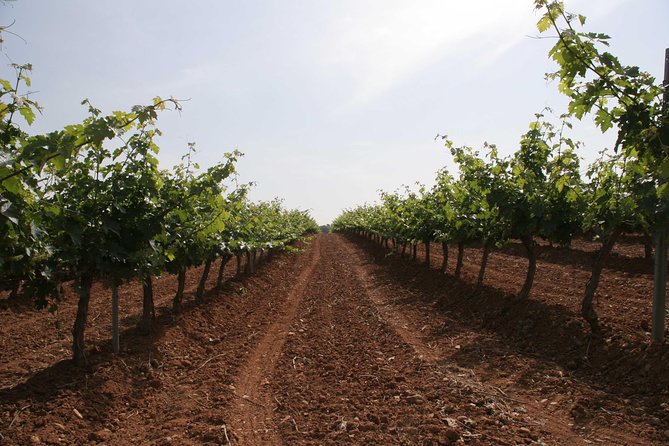
The route begins where the grapes enter the winery. This first stop gives you the practical starting point for understanding wine production. Grapes do not simply arrive and become bottles. They pass through a chain of receiving, handling, and processing stages, and the visit lets you follow that path inside the building.
Next comes the processing area. Here, the guide explains how the winery handles the grapes before the wine reaches its later stages. You will not just hear tasting terms. You will see the spaces and machinery that make the finished wines possible.
I like this order because it gives the tour a sensible rhythm. You start with the raw material, follow the production process, then move toward storage and bottling. If you have visited wineries where the tour jumps straight to a polished tasting room, this more practical route should feel useful.
The level of technical detail can depend on the guide and the group’s questions. The staff members Jorge and Álvaro are specifically associated with the visit, and the strongest feedback about the experience points to clear explanations and a warm manner. Still, you should expect a guided introduction rather than a specialist winemaking class.
The old cellar and barrel room
The old cellar adds a different mood to the visit. After the modern processing areas, you move into a space connected with the winery’s earlier methods and storage traditions. It helps put the current operation into context without turning the tour into a lecture about the past.
The barrel room is the place to connect storage with flavor. Wine changes as it rests, and barrels are part of that process. The guide can explain how this stage fits between production and the final bottle, giving you a better reason to pay attention when the red wines appear at the tasting.
You should not expect an enormous historic cellar complex from the information provided. The visit is focused on the winery’s facilities, not on a long architectural tour. That is fine for a first introduction, especially if you want the basics in a manageable format.
The sequence also makes the tasting more meaningful. By the time you reach the wines, you have seen the spaces involved in making and storing them. You can ask better questions because you have already watched the process move from grapes to barrels and bottles.
Underground bottle racks and the bottling machine
The underground bottle rack is one of the more distinctive parts of the route. Bottle storage is easy to ignore when you see a finished product on a shop shelf, but this stop shows the period between bottling and purchase. It reminds you that wine has another stage after the barrel room.
The bottling machine brings the visit back to the practical end of production. You see the equipment used to prepare the wine for sale, which rounds out the tour’s movement through the winery. Grape intake, processing, storage, bottle racks, and bottling create a complete production story.
These details matter because they give you something to look at during the explanations. A winery tour can become repetitive if it only consists of standing in a tasting room while someone lists grape varieties. Here, the route changes from area to area and shows how the operation works.
The downside is that a compact schedule means each facility receives limited time. If you want a slow look at every machine or a long technical discussion about production, 90 minutes may feel brief. For most people, though, the sequence should provide a solid overview without too much waiting around.
Same region, a different wheel:
- Guided Visit to the Estrella Galicia Museum with Cheese Pairing
★ 5.0 · 218 reviews - Fuerteventura: Tickets to Salt, Cheese and Windmill Museums
★ 4.4 · 129 reviews - Fuerteventura: Artisan Goat’s Cheese Making at Local Farm
★ 4.9 · 112 reviews - Menorca: Guided visit to the Subaida cheese factory,
★ 4.5 · 96 reviews
Four wines with Aragón cheese and sausage
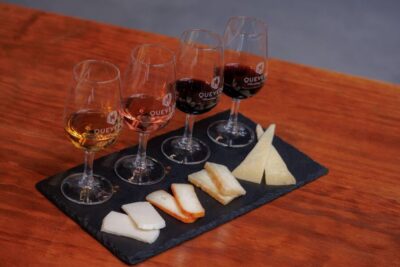
The tasting is the payoff, but it is also where the food makes a real difference. You taste four wines: one rosé, one white, and two reds. That range lets you compare several styles instead of judging the winery from a single pour.
The tasting is commented, so you receive guidance as you drink. This is useful if you are unsure how to compare a white with a rosé or how to think about two different reds. You can focus on what changes from glass to glass instead of trying to invent a tasting system of your own.
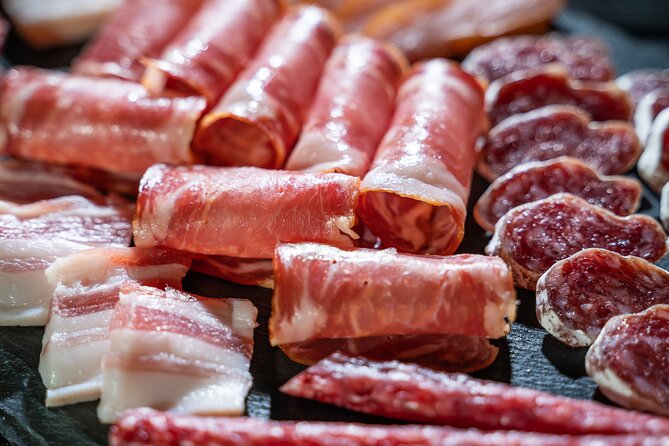
Local cheese and sausage accompany the wines. I especially like this feature because it places the tasting in Aragón rather than making it feel like a generic wine flight. The food is not just decoration. It gives you a way to test how the wines work with salty, savory flavors.
The combination should suit beginners and experienced wine drinkers alike. If you are new to wine tasting, the four-style lineup gives you an easy comparison. If you already know what you like, you can use the tasting to identify a favorite style and ask more pointed questions.
One useful detail is that you may be able to ask for another taste of the wine you prefer after the formal tasting. Treat that as a possibility rather than a guaranteed part of the package, since the exact service can depend on the winery and the time available. It is still a good reason to pay attention to which bottle suits you best.
The tasting is likely to be the most social part of the activity. The food gives you something to discuss, and the relatively small group keeps the stop from feeling entirely anonymous. At the same time, you should remember that this is a guided tasting, not a full meal. The cheese and sausage accompany the wines rather than replace lunch.
Why the $24.14 price makes sense
At $24.14 per person, the price is reasonable for a short winery experience that includes both a facility visit and four wines with food. You are not paying only for samples. The fee also covers the guide’s explanation and access to working areas that you would not normally see on your own.
Value depends on how you use the tour. If you are already in the Somontano area, this is an efficient way to spend 90 minutes and gain a better understanding of local wine. If you must make a long detour just to reach the winery, the cost of transport may matter more than the ticket itself.
I would compare this with the price of a similar tasting at a restaurant or wine shop. Here, you receive four wines, local pairings, and a production tour. That makes the package appealing for someone who wants both context and tasting, not just a glass poured at a counter.
The price also works well for couples and small groups because it is easy to understand what is included. There are no separate facility and tasting charges listed in the provided details. You get one compact experience with the tasting at the end.
Who will enjoy this most
I would recommend the tour to anyone interested in Spanish wine but short on time. The clear route through the winery gives you a useful introduction without requiring a full day of cellar visits.
It also suits food-minded visitors. The local cheese and sausage make the tasting more connected to Aragón’s table, and the savory pairings give you a simple way to compare the wines.
Families and mixed-interest groups may find the 90-minute length helpful. Not everyone needs to be a serious wine fan to enjoy seeing the production rooms and bottling equipment. Most people can participate, and service animals are allowed.
This is less suited to someone looking for a private, highly specialized tasting. The group can reach up to 20 people, and the experience follows a set route. You should also choose another activity if you want a long lunch, extensive vineyard walking, or a full-day wine course, since none of those are part of the stated program.
The English-language option makes the visit more accessible to international visitors. If you speak Spanish, you may also appreciate the chance to connect with local staff, including Jorge and Álvaro, whose friendly service is part of the experience’s appeal.
Timing, booking, and cancellation
Confirmation arrives within 48 hours of booking, subject to availability. Since the visit is often reserved about 12 days ahead, I would book before your Aragón plans are fixed if the timing matters to you.
You receive a mobile ticket, and the activity begins and ends at Bodega Pirineos. Plan around the full 90 minutes rather than assuming the tasting can be rushed if you have another appointment immediately afterward.
Free cancellation is available if you cancel at least 24 hours before the local start time. Canceling later than that does not qualify for a refund, and changes made inside the 24-hour window are not accepted.
The meeting details deserve a careful check because the location appears under both Bodega Pirineos and Bodega Pyrenees in the supplied address. Use the full road address, A1232, kilometer 3.5, between Barbastro and Naval, when planning your route.
My take on the full experience
I like the balance here. The visit does not rely only on a polished tasting. It shows the grape entrance, processing area, old cellar, barrel room, underground bottle racks, and bottling machine, then uses four wines and regional foods to make those details easier to understand.
The strongest feature is the connection between the tour and the glass. You see where the wine starts, how it is handled, where it rests, and how it reaches the bottle. Then you taste a rosé, a white, and two reds while the information is still fresh.
The main limitation is scope. This is a concise winery visit, not a large estate tour or a full food experience. The group limit of 20 helps, but you will still share the route and tasting with other people.
For $24.14, that trade-off is fair. You get a useful local stop, a friendly guided explanation, four wines, and Aragón cheese and sausage without committing half a day. I would keep the rest of your schedule flexible enough to enjoy the tasting, but I would not expect an elaborate meal or a long technical seminar.
Should you book Bodega Pirineos?
Book it if you are near Barbastro, want to understand how a winery works, and appreciate a tasting that includes local food. The four-wine lineup gives you variety, while the route through the production and storage areas gives the visit substance.
Skip it if reaching the winery would require a difficult detour or if you want a private tasting with extensive vineyard time. For most visitors exploring Aragón’s wine country, though, this is a well-priced, well-contained introduction with enough detail to make the 90 minutes worthwhile.
FAQ
Where does the Bodega Pirineos tour begin?
The tour begins at Bodega Pyrenees, S.A., on Carretera Barbastro-Naval, A1232, kilometer 3.5, 22300 Barbastro, Huesca, Spain.
How long does the experience last?
The visit lasts approximately one hour and 30 minutes.
What wines are included in the tasting?
The tasting includes four wines: one rosé, one white, and two reds.
What food is served with the wine?
The wines are accompanied by cheeses and sausages from the local area.
Is the experience offered in English?
Yes. The activity is offered in English.
How many people can join the tour?
The maximum group size is 20 people.
Can I cancel for a full refund?
Yes, if you cancel at least 24 hours before the experience start time. Cancellations made less than 24 hours in advance are not refundable.
Freshly cut around Spain
- Cheese Factory Workshop with Wine Tasting in Requena, Valencia★ 4.5 · 3 reviews
- Guided Tour Montesdeoca Cheese Factory – Cheese and Wine Tasting★ 4.5 · 6 reviews
- Hike the Cork Oak trail and try some Delicious Cheese★ 5.0 · 12 reviews
- Discover the Art of Idiazabal Cheese in the Basque Country★ 4.5 · 9 reviews
- Private Basque Cheese & Txakoli Wine Tour from San Sebastian★ 5.0 · 20 reviews
- Menorca: Cheesemaking and Farm-Fresh Product Tasting★ 5.0 · 29 reviews
- Madrid Bike Tour with Churros and Wine, Ham, and Cheese Upgrade★ 5.0 · 8 reviews
- Mallorca Wine and Cheese Tasting★ 5.0 · 29 reviews
Wine and Cheese Tastings, plate by plate.
Paris: Montmartre Cheese, Wine & Pastry Guided Walking Tour
Read our review →
Paris Le Marais Food Tour With 10+ Tastings, Cheese, Wine & More
Read our review →Cheese lists with this tasting