
Review · AMSTERDAM
Cheese making workshop next to De Hallen, heart of Amsterdam
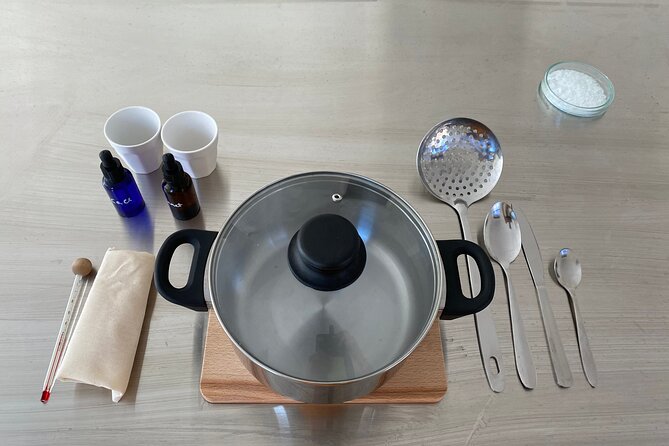
Making cheese in Amsterdam is a fine way to get beyond the usual canal cruise and museum circuit. At De Kaasserie, near De Hallen, you learn to make two fresh cheeses using different methods: one with rennet and one with acid. The class is hands-on, calm, and small enough for real questions.
I like the small maximum group of eight, which gives the session a personal feel. I also like that you take home both cheeses, basic tools, and recipes by email, so the class can continue in your own kitchen. The main drawback is the price, $144.49 per person, which is a serious spend for a three-hour activity.
Key points to know before booking
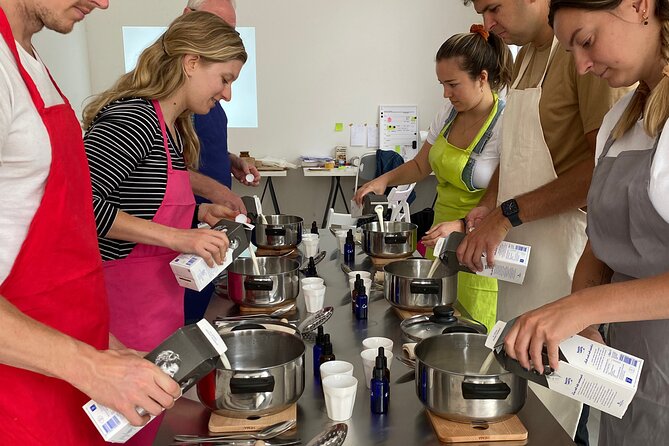
- Two cheese-making methods: Learn how rennet and acid create different fresh cheeses.
- A maximum of eight people: The small group suits beginners who want help as they work.
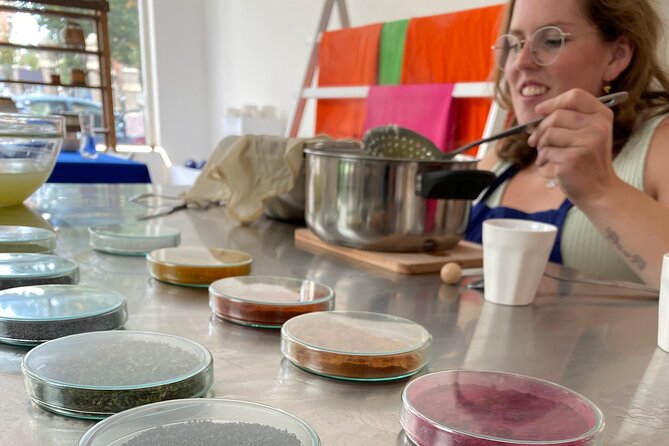
- Herbs and colour are part of the fun: You can experiment with the acid-coagulated cheese.
- You take home your results: Both homemade cheeses and basic tools are included.
- A tasting finishes the class: Sample homemade cheeses with spices, herbs, and a drink.
- Convenient west Amsterdam location: Meet at De Kaasserie on Bellamystraat, close to De Hallen and Ten Katemarkt.
What happens at De Kaasserie near De Hallen
The class begins at De Kaasserie, at Bellamystraat 8 in Amsterdam’s 1053 BL postal area. The meeting point is next to De Hallen, a useful landmark in west Amsterdam, and the activity ends back at the same address.
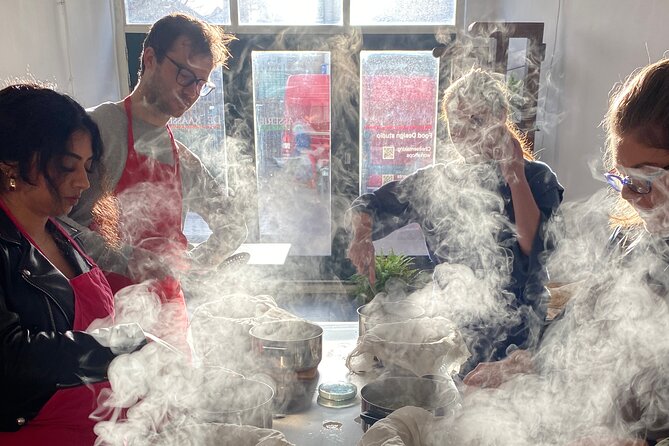
The setting is a food design studio rather than a large cooking school. That matters. With no more than eight people, you are not lost at the back of a room or left watching someone else do the work. You should expect to handle the ingredients and tools yourself, with guidance as you go.
The tone is beginner-friendly. You do not need prior cheese-making experience, and the ingredients and materials are supplied. The session is offered in English, which makes it practical for an international visit to Amsterdam.
The experience takes about three hours. That gives the instructor enough time to explain the process, let you make two cheeses, and finish with a tasting. It is not a quick demonstration followed by a sample. The point is to give you a usable introduction to the craft.
More Cheese Making Workshops in Amsterdam:
- Private Farmhouse Cheesemaking Workshop
★ 3.5 · 2 reviews - Paris Cheesemaking Workshop including Wine and Cheese Tasting with an Expert
★ 5.0 · 141 reviews - Dijon: Cheese and Burgundy Wine Tasting Workshop
★ 4.8 · 122 reviews
Two cheeses, two ways to understand the craft
The first cheese is coagulated with rennet. The second is coagulated with acid. You do not need to arrive knowing what either term means. The value of the class is seeing how two different approaches change the way milk becomes cheese.
Rennet and acid are not simply two ingredients on a list. They represent different ways of controlling texture and flavour. By making both in one session, you get a clearer sense of the choices involved in cheese-making than you would from preparing a single recipe.
The process also gives the lesson a useful rhythm. You learn a method, work through it, and see the result. Then you repeat the basic idea with a different technique. For a beginner, that comparison can make the subject feel manageable rather than mysterious.
The supplied information does not specify the exact cheese styles or milk used, so you should not book expecting a particular named cheese. What you can count on is making two fresh cheeses and learning the basic methods behind them.
Adding herbs and colour to the acid-coagulated cheese
The more creative part comes when you finish the acid-coagulated cheese. You are encouraged to experiment with herbs and colours, which turns a basic kitchen process into something personal.
This is a good feature for first-time cheese makers. You are not only following instructions and producing a standard result. You can think about how seasoning and appearance affect the finished cheese. The class gives you a starting point, then leaves room to make choices.
The activity is especially well suited to people who enjoy cooking without needing a formal culinary background. If you like tasting ingredients as you work, testing combinations, or bringing home something made with your own hands, this part will likely be a highlight.
There is also a practical limit here. You are working within a three-hour class, so the experiment is an introduction rather than a full course in flavour development. Think of it as a first set of ideas to try again later with the recipes you receive.
The tasting: homemade cheese with spices and herbs
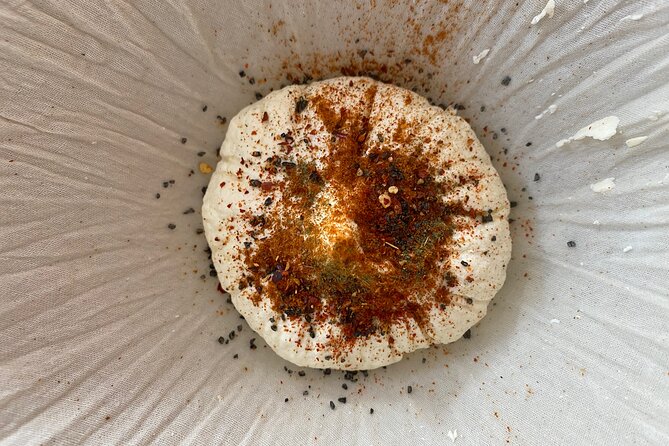
The final tasting includes cheeses made by the instructor, served with spices and herbs, along with a drink. This is more than a snack at the end. It gives you a chance to compare the cheeses and think about how they work with different seasonings.
A tasting also helps connect the making process with eating. You have just spent time handling ingredients and following a method. Sitting down to taste cheese afterward lets you consider the texture, flavour, and possible uses at home.
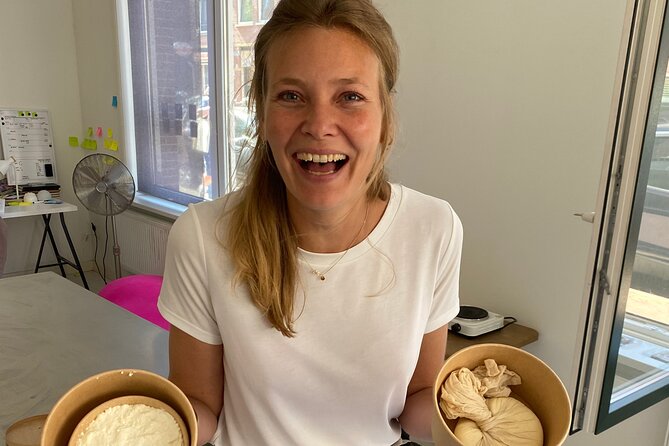
The session is described as calm and peaceful, with plenty of laughter and patient instruction. Those details matter because cheese making can feel unfamiliar at first. A relaxed teacher can make it easier to ask questions, correct a mistake, and keep going rather than worry about getting every step perfect.
No specific guide name is provided, so you should not expect a named celebrity chef or a large teaching team. The class is led through De Kaasserie, and the personal approach is part of its appeal.
More cheese tours around Amsterdam:
- Amsterdam Classic Saloon Boat Cruise with Drinks and Cheese
★ 5.0 · 31,825 reviews - Amsterdam: Classic Saloon Boat Cruise with Cheese & Wine
★ 4.6 · 27,035 reviews - Amsterdam: Guided Zaanse Schans, Windmills & Cheese Tour
★ 4.4 · 4,826 reviews - Zaanse Schans Windmills, Clogs and Dutch Cheese Small-Group Tour from Amsterdam
★ 4.5 · 2,369 reviews
What you take home after three hours
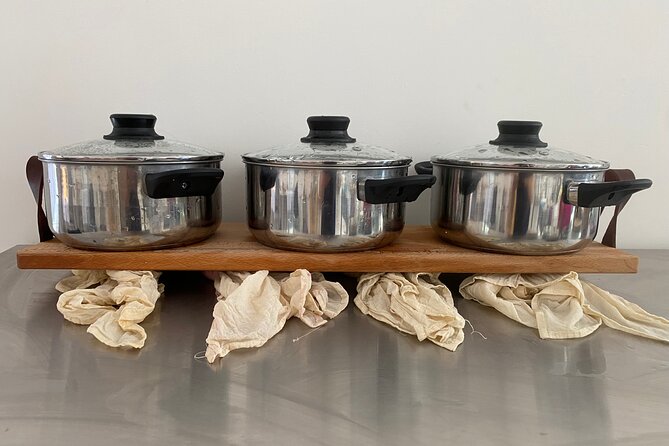
You leave with the two cheeses you made during the class. That gives the experience a useful souvenir, but one that is meant to be eaten rather than placed on a shelf.
You also receive basic tools and recipes by email. This is where the price has some added value. You are not paying only for the time spent in the studio. You are getting an introduction to a craft, materials to help you continue, and written guidance for future attempts.
The recipes also give the class a longer life. You can try the process again at home and adjust the herbs, colours, or other elements as you gain confidence. The experience is designed to open the door to home cheese making, not simply fill an afternoon in Amsterdam.
The exact tools included are not listed, so it is sensible to view them as basic starter equipment rather than a complete home dairy kit. You should not assume that every item needed for advanced cheese making will be supplied.
Why the small group makes a difference
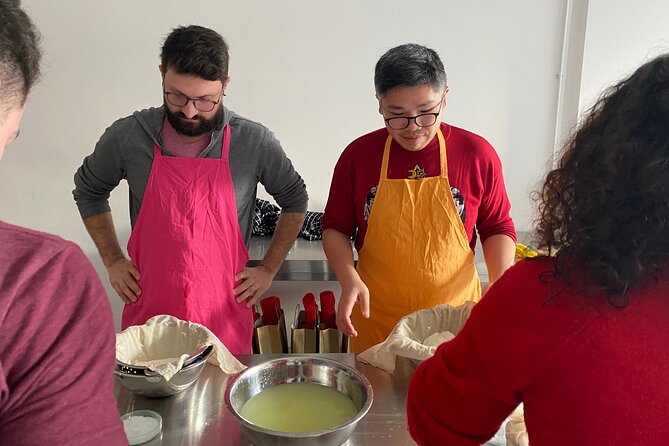
The maximum group size is eight. I consider that one of the strongest features of the experience, especially for beginners.
Small classes work best when the activity involves your hands. You may need to check a stage of the process, ask why a texture looks different, or get help with a technique. In a group of eight or fewer, the instructor has a better chance of seeing what you are doing and responding directly.
The size also suits solo visitors and couples who want to meet other people without joining a large organized group. One of the clearest themes in the feedback is the pleasure of meeting others while working together. The class has a social side, but it is centered on making cheese rather than forced conversation.
At the same time, a small class can feel more intimate than a standard sightseeing activity. If you prefer to remain completely private or simply watch rather than participate, this may not be the right choice. The experience expects you to take part.
De Hallen and Ten Katemarkt as part of the setting
The listed route includes De Hallen Amsterdam and Ten Katemarkt. The activity itself begins and ends at De Kaasserie on Bellamystraat, so these places are best understood as useful location markers for the neighborhood rather than separate sightseeing stops with a long guided tour.
De Hallen helps place the class in west Amsterdam, away from the most concentrated canal-belt crowds. Ten Katemarkt is another local reference point in the same general area. If you are planning your day, you can use the class as an anchor while spending time around De Hallen and the market before or after the workshop.
The supplied details do not promise a market visit, food crawl, or guided walk through either place. Do not book this expecting a full neighborhood tour. The main event is cheese making inside the studio.
The location is still useful for a practical reason: the class is near public transportation. You can reach the meeting point without treating it as a major expedition across the city. Check your route before leaving, since the class has a fixed start time and the booking information does not specify a late-arrival procedure.
Is $144.49 a fair price?
At $144.49 per person, this is not a bargain activity. You need to decide if the hands-on instruction and take-home items justify the cost for you.
The value is stronger if you care about food, enjoy learning by doing, or want a lasting skill from your Amsterdam visit. The fee includes ingredients, materials, two cheeses, basic tools, a tasting, a drink, and recipes by email. You are also paying for a very small group and roughly three hours of instruction.
The value is weaker if you mainly want a taste of Dutch cheese or a short food stop. You can sample cheese elsewhere in Amsterdam for much less. This class is about learning a process, not simply eating a generous cheese board.
I would also compare it with the cost of other hands-on cooking activities in Amsterdam before booking. The strongest reason to choose this one is its focus. It offers a clear introduction to a specific craft, with something tangible to take home and repeat later.
Who will enjoy this Amsterdam workshop most?
I would recommend the class to:
- Food-focused visitors who want more than a standard tasting.
- Beginner cooks looking for a friendly introduction to cheese making.
- Couples and friends who like practical activities they can do together.
- Solo visitors who enjoy meeting a few people in a relaxed setting.
- Creative home cooks who want to experiment with herbs and colour.
- Repeat visitors to Amsterdam seeking a local activity near De Hallen.
It may be less suitable if you want a major sightseeing experience, a large social event, or a professional-level cheese-making course. The class is compact and introductory. Its strength is access: you get to try the craft without needing specialist knowledge.
Families with children should check the booking details before assuming the class is suitable for young participants. The information provided does not state a minimum age or child policy.
Practical details that matter
The activity is offered in English and includes a mobile ticket. Confirmation is received when you book. Service animals are allowed, and the meeting point is near public transportation.
The class requires a minimum number of participants. If that number is not reached and the activity is canceled, you will be offered another date or experience, or receive a full refund.
You can cancel for a full refund up to 24 hours before the start time. Changes or cancellations made less than 24 hours before the local start time are not accepted for a refund. Keep that deadline in mind if your Amsterdam plans are still shifting.
The activity is booked, on average, 58 days ahead. That does not guarantee that every date fills early, but it is a useful warning not to leave a small-group class until the last day of your trip.
Should you book this cheese-making class?
Book it if you want to learn a real food skill, work in a small group, and take home two cheeses, starter tools, and recipes. The patient, relaxed format and chance to add herbs and colour make it more personal than a simple tasting.
Skip it if $144.49 feels too high for a three-hour activity or if you want a broader tour of Amsterdam. This is a focused workshop, not a general food tour. For cooks, curious eaters, and visitors who value an experience they can repeat at home, it offers a thoughtful change of pace near De Hallen.
FAQ
Where does the cheese-making class begin?
It begins at De Kaasserie, Bellamystraat 8, 1053 BL Amsterdam, Netherlands.
Where does the activity end?
The activity ends back at the meeting point at De Kaasserie.
How long does the workshop last?
The workshop lasts approximately three hours.
What language is the class offered in?
The class is offered in English.
How many people can join the class?
The maximum group size is eight travelers.
What will I make during the workshop?
You will make two types of fresh cheese. The first is coagulated with rennet, and the second is coagulated with acid.
Can I customize one of the cheeses?
Yes. When finishing the acid-coagulated cheese, you are encouraged to experiment with herbs and colours.
Do I take the cheese home?
Yes. You may take both cheeses you make during the class.
Are ingredients and materials included?
Yes. All ingredients and materials are included. You also receive basic tools and recipes by email.
Is cancellation free?
Yes. You can cancel up to 24 hours before the experience start time for a full refund. Cancellations or changes made less than 24 hours before the start time are not accepted for a refund.
Freshly cut around Amsterdam
- Amsterdam: Zaanse Schans E-Bike Tour with Windmills & Cheese★ 4.5 · 12 reviews
- Zaanse Schans & Volendam Private Tour: Windmills and Cheese★ 5.0 · 5 reviews
- Amsterdam: Experience Edam, a Cheese Tasting, and a Windmill★ 4.5 · 7 reviews
- Zaanse Schans Windmills, cheese and clogs and Volendam tour from Amsterdam★ 5.0 · 14 reviews
- Admission to The Story of Edam Cheese Museum★ 4.0 · 9 reviews
- Private Tour to Tulips, Keukenhof, Windmills & Cheese Farm★ 5.0 · 4 reviews
- Private Guided Highlights of Holland Tour with Cheese Tasting★ 5.0 · 4 reviews
- Private Keukenhof, Gardens, Windmills, cheese tour from Amsterdam★ 5.0 · 4 reviews
Cheese Making Workshops, plate by plate.
Troodos Mountains Halloumi Making: All Inclusive Workshop & Tour
Read our review →
Central Madrid: Sangría Workshop & Tasting with Local Cheese
Read our review →
Cheese lists with this tasting