
Review · GREECE
Ios: Cooking Experience with Cheese and Wine Tasting
The best part of this Ios experience is that you do not simply watch a cooking show. You help gather ingredients, prepare a local dish with Thia Froso, and cook it in a traditional stone stove. The morning then moves through the farm, a rural-life museum, and a generous tasting table.
I like the small group of no more than eight, which should make the cooking hands-on rather than a distant demonstration. I also like the mix of food and island history: goats, chickens, olive trees, cheese-making, and exhibits about daily life before tourism and modern technology changed Ios.
The main drawback is the price, $154.88 per person, for about two and a half hours. It is a serious splurge for a short activity, and the outdoor parts depend on good weather. Still, the meal you cook is packed for you to eat later, perhaps on the beach, which adds some useful value.
Key points at a glance
- Cook in a stone stove: Help prepare a surprise local recipe and cook it in the traditional way.
- Meet the farm behind the food: Visit the olive grove, chicken house, and goats at Diaseli.
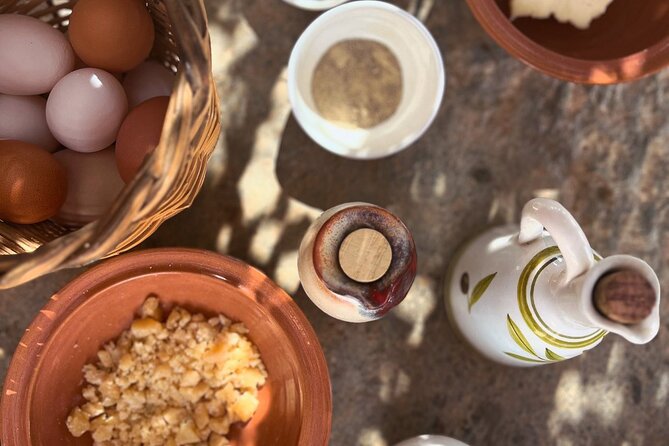
- Taste across the island pantry: Sample about nine cheeses, two kinds of honey, fig marmalade, wine, liqueur, dried fruit, breadsticks, and tomatoes with olive oil.
- See Ios beyond the beaches: The museum explains rural island life through the centuries.
- Small and personal: The group is capped at eight people, with the experience offered in English.
- Take your dish with you: Your cooked meal goes into a special box for later.
Cooking a surprise Ios dish with Thia Froso
The morning begins at 9:00 a.m. at Diaseli Traditional Cheesery and Museum, at the Diaselia junction between Psathi and Manganari. From there, the experience centers on a local recipe chosen as a surprise. That keeps the cooking from feeling like a fixed restaurant class built around a dish you may already know.
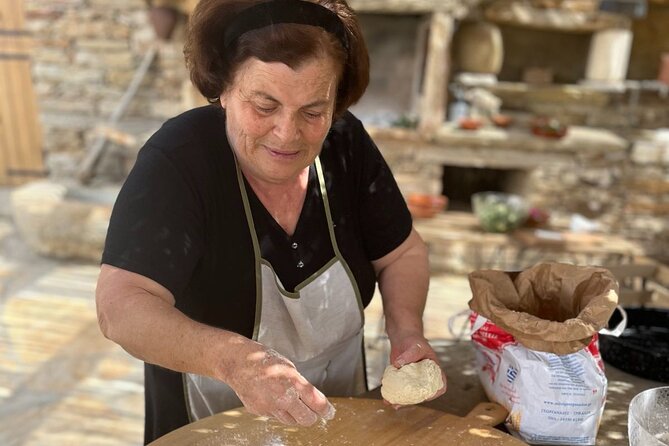
Thia Froso, described as the family grandmother, leads the cooking demonstration. You help her prepare the recipe, rather than standing back while someone else does all the work. That distinction matters. You get a closer look at the ingredients, the method, and the practical rhythm of traditional home cooking.
You then cook the dish in a stone stove, as locals do. The stove is more than a photo opportunity. It connects the food to the older farm routine that the museum explains later. You are not only learning a recipe, but also seeing how a meal fits into island life, available ingredients, and household work.
The exact dish is not announced in advance, so this class suits you if you enjoy a little surprise. It may be less suitable if you want to choose the menu, avoid particular ingredients, or follow a very specific cooking style. The supplied details do not identify the recipe or offer dietary substitutions, so ask before booking if that matters to you.
The small group size should help here. With no more than eight people, you have a better chance to take part, ask questions, and get close enough to see what is happening. Helen is praised for being patient, funny, and kind, qualities that count in a hands-on class where several people may be working at once.
More Wine and Cheese Tastings in Greece:
- From Chania: Olive Oil, Wine, Cheese & Honey Tasting Tour
★ 4.6 · 490 reviews - Athens: Acropolis Wine Tasting with Cheese and Olives
★ 4.9 · 337 reviews - Cheese & Wine Trails – Naxos
★ 5.0 · 29 reviews
From olive grove to chicken house
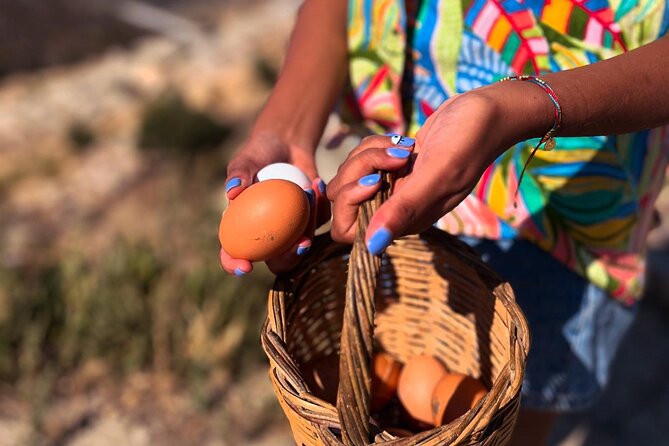
Part of the appeal is the way the experience moves beyond the kitchen. You visit a new olive grove, the chicken house, and the goats. These stops give you a direct look at the sources behind the food on the tasting table.
The olive grove is especially useful context for the tomatoes and olive oil served later. You see the trees before tasting the oil, which makes the final plate feel tied to this particular farm rather than assembled from anonymous products. The information provided does not promise an olive-oil production demonstration, so think of this as a farm visit, not a full agricultural workshop.
The goats connect naturally to the cheesery. Ios food traditions are easier to understand when you see the animals and the rural setting alongside the cheeses. You will not just hear that cheese is part of island life. You will see one part of the working setting that supports it.
The chicken house adds another small piece of the farm picture. It is not presented as a major attraction, and you should not expect a long animal-handling session. Its value is in showing how several simple food sources fit together on a family property.
The outdoor portions also mean you should plan for changing conditions. The activity requires good weather, and poor weather can lead to a new date or a full refund. That policy is sensible for a tour built around an olive grove, animals, and movement between buildings, but it means you should avoid scheduling it as the one fixed event around which your entire Ios trip depends.
A museum about Ios before mass tourism
The guided museum visit adds depth to what might otherwise be a pleasant food morning. The exhibits focus on rural life in Ios through the centuries, including how islanders lived before tourism and technology reshaped daily routines.
This is where the experience earns some of its cultural value. You get to connect the stone stove, farm animals, olive trees, and preserved foods with an older way of living. The museum is not simply a break between tastings. It helps explain why these tools, ingredients, and methods matter.
The supplied details do not list the individual exhibits, so you should not expect a full archaeological museum or a broad survey of every period in Greek history. The focus is narrower and more useful for this setting: rural Ios, family work, food, and life before modern conveniences.
I like that the museum is part of the same property as the cheesery. You do not spend the morning rushing between unrelated sights. The cooking, farm visit, museum, and tasting all tell parts of the same story.
The experience is also a good choice if you have already spent plenty of time on Ios beaches and want a morning with more local context. It gives you something to do at 9:00 a.m. before the hottest part of the day, while showing a side of the island that a standard beach visit will miss.
Nine cheeses, honey, wine, and island treats
The final tasting is the largest food portion of the morning. You can expect about nine kinds of cheese, two kinds of honey, homemade fig marmalade, wine, and liqueur. These are served with dried fruit, breadsticks, and tomatoes dressed with olive oil from the family’s olive trees.
That is a substantial spread for a two-and-a-half-hour experience. The tasting lets you compare several cheeses rather than trying one sample and moving on. It also gives you sweet, savory, and drink pairings, so the meal feels broader than a basic dairy tasting.
The fig marmalade is a particularly useful touch. Figs, honey, dried fruit, and cheese bring out the island pantry in a way that a single cheese plate cannot. The tomatoes and olive oil add a fresh, simple counterpoint to the dairy and sweets.
Wine and liqueur are included, so consider the timing if you have a long drive or another active plan afterward. The start is early, and the group is small, but the tasting still includes several drinks. The details do not state the number of pours or the exact wine and liqueur, so expect a tasting rather than a full bar service.
The word about matters when you see nine cheeses listed. The selection may vary, and the experience does not promise a fixed menu. That is normal for a family cheesery and can be part of the appeal, but anyone with allergies should ask for current ingredients before booking.
The food is not only something to eat on site. Your cooked dish is placed in a special box so you can take it away. You might eat it later on the beach or save it for another time. That practical extra softens the price a little, especially if the portion is enough to serve as a later meal.
More cheese tours around Greece:
- Crete: Farm Visit with Cheese Tasting and Milking Experience
★ 4.9 · 109 reviews - Cheese and Wine Tasting (Guided Tour INCLUDED)
★ 4.5 · 14 reviews - Beer Tasting Evening Experience in Athens with Greek Cheeses
★ 5.0 · 14 reviews - Naxos Mythology & Ancient Sites Tour with Cheese & Wine
★ 4.5 · 12 reviews
Is $154.88 a fair price?
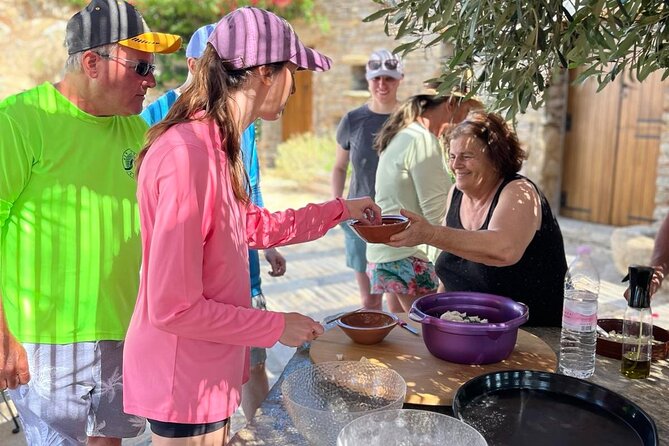
At $154.88 per person, this is not a budget food activity. You are paying for a private-feeling small group, a cooking session, a farm visit, museum access, a broad tasting, drinks, and the meal you prepare.
The value depends on what you want from Ios. If you only want a quick cheese sample, the price is high. If you want a structured morning that combines cooking, local food, family stories, animals, and rural history, the cost becomes easier to defend.
I would compare it with the price of a good meal plus a separate cultural activity. The tasting includes roughly nine cheeses, two honeys, fig marmalade, wine, liqueur, dried fruit, breadsticks, tomatoes, and olive oil. You also get a dish to take away. That does not make the tour cheap, but it means the fee covers much more than a demonstration and one plate of food.
The group limit matters to the calculation. Eight people is still a group, but it is small enough for the cooking to feel participatory. A larger class might offer the same food at a lower rate, but it would likely provide less contact with the family and less room to ask questions.
The experience has only a perfect rating from six reviews, which is a small sample. I would treat that as encouraging rather than conclusive. The strongest praise focuses on the beautiful, well-kept setting, the relaxed atmosphere, the farm ingredients, and Helen’s patient and humorous approach. Those are exactly the qualities that make this worthwhile, but they are also more personal and less predictable than a standard sightseeing stop.
Timing, transport, and practical planning
The start time is 9:00 a.m., and the duration is about two hours and 30 minutes. The activity ends back at Diaseli Traditional Cheesery and Museum, so you are not dropped at a different part of Ios.
The meeting point is listed at Diaselia, at the Psathi to Manganari junction, Ios 840 01. The location is near public transportation, but the supplied details do not specify the route, frequency, or journey time. Check your transport plan before booking and allow enough time to arrive for the early start.
A mobile ticket is provided, and the experience is offered in English. Service animals are allowed. Snorkeling equipment is not included, though that should not affect your decision much because snorkeling is not part of the described activity.
The group maximum is eight. Confirmation is received at booking, and the activity requires a minimum number of participants. If that minimum is not met, you can choose another date or experience, or receive a full refund.
Free cancellation is available up to 24 hours before the start time. Canceling or changing the booking less than 24 hours ahead is not accepted for a refund. Cutoff times use local Ios time, so keep that in mind if you are arranging the booking from another country.
Who will enjoy this morning most?
I would choose this for you if food is one of the main ways you connect with a place. You do not need advanced cooking skills. The point is to work alongside the family, learn a local recipe, and understand where the ingredients come from.
It also suits couples, families, and small groups who prefer a calm morning to a crowded excursion. The farm setting, museum, and cooking give children more variety than a long seated tasting, though parents should consider the early start and the outdoor setting.
This is a strong pick if you have already seen the famous white buildings and beaches of Ios. It gives you a look at island life that is less polished and more connected to food production and household tradition.
You may want to skip it if you need a fixed menu, have serious food allergies, dislike dairy, or want a fast and inexpensive activity. The surprise recipe and changing tasting selection are central to the format. So is the family setting, which means the pace may feel relaxed rather than tightly timed.
Should you book the Diaseli cooking experience?
Book it if you want a personal food morning with real participation. The strongest reasons are the small group, the chance to cook in a stone stove, the farm visit, and the broad tasting of cheeses, honey, preserves, wine, and island produce.
I would especially recommend it for a first visit to Ios when you want more than beach time, or for a repeat visitor looking for a local activity with a slower pace. The $154.88 price is high, but the package includes several connected experiences and a meal to take away.
Skip it if your priority is value measured only by time, or if you want to select every dish in advance. For everyone else, this is one of the more distinctive ways to spend a morning on Ios, provided you can reach Diaseli for 9:00 a.m. and the weather cooperates.
FAQ
Where does the Ios cooking experience begin?
It begins at Diaseli Traditional Cheesery and Museum, at Diaselia, the Psathi to Manganari junction, Ios 840 01, Greece.
What time does the experience start?
The start time is 9:00 a.m.
How long does the activity last?
It lasts approximately two hours and 30 minutes.
What food and drinks are included?
The tasting includes about nine kinds of cheese, two kinds of honey, homemade fig marmalade, wine, liqueur, dried fruit, breadsticks, and tomatoes with olive oil from the family’s olive trees.
Can I take the food I cook with me?
Yes. The meal you cook is packed in a special box so you can eat it later, including on the beach.
How many people can join the activity?
The maximum group size is eight people.
What happens if the weather is bad?
Because the experience requires good weather, poor conditions may lead to a different date or a full refund.
Freshly cut around Greece
- Naxos Mythology & Ancient Sites Tour with Cheese & Wine★ 4.5 · 12 reviews
- Naxos Farm Experience and cheese making★ 5.0 · 5 reviews
- Culture & Taste Tour★ 5.0 · 6 reviews
- Cheese and Wine Tasting (Guided Tour INCLUDED)★ 4.5 · 14 reviews
- Cretan Farm Tour with Cheese-Making, Olive Oil Tasting & Picnic★ 5.0 · 10 reviews
- Cheese and Wine Tasting Tour From Chania★ 5.0 · 7 reviews
- Explore Shepherd’s Hut and Cheese Making Process★ 5.0 · 2 reviews
- Beer Tasting Evening Experience in Athens with Greek Cheeses★ 5.0 · 14 reviews
Wine and Cheese Tastings, plate by plate.

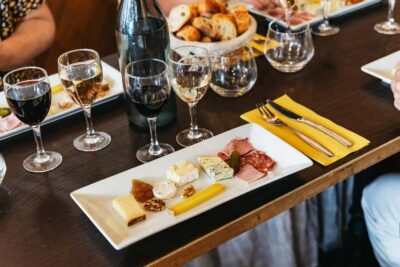
Paris: Montmartre Cheese, Wine & Pastry Guided Walking Tour
Read our review →

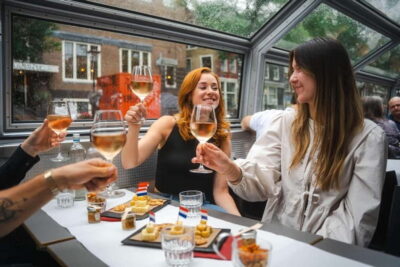
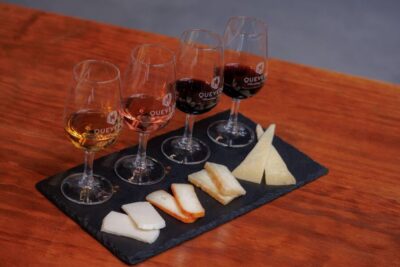
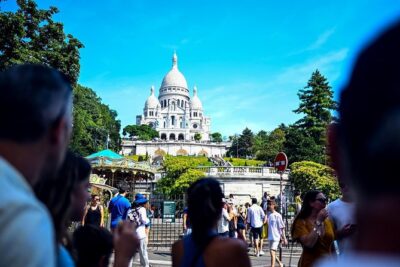

Paris Le Marais Food Tour With 10+ Tastings, Cheese, Wine & More
Read our review →Cheese lists with this tasting