
Review · PARIS
Paris: Wine & Cheese Tasting Master Class Near Eiffel Tower
The best part of this Paris tasting happens below street level, in a natural stone cellar beneath the Gourmet delicatessen. Alejandra leads you through five French wines and five artisan cheeses, turning a standard tasting into a lively lesson about regions, aromas, and the way food changes what you taste.
I like the small group limit of six, which leaves room for questions and conversation. I also like the location: you can walk from Invalides in about five minutes or from the Eiffel Tower in about fifteen, then finish by shopping for French specialties or enjoying a glass on the terrace.
The main thing to consider is the pace. The advertised time is two hours, but warm conversation can stretch the session, sometimes closer to three hours. This is not a quick stop between monuments, and it is not suitable for children under 18 or pregnant women.
Key points to know before booking
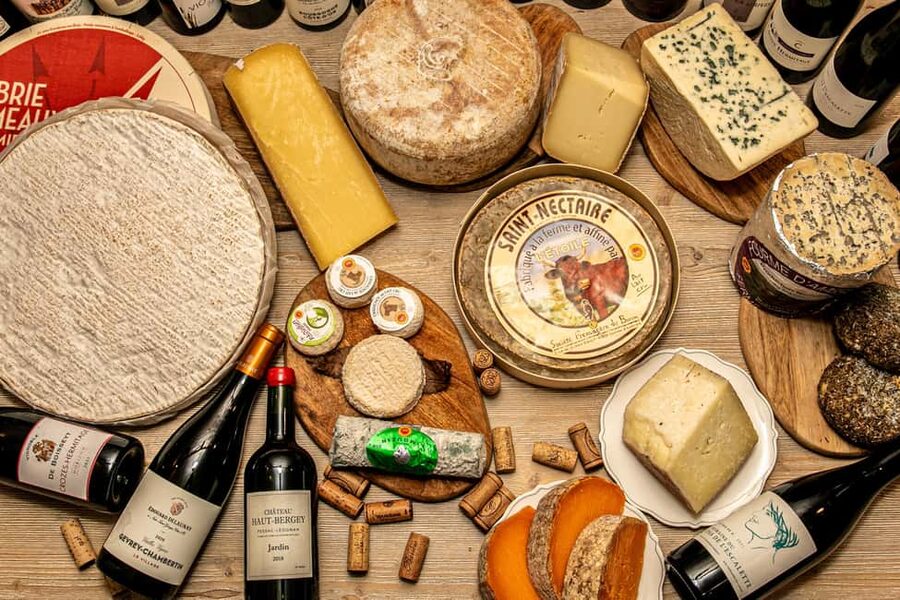
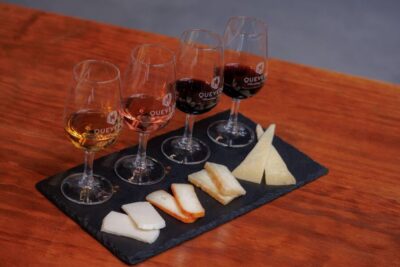
- Five wines, five cheeses: Taste two white wines and three reds, with French cheeses chosen to match them.
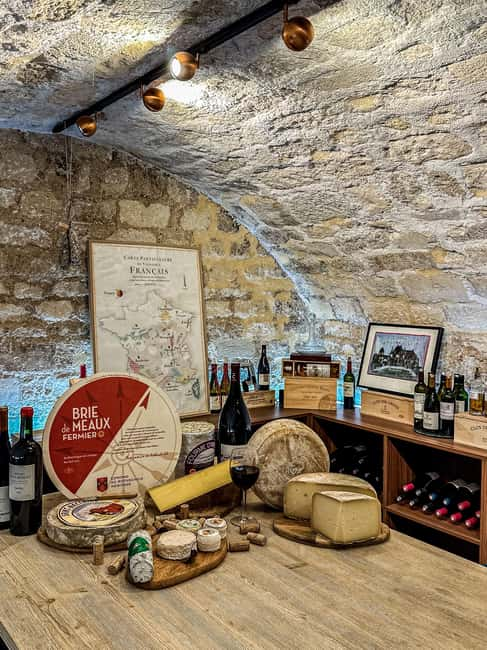
- A real cellar setting: The class takes place beneath the Gourmet shop in a natural stone room with a vaulted, old-world feel.
- Alejandra leads the lesson: She has more than 20 years of experience with French wine and a tasting diploma from the University of Oenology of Bordeaux.
- A very small group: No more than six people attend, and at least two participants are needed for the class to proceed.
- Easy to pair with sightseeing: The shop is about five minutes from Invalides and fifteen minutes from the Eiffel Tower.
- Useful shopping afterward: You can buy wine, cheese, ham, and other French specialties, or arrange a picnic-style selection to enjoy elsewhere.
A Paris wine class below a neighborhood delicatessen
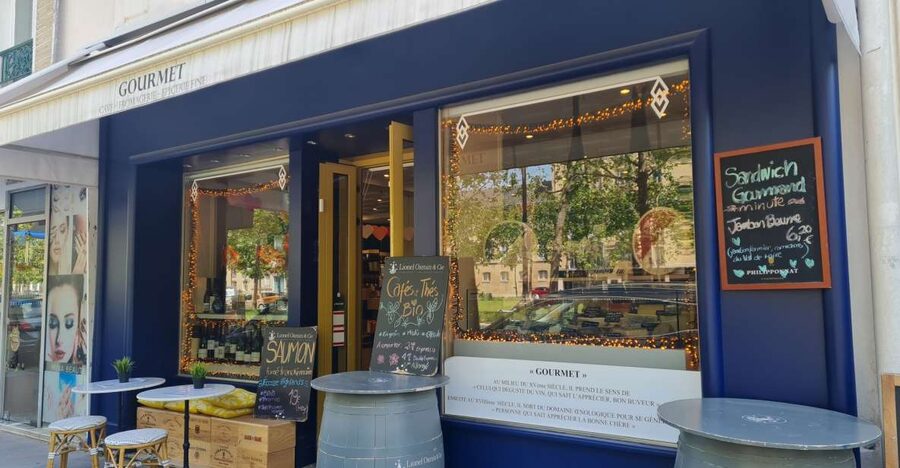
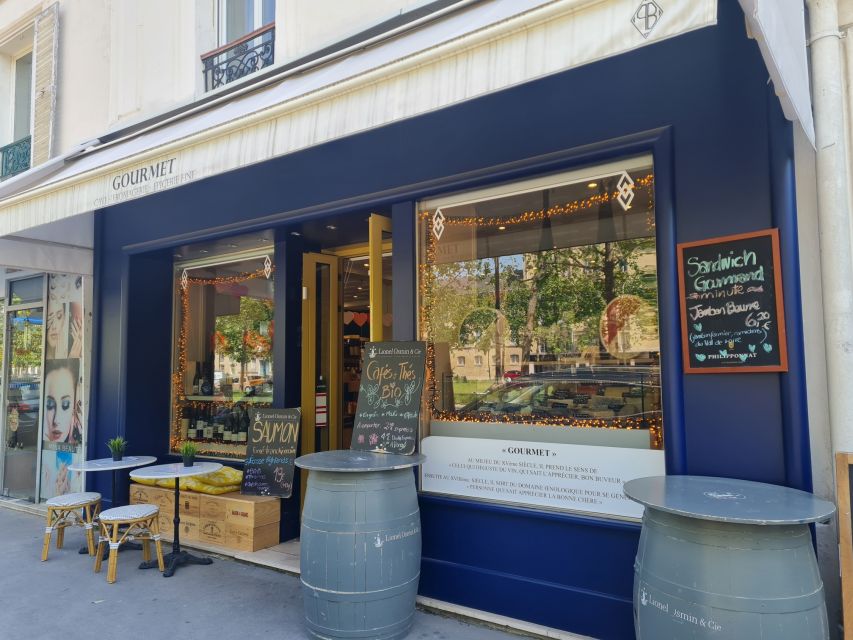
Paris has plenty of wine tastings, but many take place in polished classrooms or busy restaurants. This one begins in a small Gourmet shop in the 7th Arrondissement, then moves downstairs into its stone cellar.
That setting matters. You are not simply sampling bottles at a counter. The cool cellar, the old masonry, and the intimate table give the session a more personal feel. It is still a lesson, but it feels connected to the shop and the food culture around it.
The location is especially handy if you are sightseeing in western central Paris. From Invalides, the walk takes about five minutes. From the Eiffel Tower, allow roughly fifteen minutes. You can visit a monument before the tasting, then spend two hours indoors without adding another long journey to your day.
The shop itself gives you a glimpse of the kind of French food shopping that can be hard to find in a supermarket. After the tasting, you can look at wines, cheeses, hams, and other specialties. Some participants have also bought picnic items to take away, which makes this a useful stop before an afternoon along the Seine.
More Wine and Cheese Tastings in France
- Paris: Montmartre Cheese, Wine & Pastry Guided Walking Tour
★ 4.8 · 2,255 reviews - Private Montmartre Food Tour with Wine, Cheese & Pastries
★ 5.0 · 1,027 reviews - Paris Le Marais Food Tour With 10+ Tastings, Cheese, Wine & More
★ 5.0 · 985 reviews
Meet Alejandra and Lucas at Gourmet
Alejandra is the main guide named in the experience details and the person who gives the tasting its shape. She has worked with French wine for more than 20 years and holds a tasting diploma from the University of Oenology of Bordeaux, known as the DUAD. That training allows her to serve as a judge in international wine contests.
You do not need a technical wine background to enjoy the class. Alejandra explains how to smell and taste wine in practical terms, then helps you connect aromas and flavors to your own senses. The aim is not to make you memorize a list of French appellations. It is to help you notice what is in the glass and explain what you like.
Lucas, her husband, may also help host the session. He is from Bordeaux and is described as a true bon vivant. Together, the couple creates a relaxed atmosphere that suits people who want a social evening as much as a formal lesson.
The teaching style is energetic and interactive. You can ask questions, compare impressions with the other participants, and learn how different people pick up different aromas in the same wine. That makes this a good choice if one person in your group is already interested in wine and another person is starting from zero.
Five wines from across France
The tasting includes two white wines and three red wines. The selection is designed to take you across several French wine regions, showing how soil, climate, grape varieties, blending, aging, and local methods affect the final drink.
The word terroir comes up often in French wine. Here, it is not treated as a vague marketing term. You are shown how a wine’s place of origin can shape its style, then given a chance to taste those differences directly.
The sequence begins with the mechanics of tasting. You may be asked to smell before drinking, look at the color, take a small sip, and notice how the wine changes across your palate. The lesson also uses simple sensory exercises to help you identify familiar smells and describe them without feeling that there is a single correct answer.
The three reds give the class room to discuss stronger contrasts in body, fruit, acidity, tannin, and finish. The two whites help show that white wine is not one single style. The full set gives you a compact tour of French production rather than a lesson focused on just one region.
A useful feature is the choice of small-producer bottles. These are not necessarily labels you will see in every shop back home, so the tasting can introduce you to wines that are harder to find outside France. If you discover a favorite, you can ask for help finding something similar or buy a bottle before leaving.
The pours are intended to be generous enough for proper tasting while still keeping the session comfortable. Even so, you are sampling five wines in two hours, so plan your day sensibly. A heavy lunch beforehand may make the experience less pleasant, and you should not schedule a demanding activity that requires immediate travel across the city afterward.
Five cheeses and the logic behind each pairing
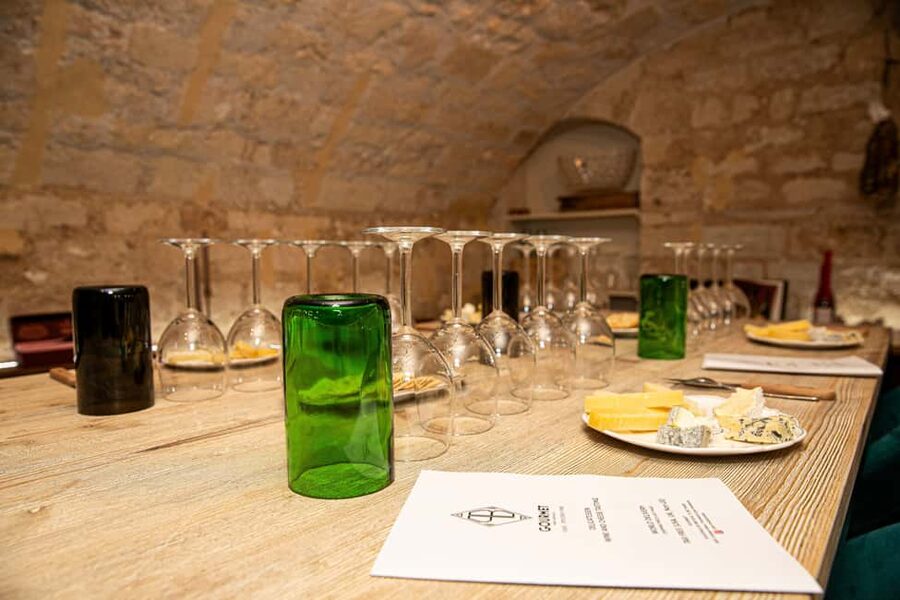
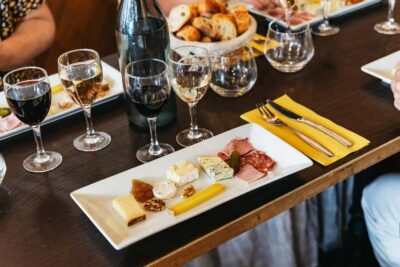
The cheese portion is not an afterthought. Five different artisan cheeses are paired with the wines, giving you a chance to see how the right food can soften, sharpen, or change a wine’s character.
A cheese can make a wine seem fruitier, less acidic, rounder, or more intense. The guide explains these effects as you taste rather than leaving you with a plate of unrelated samples. French bread is also served with the pairings, adding a simple staple that helps cleanse the palate and makes the tasting feel more like a small meal.
This format is valuable for anyone who enjoys French food but is unsure how to order or pair it. You may leave with a better sense of which wines suit soft cheeses, firmer cheeses, or stronger flavors. You also gain ideas for building your own picnic or dinner later in the trip.
The cheeses come from artisanal sources, and the pairings are selected for contrast and balance. That means you are tasting the cheese on its own, then with the wine, and noticing what changes. It is a more useful lesson than simply being told that two items go well together.
If you do not usually drink wine, the class remains approachable. The guide encourages you to describe what you actually notice rather than forcing you to use specialist language. If you already know French wine, you still have a chance to discover unfamiliar producers and regional styles.
More Wine and Cheese Tastings in Paris
- Paris: Wine and Cheese Lunch
★ 4.9 · 596 reviews - Cheese & Wine Tasting in Montmartre with Local Cheesemonger
★ 5.0 · 470 reviews - French Wine, Champagne And Cheese Tasting Paris SECRET WINE DOOR
★ 5.0 · 464 reviews - Paris Wine Tasting plus Cheese Lunch with an Expert Sommelier
★ 5.0 · 424 reviews
A two-hour schedule that may run longer
The official duration is two hours, but leave extra room in your plans. Conversation can continue after the last pairing, especially if the group is engaged and the guide is answering questions. One session lasted about three hours, and another participant suggested allowing two and a half hours.
The usual flow is straightforward:
- You meet at the Gourmet delicatessen.
- You enter the cellar beneath the shop.
- The guide introduces the tasting method and the idea of French terroir.
- You sample two whites and three reds.
- Five cheeses are served alongside the wines.
- You discuss aromas, production methods, regional differences, and personal taste.
- You return to the shop for optional purchases or a drink on the terrace.
The group limit of six is one of the strongest practical features. A larger class can make a tasting feel like a lecture, with little chance to ask why a certain wine tastes the way it does. Here, the small size encourages discussion and makes the lesson easier to adjust for beginners.
There is one important booking condition: at least two people must be booked for the activity to proceed. Solo visitors should check availability carefully rather than assuming they can attend alone.
The class is offered in English. Hotel pickup and drop-off are not included, so you make your own way to the shop. The meeting point is described by its proximity to Invalides and the Eiffel Tower rather than by a hotel transfer service, making it easy to combine with a walking day in the 7th Arrondissement.
Is $94 a fair price?
At $94 per person, this is not a bargain snack, but it is a reasonable price if you value instruction, a proper cellar setting, and five wine and cheese pairings.
You are paying for more than the food and drink. The cost also covers Alejandra’s experience, the small group format, the guided tasting method, the cellar venue, and the chance to ask detailed questions. A self-guided visit to a wine shop would cost less, but it would not give you the same explanation of terroir or the same structure.
The value improves if you plan to buy something afterward. The shop can help you choose bottles, cheeses, hams, and other French specialties based on what you liked during the class. You may also find the advice more useful than trying to pick a bottle from a large supermarket shelf with no context.
The price is less attractive if you want a quick tasting with only a few sips, or if you are mainly looking for a full meal. This is a teaching session with substantial food, not a restaurant dinner. Some people may also prefer a vineyard day trip outside Paris, but that requires far more time and transport.
For a couple, a small family group with adult children, or friends who want an easy food-focused activity, the cost is defensible. The experience is also a good option for repeat visitors who have already seen the main monuments and want a more local-feeling afternoon.
Who will enjoy this most?
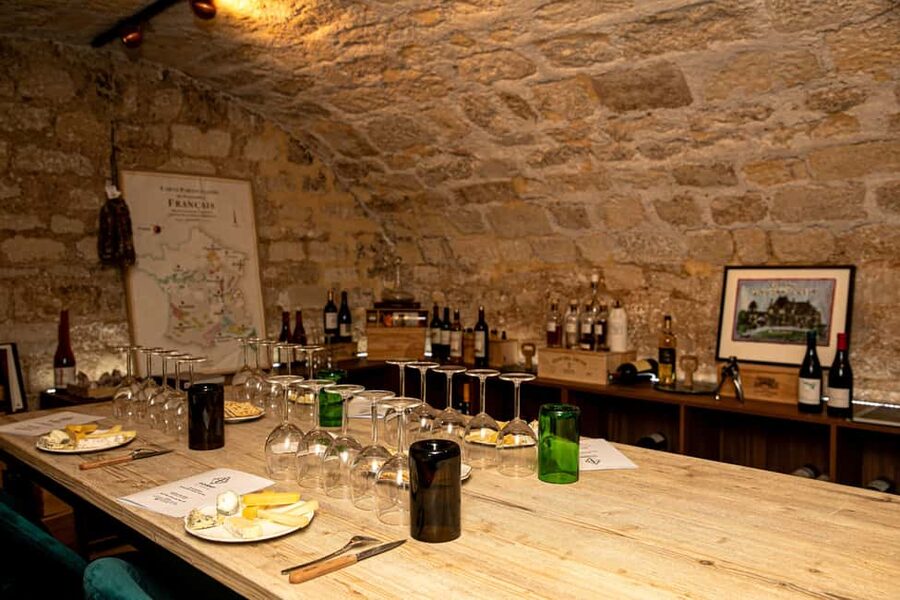
I would recommend this class to adults who like food, want to understand French wine, or need a friendly introduction before buying bottles in Paris. It works particularly well for mixed groups, where one person is a wine enthusiast and another is still learning the basics.
It suits couples because the cellar creates a quiet, intimate setting, and it works for small family groups as long as everyone is over 18. The activity has also been used as a Valentine’s Day outing and as a way to begin a Paris trip with something social and relaxed.
You should choose something else if you dislike enclosed cellar spaces, do not drink alcohol, or need a tightly timed schedule. Pregnant women and children under 18 are specifically not suitable for this experience. If your Paris day is packed with timed museum entries, allow more than the stated two hours so you are not watching the clock.
The social side is part of the appeal. Alejandra and Lucas encourage people to talk with one another, and the small group gives you a chance to compare reactions. You are likely to learn as much from hearing another person describe a wine as from the formal explanation.
Smart ways to plan the visit
Schedule the tasting around Invalides or the Eiffel Tower rather than treating it as an isolated appointment. The short walks make it practical before or after sightseeing, and the surrounding area gives you plenty of ways to continue the day on foot.
Give yourself enough time to arrive calmly. The activity does not include transportation, and city traffic can be unpredictable. If you are coming from another part of Paris, use the nearby monument as your navigation reference and avoid turning up at the last moment.
Wear something comfortable for sitting in a cellar. The available information does not specify the room temperature, but natural stone cellars can feel different from the street outside. A light layer is a sensible choice.
Plan how you will handle purchases. The shop sells wine, cheese, ham, and other French goods, and you may be tempted to buy more after finding a new favorite. If you are leaving Paris soon, ask the staff what travels well and what is best eaten that day. You can also choose items for a picnic and enjoy them elsewhere.
Cancellation is flexible up to 24 hours before the activity for a full refund, and you can reserve now and pay later. Starting times vary, so check the available schedule before building the rest of your day around the tasting.
Should you book the Gourmet wine and cheese class?
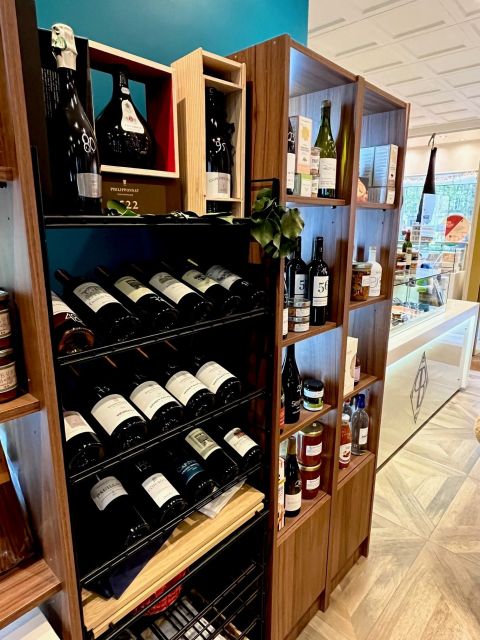
Book it if you want a small, personal food experience near the Eiffel Tower, with real instruction rather than a simple pour-and-go tasting. Alejandra’s training, the cellar setting, the five regional wines, and the cheese pairings give the session a clear purpose.
I would be especially keen to book this for a first Paris visit that includes time around Invalides, or for a return visit when the major sights are already familiar. The shop also makes the experience practical: you can leave with a bottle, picnic supplies, or a better idea of what to order later.
Skip it if you need a strict two-hour appointment, want a full meal, or prefer to visit vineyards outside the city. For everyone else, $94 buys a well-structured introduction to French wine, plenty of tasting material, and the kind of direct advice that can improve the rest of your Paris food stops.
FAQ
Where does the wine and cheese tasting take place?
It takes place in the cellar of Gourmet, a delicatessen about five minutes on foot from Invalides and fifteen minutes from the Eiffel Tower.
How long does the activity last?
The stated duration is two hours. Allow extra time because the tasting can run longer when the group continues talking and asking questions.
How many wines and cheeses are included?
You taste two white wines, three red wines, and five different French artisan cheeses.
What language is the class taught in?
The class is taught in English.
How many people can join the tasting?
The group is limited to six participants. At least two people are required for the activity to proceed.
Are children allowed to attend?
No. The experience is not suitable for children under 18, and it is also not suitable for pregnant women.
Can I buy French food and wine after the tasting?
Yes. Gourmet sells French wines, cheeses, hams, and other specialties. You may also enjoy a glass of wine on the shop’s terrace.
Freshly cut around Paris
- Paris: Wine and Cheese Pairing★ 5.0 · 4 reviews
- French Wine and Cheese Master Class Near the Eiffel Tower★ 5.0 · 6 reviews
- Paris Wine and Cheese Tastings Class near Le Marais★ 5.0 · 4 reviews
- Paris Wine with Cheese Pairing & Tasting Small Group Class★ 5.0 · 6 reviews
- Private wine tour to Sancerre vineyards from Paris with Sommelier★ 5.0 · 11 reviews
- Paris Marché d’Aligre Walking Tour with Chocolate and Cheese Tasting★ 3.5 · 24 reviews
- Wine and cheese tasting in Bastille★ 5.0 · 5 reviews
- Paris Wine and Cheese Pairing Private Masterclass in a Bistrot★ 5.0 · 7 reviews
Wine and Cheese Tastings, plate by plate.
Paris: Montmartre Cheese, Wine & Pastry Guided Walking Tour
Read our review →
Paris Le Marais Food Tour With 10+ Tastings, Cheese, Wine & More
Read our review →Cheese lists with this tasting