Review · FRANCE
Visit and tasting of wines and cheese and charcuterie platter
The best part of this 90-minute cellar visit is the clear path from grape to glass. You move through the pressing hall, stand among stainless-steel vats, then enter the older cellar with its wooden tuns before sitting down to taste the estate’s wines with cheese and charcuterie. I like the hands-on setting and the chance to choose wines for your tasting. The main consideration is that this is a short visit, so it offers an introduction rather than a full day of vineyard time.
I also like the small group limit of 15 people, which should make questions easier and the tasting less rushed. Guides connected with past visits include Orianne and Herr Specht, both praised for patient explanations. You will need to reach the domaine in Mittelwihr yourself, and the experience ends where it begins.
Key points at a glance
- A real working cellar: See the pressing hall, modern stainless-steel vats, and historic wooden tuns in one visit.
- Winemaking explained simply: Learn how fermentation and storage shape the wines of Alsace.
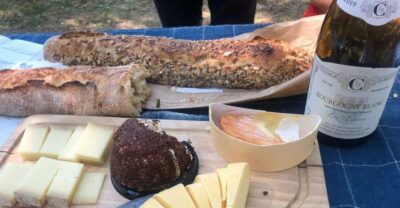
- Tasting with food: Estate wines come with a platter of cheeses and charcuterie, suitable for an aperitif or light lunch.
- Small group format: The maximum group size is 15 people.
- English offered: The activity is offered in English, with confirmation sent at booking.
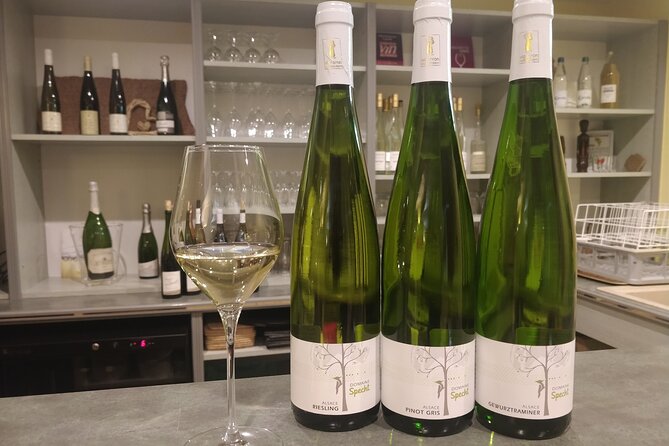
- Flexible wine choice: The tasting can include different wines from the estate, including Riesling, Gewurztraminer, white wines, and Pinot Noir.
A cellar visit that shows the whole wine process
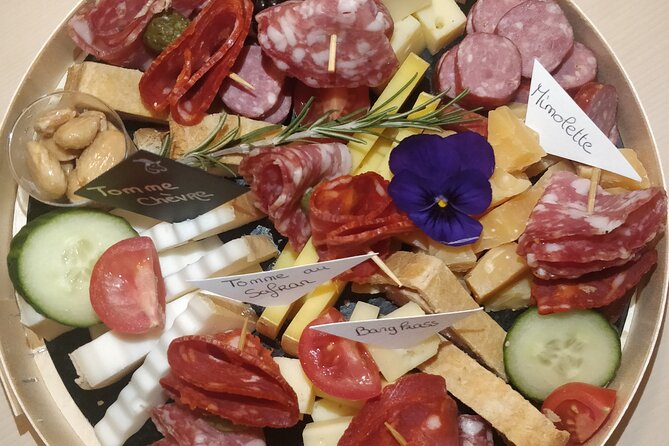
Domaine Specht’s experience works because it connects the practical work of winemaking with the pleasure of drinking the finished wine. You do not begin with a table and a row of glasses. You first see where the production happens, then hear how the process works, and only afterward taste the results.
That order matters. A Riesling or Gewurztraminer can seem like just another glass of white wine if you know nothing about its production. After seeing the equipment and hearing about fermentation, you have a better sense of what the estate is trying to do.
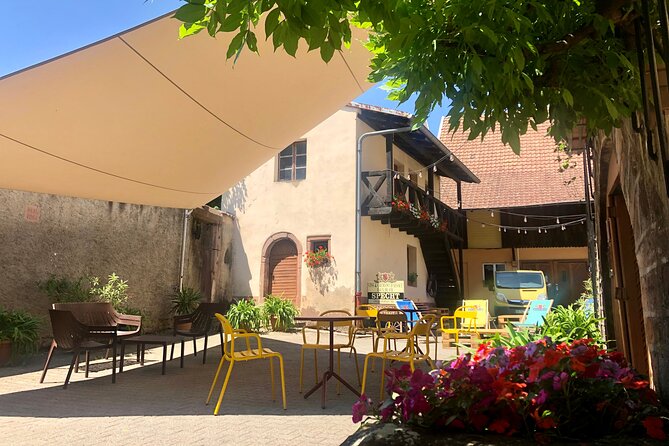
The visit takes place at 2 Rue des Églises in Mittelwihr, a village in the Colmar area. The activity lasts about an hour and a half, and it returns to the same meeting point. Since no transportation is included in the description, plan your route to the domaine before you set out.
This is a good choice if you want a focused wine stop during a day in Alsace. It is not designed as a broad regional tour, and there is no stated vineyard walk or meal beyond the tasting platter. You get the cellar, the winemaking explanation, and a substantial tasting in a compact format.
More Cheese and Charcuterie Boards in France
- Tasting of 6 Bordeaux wines and pairing charcuterie & cheese
★ 5.0 · 199 reviews - Bordeaux: Wine Masterclass with Cheese and Charcuterie Board
★ 4.9 · 184 reviews - Introduction to Bordeaux wines paired with cheeses & charcuterie
★ 5.0 · 175 reviews
From the pressing hall to the stainless-steel vats
The first stop is the pressing hall. This is where the visit gains useful context right away. Rather than hearing a list of wine terms in a tasting room, you see the place where grapes are handled at the start of production.
The exact equipment details are not specified, so you should not expect a technical engineering tour. Still, the pressing hall gives the guide a natural place to explain how grapes move into the cellar and how the first stages of winemaking begin.
Next, you enter the section with stainless-steel vats. These large tanks are a familiar sight in modern wineries, but they are still helpful to see in person. The guide can connect the tanks to fermentation, temperature control, and the way wine develops before it is ready for tasting.
This part should appeal to anyone who wants more than a quick pour. You can ask about fermentation and the reasons a producer uses modern tanks. The small group limit helps here, since a group of 15 or fewer is easier to manage than a large busload gathered around the same vat.
The tour is also suitable for people who are new to wine. You do not need to know the difference between fermentation methods or grape varieties before arriving. The experience is built around explanation, and the available feedback points to guides who take time with questions rather than rushing through a prepared speech.
The older cellar and its wooden tuns
The route then shifts from modern equipment to the historic part of the cellar, where wooden tuns are kept. This change gives the visit some visual variety and lets you compare two different parts of the production space.
The wooden tuns are not presented as a museum display. They are part of the cellar story, showing that wine production here includes older traditions as well as stainless-steel technology. The guide explains fermentation and winemaking in this setting, which makes the subject easier to follow than a lecture in a plain room.
I find this contrast especially useful for first-time wine visitors. You see that a wine estate is not defined by one piece of equipment. Modern tanks and older wooden vessels can both form part of the process, each with a role in how wine is made and stored.
The historic cellar may also be the most atmospheric part of the visit, but the experience is still educational rather than theatrical. There is no promise of costumes, music, or a staged story. What you get is a working wine environment and a guide explaining how the spaces are used.
Past visits have featured Orianne and Herr Specht. Orianne is described as patient, friendly, and especially good at explaining the wines and answering questions. Herr Specht is associated with a visit that covered how grapes become wine and how the finished bottles are stored. Your guide may be someone else, but the format allows room for questions.
Tasting Alsace wines with a proper snack
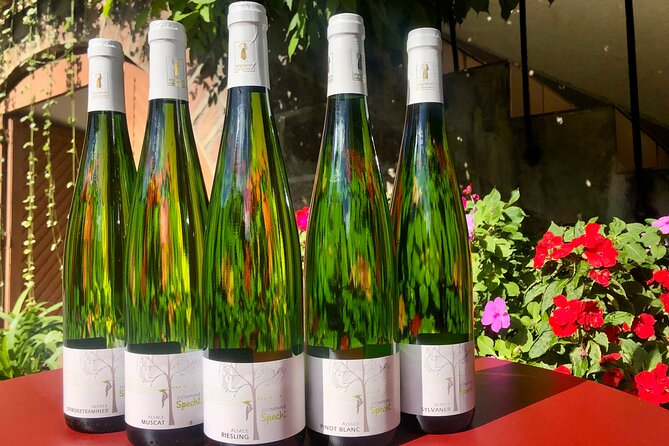
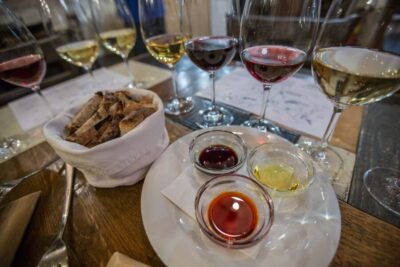
The final stop is the tasting cellar. Here you sample wines from the estate with an assortment of cheese and charcuterie. This is more generous than a token bite beside a single glass. The platter is intended to work as an aperitif or a light lunch.
That food pairing changes the feel of the activity. You are not tasting on an empty stomach, and you have something salty and creamy to compare with the wines. Cheese and cured meats also make the tasting more relaxed for people who are interested in wine but do not want a formal lesson.
The wines can include Riesling, Gewurztraminer, other white wines, and Pinot Noir. The available information indicates that you can choose from the estate’s wines rather than being restricted to one fixed selection. That flexibility is valuable because it lets you focus on the varieties you most want to understand.
If you already know Alsace wines, you can use the tasting to compare styles. If you are new to the region, Riesling and Gewurztraminer give you a useful starting point, while Pinot Noir shows that the tasting is not limited to white wine.
Do not expect the food to replace a full restaurant meal. It is described as suitable for an aperitif or light lunch, so plan a separate meal if you need something substantial. For a short cellar visit, though, the pairing sounds well judged. You get enough food to make the tasting comfortable without turning the activity into a long dining event.
More Wine and Cheese Tastings in France
- Paris: Montmartre Cheese, Wine & Pastry Guided Walking Tour
★ 4.8 · 2,255 reviews - Private Montmartre Food Tour with Wine, Cheese & Pastries
★ 5.0 · 1,027 reviews - Paris Le Marais Food Tour With 10+ Tastings, Cheese, Wine & More
★ 5.0 · 985 reviews - Paris: Wine and Cheese Lunch
★ 4.9 · 596 reviews
What the wine choice means for you
One useful feature is the ability to select your own tasting. That gives you more control than a fixed flight, especially if you already have a favorite grape or want to compare two styles.
A first-time visitor might begin with a Riesling and a Gewurztraminer, then add Pinot Noir if available. Those choices let you explore different expressions from the estate without needing to order a large number of glasses. The guide can help explain the differences as you go.
The tasting also appears well suited to people with different levels of wine experience. Someone who knows Alsace can ask detailed questions, while a beginner can focus on simple points such as aroma, sweetness, acidity, and food pairing. The information provided does not promise a formal tasting sheet or a set number of pours, so do not book it expecting a structured certification-style lesson.
There is also a practical shopping angle. The experience allows you to choose wines, and one past participant went home with a box. That makes sense if you find a bottle you particularly enjoy, though the supplied details do not specify shipping, package size, or purchase arrangements. If you want to buy wine, ask the domaine about current options during your visit.
Is $36.12 a fair price?
At $36.12 per person, the value depends on what you want from a wine stop. You are paying for about 90 minutes that combine a cellar visit, an explanation of production, several wine samples, and cheese and charcuterie.
That is a reasonable package for someone who wants more than a stand-alone tasting. The food adds practical value, and the chance to see both stainless-steel vats and wooden tuns gives the visit more substance than simply sitting at a counter.
The price is less compelling if your main goal is to drink as many wines as possible. The experience is short, and the number of pours is not specified. It is better understood as a guided introduction to one estate than as an all-day tasting pass.
I would also compare it with your schedule in Colmar. If you are already planning to spend time in Mittelwihr or nearby villages, the visit fits neatly into a day of Alsace wine stops. If you are staying in central Colmar and have limited time, remember that you must arrange your own way to the meeting point.
The fact that it is often booked about 25 days ahead is useful planning information. It suggests you should not leave this until the last minute, especially if your dates are fixed. Confirmation arrives when you book, and the mobile ticket makes it easier to keep the reservation available on your phone.
Group size, language, and pace
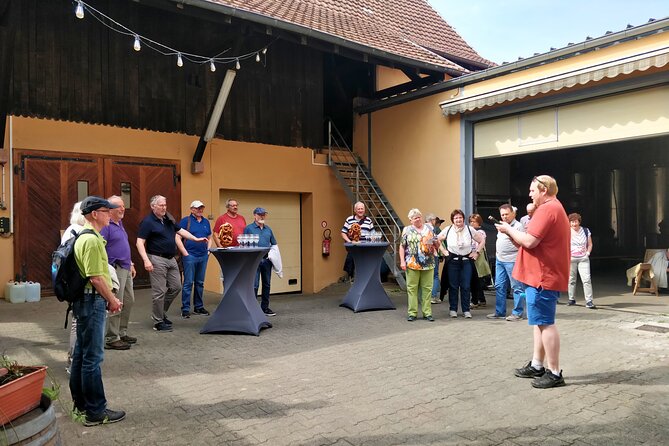
The maximum group size is 15 people. That is small enough for a personal feel without making the visit dependent on a private booking. It also gives the guide a fair chance to answer questions, though the actual group may be smaller or close to the limit.
The experience is offered in English, which makes it practical for English-speaking visitors. The supplied details do not state that every part of the activity is available in another language, so check directly if you need a language other than English.
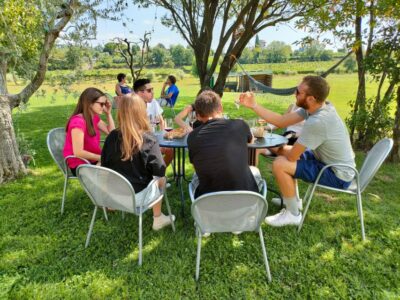
The pace should suit most people. You move through several cellar areas, listen to explanations, and finish seated for the tasting. Most participants can take part, and service animals are allowed.
Because the activity lasts about 90 minutes, it is easy to fit around other plans. You could schedule it before a meal, after a visit to another Alsace village, or as an afternoon stop. Just avoid stacking it too tightly against another booking, since the duration is approximate rather than guaranteed to the minute.
Who will enjoy this experience most?
I would recommend this visit to:
- People visiting Colmar who want a wine experience outside the city center.
- Couples looking for a relaxed anniversary or special-occasion activity.
- Beginners who want a plain explanation of how wine is made.
- Wine drinkers interested in Riesling, Gewurztraminer, white wines, and Pinot Noir.
- Anyone who prefers a small group and time for questions.
- Visitors who enjoy pairing wine with cheese and charcuterie.
It is particularly well suited to a couple or small group celebrating a special occasion. The tasting platter gives the visit a social side, while the cellar tour keeps it from feeling like only a meal.
You may want something else if you want a vineyard hike, a full lunch, a long technical seminar, or transportation from Colmar. None of those elements is included in the supplied description. This is a compact estate visit, not a complete wine-region excursion.
Booking and cancellation details to know
The activity uses a mobile ticket, and confirmation is provided at the time of booking. The meeting point is Domaine Specht at 2 Rue des Églises, 68630 Mittelwihr, France. The tour finishes back at that same location.
Free cancellation is available if you cancel at least 24 hours before the scheduled start time. Cancellations made less than 24 hours in advance are not refunded, and changes inside that same window are not accepted. The cut-off follows local time in France, so check the clock carefully if you are changing plans from another time zone.
The experience has a five-star rating based on 10 ratings, with 100 percent recommending it. That is a small sample, so I would treat it as encouraging rather than proof that every visit will be identical. The strongest pattern is clear: the personal instruction, wine quality, and cheese and charcuterie platter are the parts most likely to shape your day.
Should you book the Domaine Specht tasting?
Book it if you want a friendly, focused introduction to an Alsace wine estate, especially if you enjoy asking questions and tasting several styles with food. The mix of pressing hall, steel vats, wooden tuns, and tasting cellar gives you a proper sense of the winemaking process in about an hour and a half.
I would skip it only if you need a full meal, vineyard transport, or a longer regional wine tour. For $36.12, the experience offers solid value when you want education, atmosphere, and a well-paired tasting in one stop. Reserve ahead, plan your own route to Mittelwihr, and leave room in your schedule for a relaxed tasting rather than a rushed dash to the next sight.
FAQ
Where does the wine experience take place?
It takes place at Domaine Specht, 2 Rue des Églises, 68630 Mittelwihr, France.
How long does the activity last?
The visit and tasting last approximately 1 hour and 30 minutes.
What does the tour include?
You visit the pressing hall, the area with stainless-steel vats, and the historic cellar with wooden tuns. The experience also includes explanations of fermentation and winemaking, followed by wine tasting with cheese and charcuterie.
Is the tour offered in English?
Yes. The activity is offered in English.
How large is the group?
The maximum group size is 15 participants.
What wines might be included in the tasting?
The tasting can include estate wines such as Riesling, Gewurztraminer, other white wines, and Pinot Noir. The available information indicates that you can choose your own tasting.
Is food included?
Yes. The tasting is accompanied by an assortment of cheeses and charcuterie. It is intended to work as an aperitif or light lunch.
Can I cancel for a refund?
Yes. You can cancel for a full refund up to 24 hours before the experience begins. Cancellations or changes made less than 24 hours before the start time are not accepted for a refund.
Freshly cut around France
- Wine Masterclass & Cheese Tasting Workshop in Bordeaux★ 5.0 · 2 reviews
- Paris: Wine and Cheese Pairing★ 5.0 · 4 reviews
- Wine, Cheese and Charcuterie tasting★ 4.9 · 17 reviews
- Wine and Cheese experience★ 4.5 · 18 reviews
- Cheese food-tour through downtown Toulouse★ 4.5 · 7 reviews
- Wine and Cheese Tasting★ 4.5 · 17 reviews
- French Wine and Cheese Master Class Near the Eiffel Tower★ 5.0 · 6 reviews
- Paris Wine and Cheese Tastings Class near Le Marais★ 5.0 · 4 reviews
Cheese and Charcuterie Boards, plate by plate.
Full-Day Group Wine Tour (with cheese and charcuterie) in Niagara-on-the-Lake
Read our review →
Tasting of 6 Bordeaux wines and pairing charcuterie & cheese
Read our review →
Taste of Lake Como: 4 Wines Paired with Local Cheese Charcuterie
Read our review →
Bordeaux: Wine Masterclass with Cheese and Charcuterie Board
Read our review →
Introduction to Bordeaux wines paired with cheeses & charcuterie
Read our review →