
Review · BORDEAUX
Bordeaux Gourmet Experience: Cheese & Wine Tasting
Beneath a Bordeaux restaurant, the 18th-century Cave of 100 Cheeses turns a standard wine tasting into a small French food lesson. You sit at a communal table, try nine AOP or AOC cheeses from across France, and match them with three Bordeaux wines: dry white, red, and Sauternes.
I like the generous cheese-to-wine ratio and the hosts who keep the talk lively rather than stuffy. I also like the setting: this is a working family cheese business, founded in 1987, not a polished tasting room built for tour groups. The main consideration is that this is a fixed tasting, so it may not suit you if you dislike cheese, want a full meal, or prefer a formal wine class.
Key points at a glance
- Three wine pairings: Taste a dry white, a red, and a sweet Sauternes from Bordeaux.
- Nine French cheeses: Each wine is paired with three assorted AOP or AOC cheeses.
- A real cellar setting: The tasting takes place below the restaurant in an 18th-century vaulted room holding more than 100 cheeses.
- Lively English hosts: Patrick, Marty, Marti, and Melanie have led sessions in the past, though your host may be different.
- Good food value: Local sourdough baguette comes with the tasting, and the cheese portions are substantial enough to feel like more than a nibble.
- Simple planning: Meet at 19 rue Huguerie at either 11:30 AM or 5:30 PM, and ring the bell when you arrive.
Inside Bordeaux’s Cave of 100 Cheeses
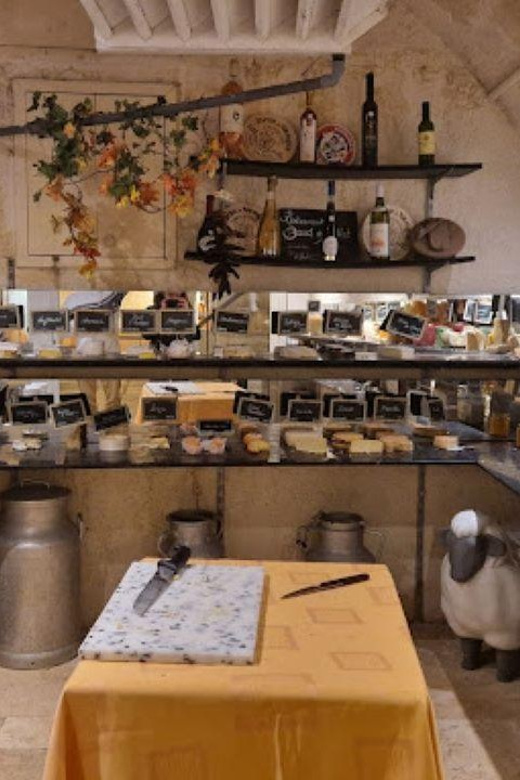
The experience starts at 19 rue Huguerie, where you ring the bell and wait for the host to open the venue. That small arrival ritual gives the tasting a private, tucked-away feel. You are not being sent into a large public hall with signs and queues. Instead, someone from the restaurant comes to meet you and leads you inside.
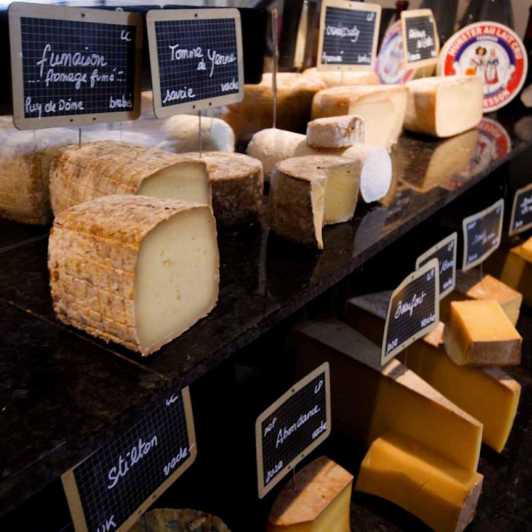
The cheese cellar sits beneath the restaurant. Its vaulted 18th-century construction gives the setting real character, while the shelves of more than 100 cheeses make it part tasting room and part working shop. I would allow a little extra time before or after the session to look closely at the cellar. One past participant especially recommended touring it, and that is sensible advice even if you are already full.
This setting matters. Cheese can feel abstract when it arrives on a neat plate in a modern room. Here, you can connect the tasting to the place where the products are stored and cared for. You get a better sense of French cheese as an everyday craft, not just a luxury item arranged for visitors.
The business has been family-run since 1987. That family connection helps explain the relaxed tone. This is built around sharing food, talking, laughing, and learning a few useful facts without turning the session into a lecture.
More Wine and Cheese Tastings in France
- Professional – Bordeaux Wine and Cheese Tasting with a walking tour
★ 5.0 · 218 reviews - Tasting of 6 Bordeaux wines and pairing charcuterie & cheese
★ 5.0 · 199 reviews - Bordeaux: Wine Masterclass with Cheese and Charcuterie Board
★ 4.9 · 184 reviews
Three flights, nine cheeses, and three Bordeaux wines
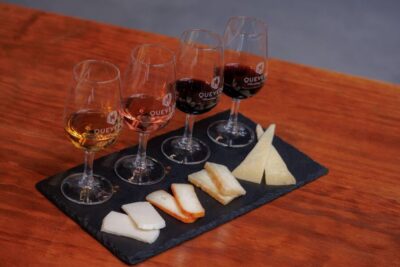
Once seated around the large communal table, you receive three platters, each with three assorted French cheeses. The precise selection can change, but the format is clear: nine cheeses from different parts of France, all carrying AOP or AOC designation.
Those labels matter. AOP, or Appellation d’Origine Protégée, and AOC, or Appellation d’Origine Contrôlée, connect a food to a defined place and production method. You do not need to memorize the regulations to enjoy the cheese, but the system gives the host a useful way to explain why a product tastes the way it does.
The first wine is a dry Bordeaux white. The second is a red. The third is Sauternes, the region’s famous sweet wine. That sequence gives you a broad introduction to Bordeaux in one sitting, from crisp and dry to full-bodied and sweet.
Each wine is paired with three cheeses. This is the most useful part of the format. Rather than simply tasting one cheese and one wine, you can compare how one wine changes beside several styles of cheese. A cheese may make a dry white seem rounder, or a sweet Sauternes may bring a fresh contrast to a salty or assertive cheese.
You also receive traditional sourdough baguette from a neighborhood bakery. It is not a decorative extra. Bread helps clear your palate between samples and makes the cheese feel like food rather than a series of tiny professional tasting bites. The portions have been described as generous, so you should not arrive expecting only a few slivers.
One important detail: the formal description specifies nine cheeses, while some past sessions have been described as three cheeses per wine and others as four cheeses with each wine. The safe expectation is nine cheeses arranged across three pairings. The exact selection and presentation may vary with the day’s stock.
The host shapes the whole experience
The strongest part of this tasting is likely to be the person leading it. The format is simple, so the host has room to make it fun. Past hosts named in the feedback include Patrick, Marty or Marti, and Melanie. Your host may be someone else, but the activity is designed around an English-speaking guide who explains the food and wine through stories, anecdotes, and humor.
The best sessions are not about showing off technical terms. They are about giving you enough context to notice something in the glass or on the plate. You may learn about a cheese’s region, production style, or traditional pairing. You may also hear a small story that makes the cheese easier to remember than a list of tasting notes.
The tone is interactive. Ask questions, compare your reactions with the people at the table, and let the host know if you have a particular preference. The supplied information says the host may ask what you would like to try, although the tasting itself follows a planned structure.
Past hosts have included witty, energetic personalities, and several sessions were praised for being informative without becoming heavy. That balance is important if you are new to wine. You should come away with a better feel for pairing, not a headache from a flood of technical vocabulary.
Group size is not fixed in the main description. One session had eight people, which is a pleasant size for a communal table. A smaller group makes it easier to ask questions and hear the host. If your date has a different group size, the same basic format still applies, but the social feel may change.
Why the pairings are worth your time
Bordeaux is best known for wine, but a wine-only tasting can sometimes feel repetitive, especially if you are visiting several vineyards or wine bars. This experience adds a practical food angle. You taste Bordeaux wines while learning how they behave beside French cheeses from other regions.
I like this approach because it gives you a usable skill. You are not only hearing that a wine is dry, fruity, or sweet. You are testing those qualities against food. That makes the lesson easier to remember when you later order cheese at a restaurant or choose a bottle for dinner.
The Sauternes pairing is especially useful for anyone who has never tried sweet wine with cheese. Sauternes can be a more memorable finish than another dry pour, and it gives the final part of the tasting a clear change in style. If you usually avoid sweet wine, this is a good chance to try it in a food setting rather than judging it on its own.
The white and red wines also help you compare the basic categories without traveling outside the city. You get three Bordeaux styles in one 90-minute session, with the cheese giving each glass a different role.
Still, do not expect a vineyard visit. There is no transportation to the countryside, no estate tour, and no vineyard walk included. You are learning about Bordeaux wine in an urban cheese cellar. That makes it convenient, but it also means the experience is about tasting and conversation rather than winemaking at the source.
More Wine and Cheese Tastings in Bordeaux:
- Introduction to Bordeaux wines paired with cheeses & charcuterie
★ 5.0 · 175 reviews - Bordeaux Wines Masterclass paired with cheeses & charcuterie
★ 5.0 · 110 reviews - Bordeaux Gourmet Experience : tasting of French cheeses & wines
★ 4.5 · 71 reviews - Bordeaux Afternoon Food Tour : Sweets, Wine and Cheese
★ 5.0 · 38 reviews
Timing, meeting point, and what to bring
The tasting lasts 90 minutes. You can choose a morning session at 11:30 AM or an afternoon session at 5:30 PM, depending on availability. The morning time works well if you want to build a day around Bordeaux’s food markets, shops, and historic center. The late afternoon option can serve as an aperitif before dinner, though the cheese portions may mean you need a lighter evening meal.
There is no transportation included. You make your own way to 19 rue Huguerie in Bordeaux. At the door, ring the bell and wait for the host to let you in. This is easy enough, but do not simply walk past the address looking for a large tour sign.
Bring a passport or identity card. The official information lists this as required, so keep it handy rather than buried in your luggage. Pets are not allowed.
The tasting is offered in English. Children under four are not permitted, and everyone from age four pays the same price. Participants under 18 receive grape juice from local wineries instead of alcohol. The minimum legal drinking age is 18.
The activity is not suitable for pregnant women. That restriction is stated directly in the booking information, so take it seriously when planning.
Is $57 a fair price?
At $57 per person, this is not the cheapest way to eat cheese in Bordeaux. You could buy bread, cheese, and a bottle of wine for less. But the comparison is not quite fair, because the price also covers the cellar setting, guided explanations, three wines, nine cheeses, and a structured 90-minute session.
The value is strongest if you want an introduction rather than a self-guided snack. You get three different Bordeaux wines and enough cheese to understand several pairings. Several past sessions were described as generous, with plenty of cheese and bread. One person even ordered more after the tasting, though extra food or drink is not part of the published package.
The cost is less attractive if you already know French cheese and Bordeaux wine well, or if you want to choose every item yourself. This is a set experience. The host decides the day’s selection, and the selection can change with availability.
I see it as a midrange food activity with solid value for first-time visitors to Bordeaux. It is also a smart option when you want a local-feeling experience without committing to a full restaurant meal. The 4.6 rating from 169 ratings suggests the format has been consistently well received, but your enjoyment will still depend on your interest in cheese, wine, and group conversation.
Who will enjoy this tasting most?
I would recommend it to couples, friends, solo visitors who enjoy communal dining, and families with children over four who want a nontraditional Bordeaux activity. It works particularly well for someone who likes wine but is less interested in a technical vineyard tour.
It also suits people who want food education without a schoolroom mood. The host-led stories and anecdotes keep the session light, while the three wine styles and nine cheeses give it enough substance to feel worthwhile.
You may want to skip it if you dislike strong cheeses, do not drink wine, or need a full lunch or dinner. The grape juice option helps younger participants, but the experience remains centered on cheese pairings and wine. Pregnant women should not book it, according to the activity restrictions.
If you are booking for a group, remember that the large communal table encourages conversation with the people around you. That is part of the charm, but it is not a private tasting for your party alone.
Practical verdict: book it if cheese matters to you
I would book this Bordeaux cheese and wine tasting if you want a friendly, food-focused introduction to the region and prefer a characterful cellar to a formal tasting room. The mix of nine French cheeses, three Bordeaux wines, local sourdough, and a lively English-speaking host gives you plenty to taste in 90 minutes.
The main reason to book is the pairing format. You are not simply sampling products one after another. You are learning how cheese changes wine, and how wine changes cheese. The main reason to hesitate is the fixed menu and group setting.
Choose the 11:30 AM time if you want to use it as a morning food lesson. Choose 5:30 PM if you want an easy start to your evening. Either way, arrive ready to eat, bring identification, and make sure cheese and wine are genuinely part of your travel plans.
FAQ
Where does the Bordeaux cheese and wine tasting take place?
It takes place at 19 rue Huguerie in Bordeaux, inside a family-run cheese business with an 18th-century underground cellar.
How long does the tasting last?
The tasting lasts 90 minutes.
What wines are included?
You receive three Bordeaux wines: a dry white, a red, and a Sauternes.
How many cheeses will I taste?
The tasting includes nine French AOP or AOC cheeses, arranged as three assorted cheeses with each wine.
Is bread included?
Yes. Traditional sourdough baguette from a local neighborhood bakery is included.
Is the experience offered in English?
Yes. The host or greeter speaks English, and the tasting is offered in English.
Can children attend?
Children under four are not allowed. Participants from age four pay the same price as adults, and anyone under 18 receives local grape juice instead of wine.
What happens if I need to cancel?
You can cancel up to 24 hours before the activity for a full refund. A reserve-now, pay-later option is also available.
Freshly cut around Bordeaux
- Wine Masterclass & Cheese Tasting Workshop in Bordeaux★ 5.0 · 2 reviews
- Tasting of Bordeaux red wines, wine and charcuterie pairings★ 5.0 · 24 reviews
- Tasting of Bordeaux White Wines Wine and Cheese Pairing★ 5.0 · 10 reviews
- Wines and Cheeses: Learning to combine perfectly★ 4.5 · 7 reviews
- Highlights of Bordeaux Walking Tour + Wine & Cheese Tasting★ 4.5 · 5 reviews
- Wine Masterclass & Cheese Tasting Workshop in Bordeaux★ 5.0 · 29 reviews
- Bordeaux Night Walk Ending with Delicious wine & cheese Tasting★ 5.0 · 10 reviews
- Bordeaux Food Tour : Sweets, Cheese & Wine pairing workshop★ 5.0 · 8 reviews
Wine and Cheese Tastings, plate by plate.
Paris: Montmartre Cheese, Wine & Pastry Guided Walking Tour
Read our review →

Paris Le Marais Food Tour With 10+ Tastings, Cheese, Wine & More
Read our review →Cheese lists with this tasting