
Review · BORDEAUX
Tasting of Bordeaux White Wines Wine and Cheese Pairing
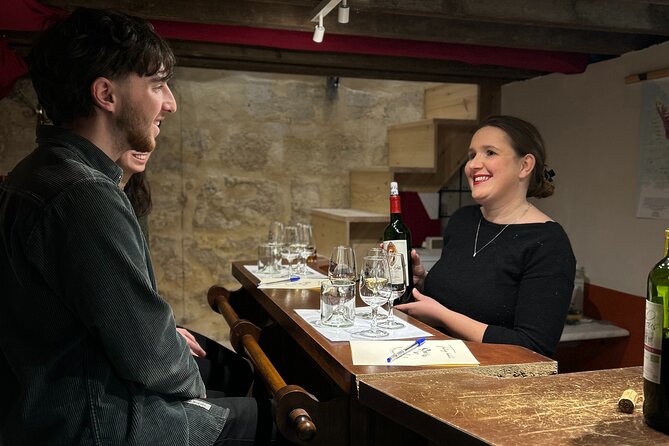
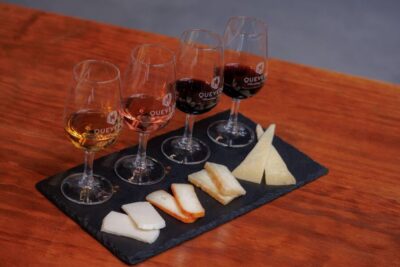
Bordeaux white wine gets the spotlight here, not as a side note to red wine. In about 75 minutes, Cecilia guides you through four bottles, the region’s appellations, soils, grape varieties, blends, and rankings, then shows how food can change the taste in your glass. The Nose of Wine adds a hands-on way to train your sense of smell.
I like the small maximum of six people, which suits anyone who wants to ask questions without feeling lost in a crowd. I also like the practical finish: a food and wine pairing, plus a tasting booklet you can use later at home. One point to consider is the food itself. The pairing is included, but one diner felt the platter needed bread or crackers, so do not expect a full meal.
- Four Bordeaux wines: Taste bottles chosen to show different expressions of their local soils and wine styles.
- Cecilia’s wine training: Your host studied at the University of Wine and teaches tasting in an informal, accessible way.
- The Nose of Wine activity: Use scent to identify and discuss aromas rather than simply sipping and guessing.
- Small-group setting: The experience accepts no more than six people, making conversation and questions easier.
- Take-home tasting booklet: Keep practicing the method after your time in Bordeaux.
- Optional picnic: Add a local-product picnic for €20 per person if you want more food than the included pairing.
What the 75-minute Bordeaux tasting is really about
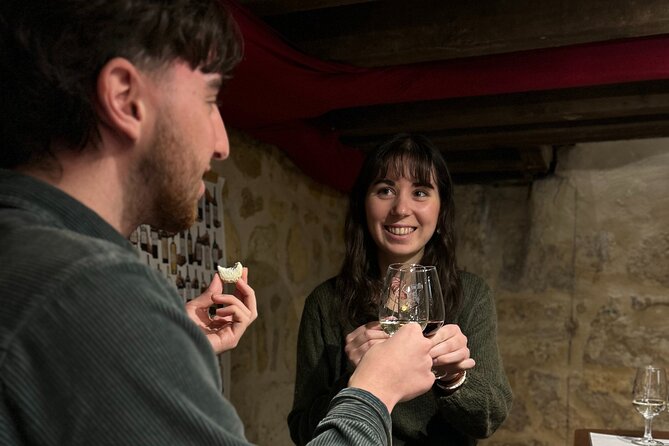
This is an introductory wine course, not a vineyard bus tour. You meet at 25 Av. Thiers in Bordeaux, and the session returns to that same meeting point. The mobile ticket makes arrival simple, and the activity runs for roughly one hour and 15 minutes.
The purpose is to make Bordeaux wine less intimidating. Bordeaux can seem wrapped in a wall of French labels, formal rankings, and famous château names. Here, Cecilia breaks that system into useful pieces: where the wines come from, how soils affect them, which grape varieties matter, and why winemakers blend different grapes.
That approach is valuable if you enjoy wine but still find a Bordeaux label hard to read. You are not expected to arrive with technical knowledge. The course is designed as an initiation, so the emphasis is on noticing what is in the glass and learning a method you can repeat.
The mood is meant to be social and relaxed. The experience provider, I love my 2cv, connects the tasting with Bordeaux’s wine country and the host’s travels among château properties in a classic 2CV. Based on the details provided, you should not assume the tasting includes a 2CV ride or a vineyard transfer. The confirmed activity is the tasting at the Bordeaux meeting point.
Meeting Cecilia and learning the Bordeaux basics
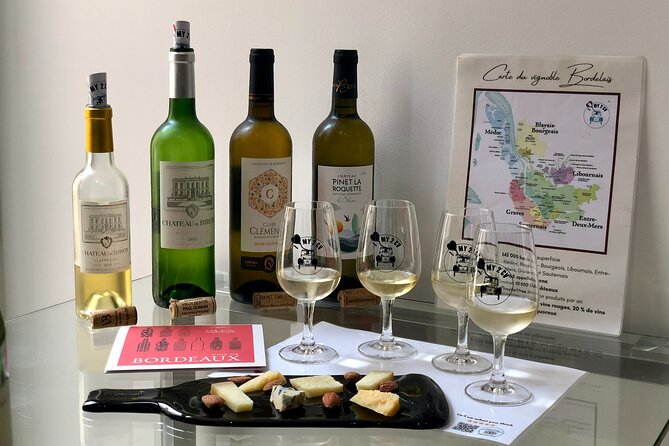
Cecilia is a professional wine taster trained at the University of Wine. Her role is not simply to pour four glasses and name them. She explains the system behind Bordeaux wine and gives you a vocabulary for describing what you smell and taste.
The regional overview covers the Bordeaux vineyard as a whole. You should expect discussion of appellations, soils, grape varieties, blends, and rankings. Those subjects matter because a Bordeaux bottle often tells you more about its place and classification than it does about a single grape variety.
That can be a useful change for anyone used to wines labeled mainly by grape. Instead of treating each bottle as an isolated drink, you learn how place, production rules, and blending shape the final wine. The lesson is broad, but the short format keeps it from becoming a classroom lecture.
Cecilia’s connection with winemakers also shapes the selection. The four bottles are chosen for typical expressions of the areas where they were made, with selections built through meetings with passionate producers. That does not mean every wine will match your personal taste, but it should give the tasting a clear regional purpose.
More Wine and Cheese Tastings in France
- Professional – Bordeaux Wine and Cheese Tasting with a walking tour
★ 5.0 · 218 reviews - Tasting of 6 Bordeaux wines and pairing charcuterie & cheese
★ 5.0 · 199 reviews - Bordeaux: Wine Masterclass with Cheese and Charcuterie Board
★ 4.9 · 184 reviews
Four glasses, four ways to read white wine
The central part of the session is the flight of four wines. You are not given a single safe favorite and sent on your way. The point is comparison, allowing you to notice how different Bordeaux whites can express their origin and style.
The exact bottles, producers, grape percentages, and vintages are not specified, so you should not book this expecting a fixed menu. Wine selections can change. What is promised is a carefully chosen set of four wines representing the character of their respective terroirs.
I like this format for a first tasting because four glasses are enough to create contrast without making the session feel rushed. You can pay attention to color, smell, texture, freshness, and finish, then compare one glass with the next. You also receive alcoholic beverages as part of the price, so there is no separate tasting charge for the four pours.
The session is not just about deciding which wine is best. Cecilia helps you consider why a wine smells or tastes the way it does. That distinction is important. A tasting course should leave you better able to describe your preferences, not simply with a list of bottles you happened to enjoy.
If you have little wine experience, do not worry about using the wrong words. The course is meant to remove some of the ceremony around wine. If you already know your way around a tasting, the value will come more from the Bordeaux focus and the chance to ask about local styles and producers.
Training your nose with The Nose of Wine
A distinctive part of the activity is the use of The Nose of Wine. This gives the tasting a sensory exercise rather than leaving you to swirl, sniff, and pretend certainty.
The idea is simple: aromas can be hard to name when they are mixed inside a glass. A structured scent exercise helps you notice separate impressions and connect them with the wine. You may find that this makes tasting feel more like a skill you can practice and less like a test you can pass or fail.
This is also where the course works well for mixed groups. One person might already enjoy wine, while another may be starting from scratch. A sensory activity gives both people something to do and discuss. You can compare impressions without needing to know technical terms in advance.
The included tasting booklet extends that lesson beyond the meeting. You take it home as a reference for practicing later. It will not replace a full wine course, but it gives you a record of the method and a way to build confidence with future bottles.
The cheese pairing and the final glass
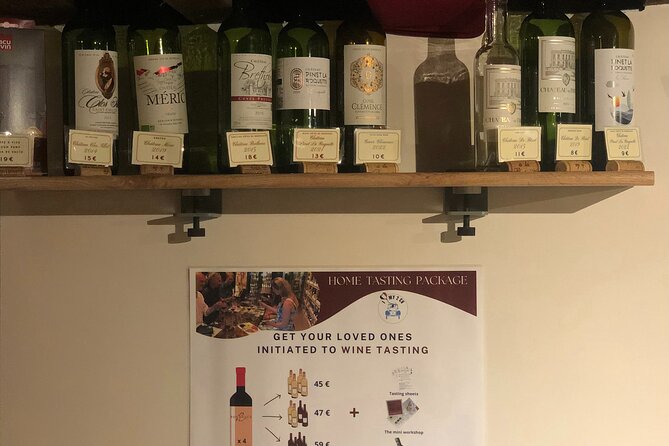
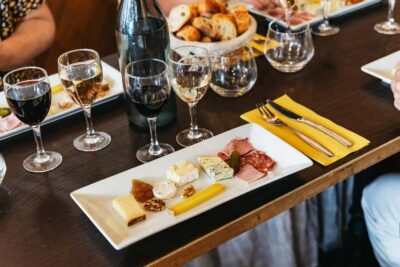
Food enters the tasting as a practical lesson, not just a snack. The final glass is paired with food so you can see how the combination changes your impression of the wine.
This is one of the more useful parts for everyday life. A wine can taste sharp, soft, fruity, dry, or more balanced depending on what you eat with it. Seeing that effect in real time gives you a better basis for choosing wine at a restaurant or planning a simple meal at home.
The activity includes a food and wine pairing, and the title identifies cheese as part of the experience. It is best to think of this as a tasting portion rather than lunch. One person felt that the food would have benefited from bread or crackers, which is a fair expectation to keep in mind.
If you want a more substantial meal, you can reserve an optional picnic made with local products for €20 per person. That picnic is not included in the $52.06 tasting price. The extra cost may make sense if you are scheduling the tasting around lunchtime, but the basic experience is built around wine education, not a full spread.
The pairing also gives Cecilia a chance to explain the logic behind food and wine matches. You learn why a certain texture or flavor can support a wine, rather than simply being told that a particular cheese goes with a particular bottle.
More Wine and Cheese Tastings in Bordeaux:
- Introduction to Bordeaux wines paired with cheeses & charcuterie
★ 5.0 · 175 reviews - Bordeaux Gourmet Experience: Cheese & Wine Tasting
★ 4.6 · 169 reviews - Bordeaux Wines Masterclass paired with cheeses & charcuterie
★ 5.0 · 110 reviews - Bordeaux Gourmet Experience : tasting of French cheeses & wines
★ 4.5 · 71 reviews
Why the small group matters
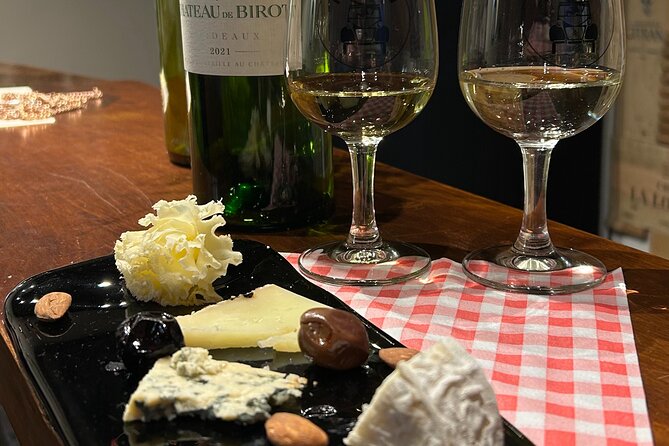
The maximum group size is six. That is a meaningful detail for a tasting course because the quality of the session depends partly on conversation. In a large room, you can end up listening from the back while the host answers someone else’s question. Here, the format should allow more direct exchange.
A solo visitor can fit comfortably into the setup, and the intimate format also suits a couple or a small group of friends. One person who attended alone found the cozy setting particularly suitable for an individual or a group of up to four. The official maximum is six, so larger parties are not the target audience.
The tradeoff is that a small, host-led tasting can feel more personal and less anonymous. That is a strength if you want to talk about your own taste. It may be less appealing if you prefer a large commercial tasting room where you can move around independently.
Cecilia’s friendly style is part of the appeal. The session includes conversation about wine and the Bordeaux area, with practical tips that can continue beyond the four glasses. If you want a quick, impersonal pour, this is not the right format. If you like learning through questions and discussion, the group size helps.
Price, timing, and practical value
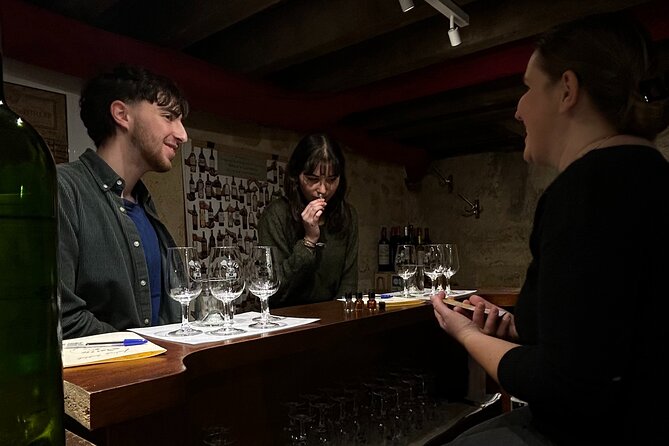
At $52.06 per person, this is not the cheapest way to drink four glasses of wine in Bordeaux. That is not really the comparison that matters. You are paying for four selected wines, instruction from a professionally trained taster, the sensory exercise, a food pairing, and a booklet to take home.
The price is easier to justify if you are new to Bordeaux wine or want more context than a standard bar tasting provides. You are also buying a compact activity that fits neatly into a day in Bordeaux. At about 75 minutes, it gives you useful background without taking over an entire afternoon.
The booking pattern, with reservations often made about 55 days ahead, suggests that you should plan early if your dates are fixed. The group is capped at six, so last-minute availability may be limited. Confirmation is provided at booking.
The meeting point is near public transportation. The activity ends where it begins, which keeps the logistics simple. Service animals are allowed, and most people can take part. No special fitness requirement is stated, but the core experience is seated or stationary tasting and discussion rather than a long walking route.
You can cancel for a full refund up to 24 hours before the local start time. Changes or cancellations made less than 24 hours before the start are not accepted for a refund. That is a reasonable policy, but it means you should not wait until the last day if your schedule is uncertain.
Who will enjoy this Bordeaux wine course
I would choose this for someone who wants an approachable introduction to Bordeaux rather than a technical certification lesson. It also suits a couple looking for a calm indoor activity, a solo visitor who enjoys conversation, or a small group that wants to learn together.
The experience is especially useful if you have questions such as these:
- Why do Bordeaux bottles use appellations instead of placing the grape variety front and center?
- How do soil and place affect the taste?
- What does blending achieve?
- How can food change the balance of a wine?
- How do I describe aromas without making wild guesses?
You may want something else if your main goal is to tour vineyards, visit château interiors, or ride through the countryside in a 2CV. The provided details do not promise those parts as participant activities. This is a city-based tasting course with Bordeaux wine context.
You should also keep your food expectations modest. The pairing is included, but it is not described as a meal. Reserve the €20 picnic if you want local food to play a larger role in the outing.
Should you book this Bordeaux white wine tasting?
Book it if you want four Bordeaux whites, clear guidance, a small group, and a useful lesson you can carry into future tastings. Cecilia’s University of Wine training, the Nose of Wine exercise, and the take-home booklet give the session more substance than a simple sampling stop.
Skip it if you are looking for a full vineyard excursion, a long meal, or a fixed list of famous château wines. For the right audience, the $52.06 price buys a friendly introduction to Bordeaux’s white wines and a practical way to understand what is in your glass.
FAQ
Where does the Bordeaux white wine tasting begin?
It begins at 25 Av. Thiers, 33100 Bordeaux, France.
Where does the activity end?
The activity ends back at the meeting point on 25 Av. Thiers.
How long does the tasting last?
The tasting lasts approximately one hour and 15 minutes.
How many wines are included?
Four glasses of wine are included in the experience.
Is food included?
A food and wine pairing is included. The activity also offers an optional picnic made with local products for €20 per person.
Is the picnic included in the ticket price?
No. The local-product picnic costs an additional €20 per person and must be reserved.
How many people can join?
The activity has a maximum of six participants.
Is the tasting suitable for beginners?
Yes. It is presented as an accessible introduction to wine tasting and Bordeaux wine, with guidance through aromas, appellations, soils, varieties, blends, and rankings.
Can I cancel for a full refund?
Yes. You can cancel at least 24 hours before the local start time for a full refund. Cancellations or changes made less than 24 hours before the start are not accepted for a refund.
Freshly cut around Bordeaux
- Wine Masterclass & Cheese Tasting Workshop in Bordeaux★ 5.0 · 2 reviews
- Tasting of Bordeaux red wines, wine and charcuterie pairings★ 5.0 · 24 reviews
- Wines and Cheeses: Learning to combine perfectly★ 4.5 · 7 reviews
- Wine Masterclass & Cheese Tasting Workshop in Bordeaux★ 5.0 · 29 reviews
- Highlights of Bordeaux Walking Tour + Wine & Cheese Tasting★ 4.5 · 5 reviews
- Bordeaux Night Walk Ending with Delicious wine & cheese Tasting★ 5.0 · 10 reviews
- Bordeaux Food Tour : Sweets, Cheese & Wine pairing workshop★ 5.0 · 8 reviews
- Bordeaux wines : tasting with 4 white wines and cheeses★ 5.0 · 24 reviews
Wine and Cheese Tastings, plate by plate.
Paris: Montmartre Cheese, Wine & Pastry Guided Walking Tour
Read our review →
Paris Le Marais Food Tour With 10+ Tastings, Cheese, Wine & More
Read our review →Cheese lists with this tasting