
Review · GREECE
Crete: Farm Visit with Cheese Tasting and Milking Experience
The best part of this farm visit near Rethymno is that you do not just watch Cretan food being made. You handle the work yourself, from feeding goats and sheep to trying the milking equipment and helping make fresh cheese. Michaelis and his family explain the process in English, with a warm, down-to-earth approach.
I like the close look at a working family farm, not a staged rural show. I also like the tasting at the end, especially the warm fresh cheese, sheep yoghurt, graviera, feta, puddings, and the farm’s own goat cheese, Tyromalama. The main thing to keep in mind is the short 90-minute schedule. It gives you a good sample of farm life, but it is not an all-day farm stay, and the wine or raki may not always be served.
Key points at a glance
- Try real milking: You can milk goats and sheep by hand, then see modern milking equipment in use.
- Make traditional cheese: The cheese-making session shows how fresh milk becomes a finished Cretan cheese.
- Taste more than cheese: The spread can include feta, graviera, Tyromalama, yoghurt, puddings, and fresh milk desserts.
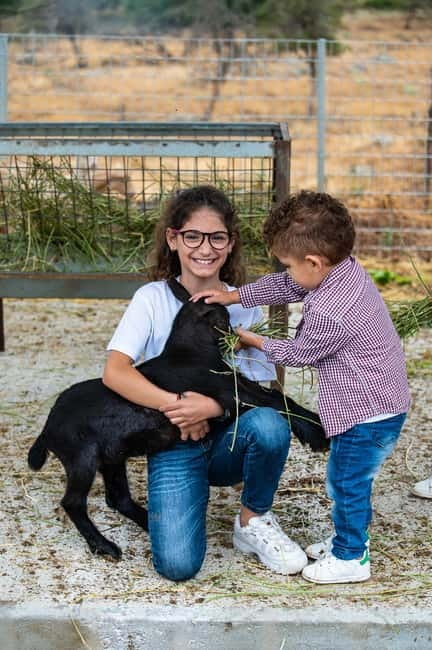
- A good family stop: Children can feed animals, meet peacocks and chickens, and play in a dedicated playground.
- Easy Rethymno add-on: Arkadianos Farm is 18 kilometres from Rethymno, 12 kilometres from Arkadi Monastery, 9 kilometres from Margarites, and 24 kilometres from Ancient Eleutherna.
- Good booking flexibility: You can cancel up to 24 hours ahead for a full refund and reserve now while paying later.
A working Cretan farm, not just a cheese shop
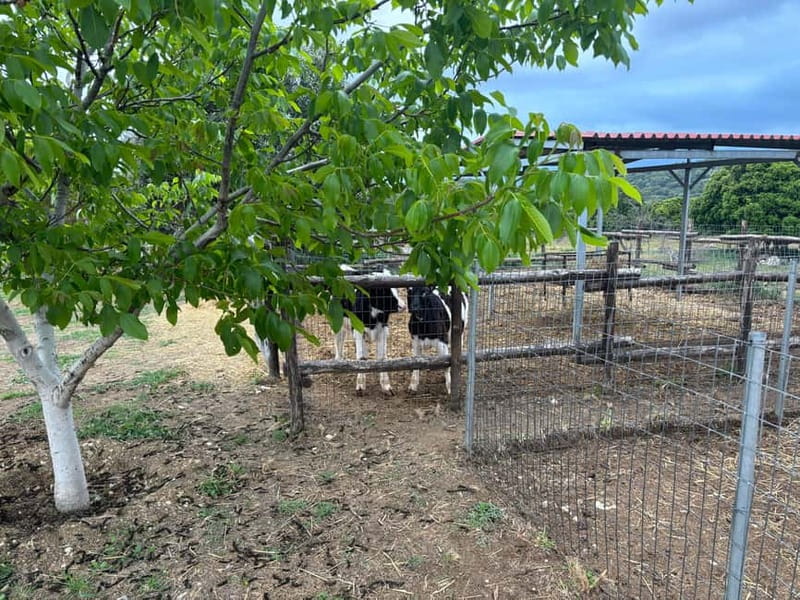
Arkadianos Farm gives you a quick, hands-on look at the daily work behind Cretan dairy food. You walk through a real farm setting with goats, sheep, cows, dogs, cats, chickens, geese, partridges, and peacocks. The range of animals makes the visit especially appealing to children, though adults will find plenty to learn too.
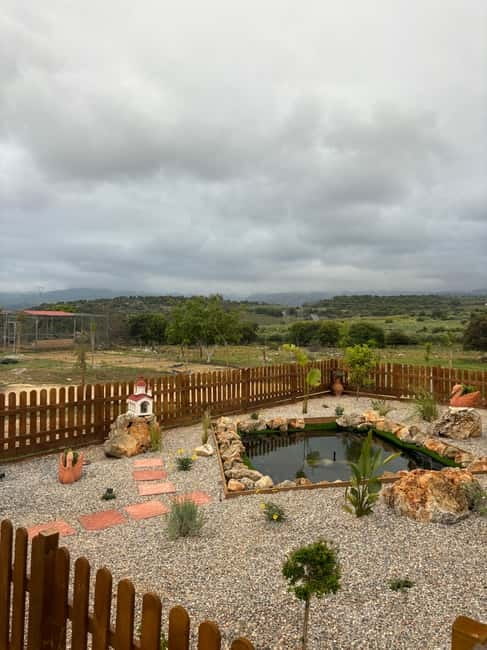
The setting is part of the pleasure. The farm sits among the Cretan mountains, with an artificial lake, a herbal garden, and a vegetable patch. If the timing works, you can see and taste produce such as tomatoes and cucumbers straight from the garden.
This is not a polished museum display. The appeal lies in seeing animals, milk, tools, and food production in the same place. You get a better sense of how dairy products fit into rural Cretan life, rather than simply buying a packaged product in a shop.
The family welcome is an important part of the experience. Michaelis leads the English-language explanation, and his family takes part in the milking, cheese-making, and tasting. One family includes three generations, with the grandmother preparing cheese and other relatives helping with the visit. That gives the experience a personal feel without turning it into a formal cooking class.
More Cheese Farm Visits in Greece:
- Cretan Farm Tour with Cheese-Making, Olive Oil Tasting & Picnic
★ 5.0 · 10 reviews - Farm Tour with Cheese-Making, Olive Oil Tasting & Picnic
★ 5.0 · 8 reviews - Authentic Farm Tour with Pizza, Cheese, Wine & Limoncello Tasting
★ 5.0 · 698 reviews
Meeting the goats, sheep, and peacocks
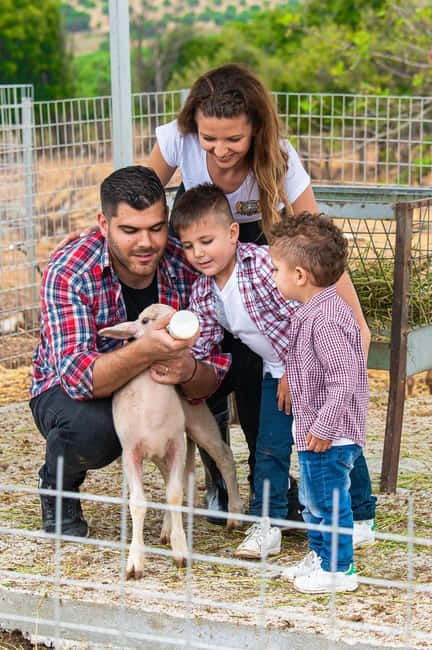
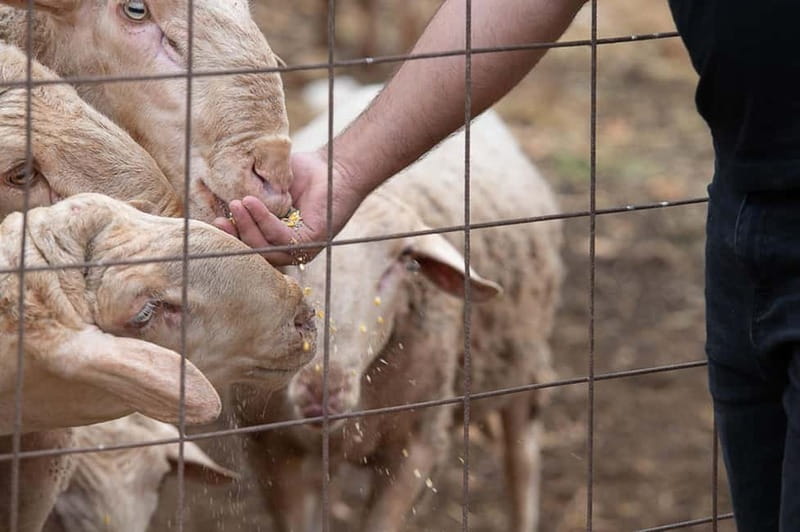
The animal portion comes early and gives you an easy way to get involved. You can feed the animals, pet them, and take photographs. Children tend to enjoy the smaller and more colorful residents, especially the baby sheep, chickens, geese, and peacocks.
The farm also has dogs and cats, along with cows and partridges. That variety helps keep the visit moving, particularly for younger children who may not want a long explanation about dairy production.
I would still set reasonable expectations. This is a farm visit, so the experience depends on the animals and the people caring for them. It is not a petting zoo with a fixed performance schedule. You are there to learn how the farm works, and animal contact takes place as part of that setting.
The staff explain how they care for the animals before moving on to the milk. That detail matters. You are not simply handed a bucket and told to pose for a photograph. The visit connects feeding and care with the food that comes later.
Milking by hand and with modern equipment
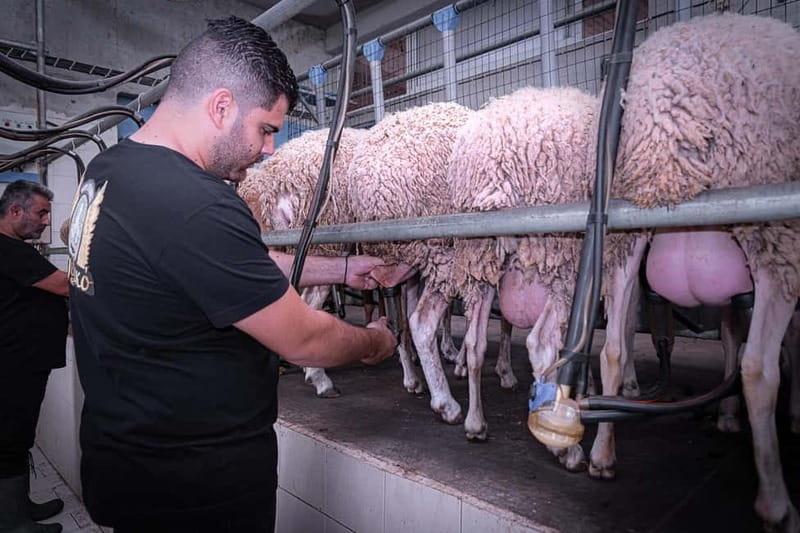
Milking is one of the most memorable parts of the visit because it turns an everyday farm task into something you can try yourself. You can attempt to milk a goat or sheep by hand, then see how modern equipment is used.
For many people, this is their first chance to try milking. It is a simple activity, but it gives you a practical feel for the patience and routine required on a dairy farm. Children can take part, with adults nearby to help.
The modern equipment adds useful context. Cretan cheese production is linked to old methods, but the farm also uses contemporary tools. Seeing both approaches in one place shows how a family business can preserve traditional food while handling a larger working operation.
The activity is hands-on, but it is not a full animal-care course. The 90-minute format means you will get an introduction rather than a detailed lesson in herd management. If you are especially interested in agriculture, you may wish to allow extra time around the visit for the gardens and farm setting.
From fresh milk to Tyrozouli cheese
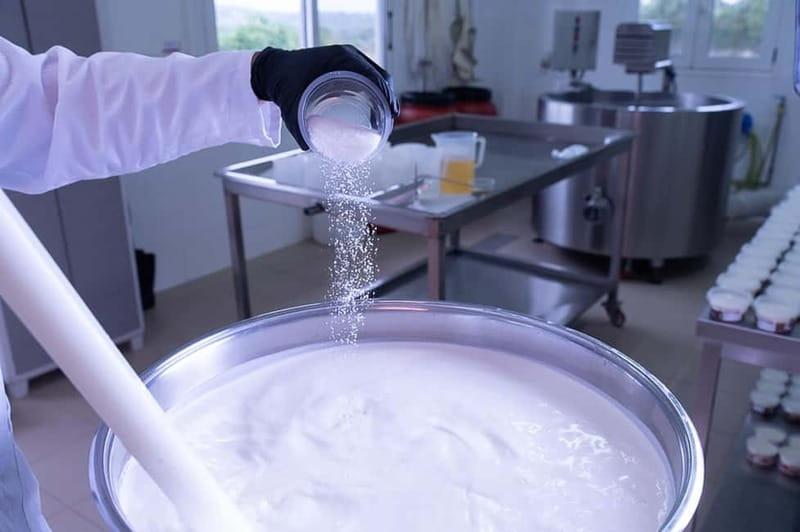
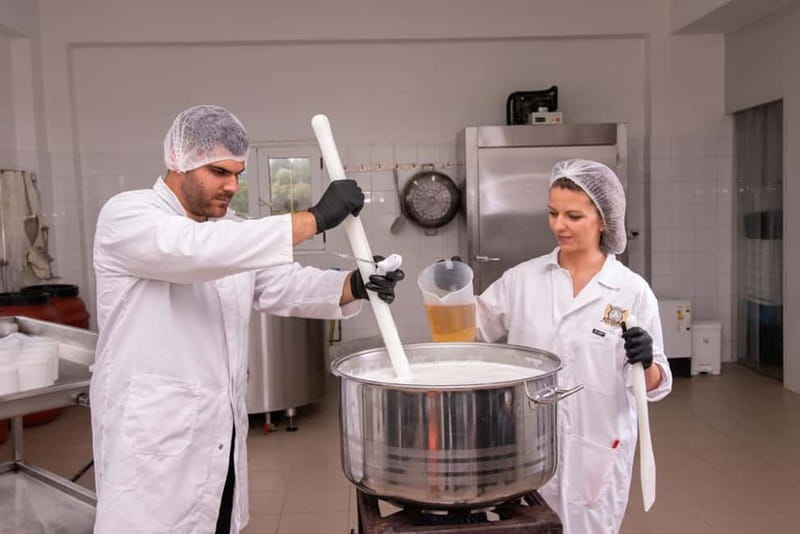
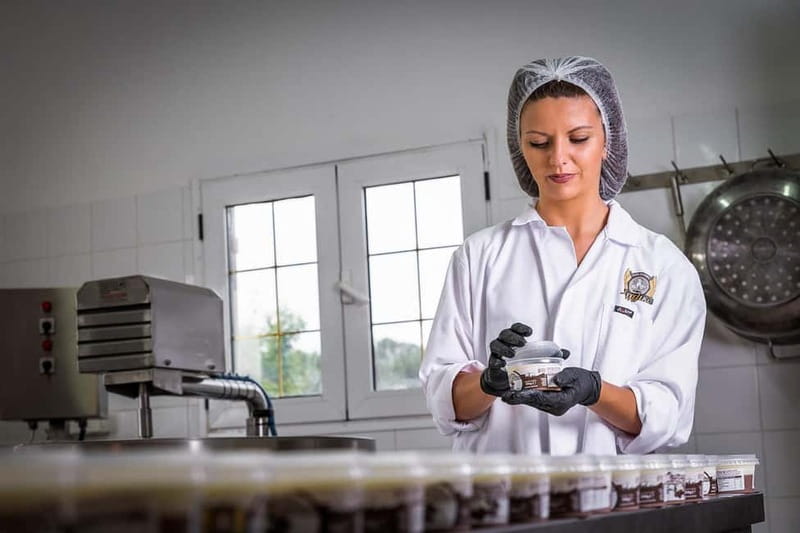
The cheese-making section is the heart of the experience. At the traditional cheese factory, you see how milk is handled and turned into cheese, then take part in making an authentic Cretan variety.
The farm is known for its fresh goat cheese, Tyromalama, and the visit also introduces Tyrozouli, a local fresh cheese. The exact names can sound confusing, but tasting them side by side helps. Fresh cheese has a soft, mild character, while other products offer firmer textures and stronger flavors.
One particularly appealing detail is tasting cheese while it is still warm. That is a very different experience from opening a chilled packet of cheese at home. The warm texture and fresh milk flavor give you a clearer idea of what the production process creates.
The family demonstrates the method rather than giving you a complicated technical lecture. You can watch the ingredients change, ask questions, and take part in the process. English is available throughout the guided visit.
If you already know a great deal about cheese production, the session may feel brief. At 90 minutes, it is designed for curious visitors and families, not professional training. For most people, that is the right balance for a holiday stop.
More cheese tours around Greece:
- From Chania: Olive Oil, Wine, Cheese & Honey Tasting Tour
★ 4.6 · 490 reviews - Athens: Acropolis Wine Tasting with Cheese and Olives
★ 4.9 · 337 reviews - Cheese & Wine Trails – Naxos
★ 5.0 · 29 reviews - Cheese and Wine Tasting (Guided Tour INCLUDED)
★ 4.5 · 14 reviews
The tasting: feta, graviera, yoghurt, and puddings
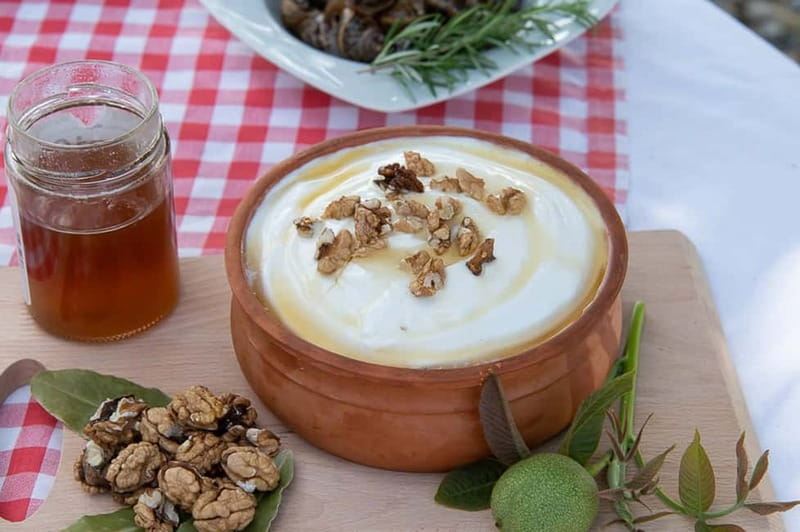
The tasting makes the experience good value. You are not limited to one small cube of cheese. The spread can include fresh feta, graviera, Tyromalama, sheep yoghurt, handmade milk desserts, puddings, and other products made at the farm.
The yoghurt is a highlight for many people, especially when served fresh from the farm. The puddings add something sweet and show how the same milk can be used beyond cheese-making.
You may also be offered local wine and raki, both included in the stated package. I would treat these as an included possibility rather than a guarantee. One family reported that neither was offered during their visit, so the dairy tasting is the dependable focus.
The tasting also answers a common concern about goat and sheep dairy: strong flavor. The products are described as mild and free of the unpleasant aftertaste some people expect. Of course, taste is personal, but this is a useful chance to try several styles before deciding what you like.
If you enjoy the food, you can buy handmade products directly from the farm. This is one of the better reasons to bring a small cooler or make the farm part of a day when you can return to your accommodation soon afterward. The available products and storage needs are not specified, so ask the farm what is practical to take with you.
A pleasant stop for children
Families have several reasons to consider this activity. Children can feed animals, try milking, watch cheese being made, taste new foods, and use the safe playground. The mix of short activities works better for young visitors than a long seated talk.
The playground is useful at the end of the visit, when adults may want to finish a tasting or browse the farm products. Children can also explore the outdoor areas, including the lake, herb garden, and vegetable patch.
The farm’s setting gives children a simple lesson in where food comes from. They can see the animals that provide milk, watch that milk become cheese, and taste the result a short time later. That connection is more memorable than a standard restaurant meal.
Parents should remember that this is still a working farm. Comfortable clothing and shoes make sense, and children will need normal supervision around animals and equipment. The available information describes the site as wheelchair accessible, but it does not detail every surface or the exact access route to each area, so visitors with specific mobility needs should confirm details before booking.
Where it fits into a Rethymno day
Arkadianos Farm works best as part of a wider outing. It is about 18 kilometres from Rethymno, making it a reasonable rural break from the city. It is also close to several well-known stops.
You can combine the visit with Arkadi Monastery, about 12 kilometres away. Margarites, a pottery village, is about 9 kilometres from the farm, and Ancient Eleutherna Museum is about 24 kilometres away. These distances make the farm useful as one stop in a central Crete day, rather than a destination that requires a special full-day journey.
The farm does not include hotel transfer. You need to arrange your own transport and allow time to find the meeting point. That is the main logistical drawback for visitors without a car or a planned excursion route.
The location is a strength if you want to get beyond the coast and see more of the countryside. It is less convenient if you are looking for a quick activity directly in central Rethymno, especially since the farm’s exact travel time can vary with roads and traffic.
What $29 buys you
At $29 per person, this is priced as an active food and farm experience rather than a simple tasting. You receive a guided farm visit, animal feeding, goat and sheep milking, cheese-making instruction or viewing, a tasting, and local wine and raki when available.
I consider the price fair because the visit combines several activities that would otherwise be separate. You are paying for access to a working farm, family guidance, hands-on participation, and a generous sample of handmade dairy foods.
The value is strongest for families and anyone interested in Cretan food traditions. A person who only wants to eat cheese may find a market or shop cheaper. A person who wants to understand how the cheese is made will get more from this visit.
The tasting also matters financially. You can try products before buying them, rather than guessing which cheese or yoghurt suits you. Since the farm sells its own goods, the purchase is optional and direct from the producer.
Who should book this farm visit?
I would recommend it most to families with children, food lovers, and anyone who wants a short rural activity near Rethymno. The animal contact and playground give younger children something to do, while adults get the cheese-making and tasting.
It also suits visitors who prefer meeting a local family and seeing everyday production instead of attending a large commercial show. The English-language guidance makes the process easy to follow.
You may want to skip it if you dislike animal contact, have no interest in dairy products, or need a long and detailed agricultural tour. The schedule is compact, and the activity centers on goats, sheep, milk, cheese, yoghurt, and desserts.
For a fuller day, pair it with Arkadi Monastery, Margarites, or Ancient Eleutherna. That makes the drive more worthwhile and gives you a good mix of religion, pottery, archaeology, and food.
Should you book Arkadianos Farm?
Yes, if you want a friendly, practical introduction to Cretan farm life and dairy-making. The strongest reasons are the chance to milk an animal, help make fresh cheese, taste products made on site, and meet a family that has built its business across generations.
Book it with realistic expectations. This is a 90-minute farm visit, not a full day of rural work. The wine and raki may not always appear, hotel transport is not included, and the experience is most useful when combined with nearby sights.
For $29, I think it is a solid choice, especially for families and curious eaters. If warm fresh cheese, sheep yoghurt, peacocks, and a chance to try milking sound better than another hour by the pool, this is a worthwhile stop in the Rethymno area.
FAQ
How long does the Arkadianos Farm visit last?
The activity lasts 90 minutes.
How much does the experience cost?
The listed price is $29 per person.
Is the tour offered in English?
Yes. The activity includes a live English-speaking guide.
Can children join the farm visit?
Yes. Children can feed and meet the animals, try milking, take part in the cheese-making activity, and use the farm’s safe playground.
What animals can I see?
The farm has goats, sheep, cows, dogs, cats, chickens, geese, partridges, and peacocks.
Is hotel transportation included?
No. Hotel transfer is not included, so you need to arrange your own way to the farm.
Can I cancel the booking?
Yes. You can cancel up to 24 hours in advance for a full refund. You can also reserve now and pay later.
Freshly cut around Greece
- Naxos Mythology & Ancient Sites Tour with Cheese & Wine★ 4.5 · 12 reviews
- Naxos Farm Experience and cheese making★ 5.0 · 5 reviews
- Ios: Cooking Experience with Cheese and Wine Tasting★ 5.0 · 6 reviews
- Culture & Taste Tour★ 5.0 · 6 reviews
- Cheese and Wine Tasting (Guided Tour INCLUDED)★ 4.5 · 14 reviews
- Cheese and Wine Tasting Tour From Chania★ 5.0 · 7 reviews
- Cretan Farm Tour with Cheese-Making, Olive Oil Tasting & Picnic★ 5.0 · 10 reviews
- Explore Shepherd’s Hut and Cheese Making Process★ 5.0 · 2 reviews
Dairy Farm and Cheese Factory Visits, plate by plate.
Authentic Farm Tour with Pizza, Cheese, Wine & Limoncello Tasting
Read our review →
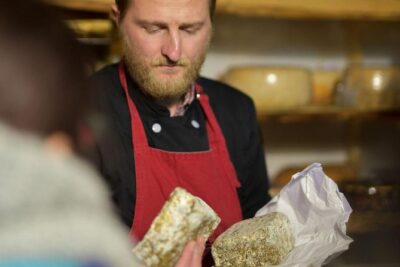
Paris Art of Pairing Cheese and Wine Tasting in a Cheese Cellar
Read our review →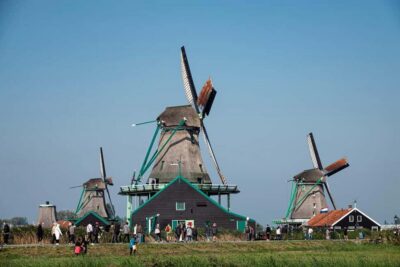
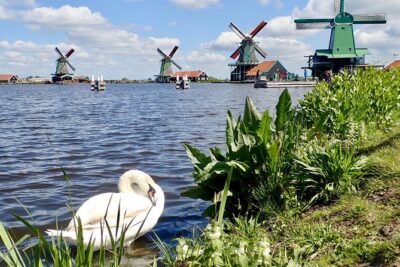
Amsterdam private tour to windmills, cheese farm and villages
Read our review →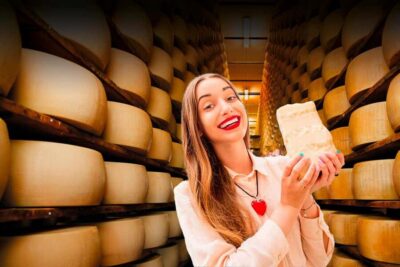

From Parma: Parmigiano Reggiano Farm Tour & Tasting with Transfer
Read our review →Cheese lists with this tasting