Review · BORDEAUX
Tasting of 6 Bordeaux wines and pairing charcuterie & cheese
Bordeaux wine can seem like a code of riverbanks, appellations, blends, soils, and grand classifications. This tasting makes that code easier to read, with six wines presented by Mathilde or Cécilia, both trained at the University of Wine. You will compare left-bank and right-bank styles, test your sense of smell, and learn how French labels work.
I like the tiny group size, capped at six, and the practical tasting booklet you take home. I also like the mix of family-estate wines, organic wines, and Grands Crus Classés, which gives you more than a parade of anonymous pours. The main caution is the food pairing: charcuterie and cheese are included, but the portions may be bite-sized rather than a meal.
Key points at a glance
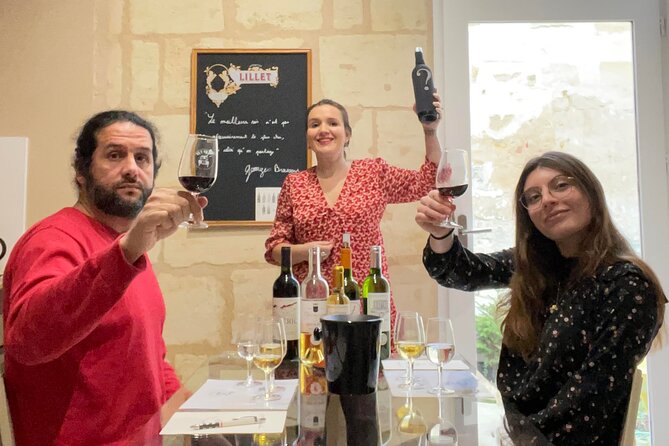
- A compact Bordeaux primer: In about 75 minutes, you cover appellations, terroirs, grapes, blends, classifications, and labels.
- Six wines with a useful range: Expect a mystery wine, dry whites, red blends from both banks, and a sweet wine, though the supplied description lists seven tasting categories, so confirm the exact lineup.
- Small and personal: The group is limited to six people, allowing questions and discussion with the host.
- Mathilde and Cécilia lead the session: Both are trained at the University of Wine and explain technical ideas in clear English.
- Food is part of the lesson: Cheese and charcuterie show how pairing changes the taste of wine, but this is not lunch.
- A good choice for a short Bordeaux stay: The tasting starts and ends at 25 Av. Thiers and does not require a vineyard excursion.
What this Bordeaux tasting is really trying to teach
This is not simply a stop where you sip six glasses and hear a few facts about famous châteaux. The aim is to help you understand why Bordeaux wines taste different from one another, even when they come from the same broad region.
You will work through the basic building blocks of Bordeaux wine: grape varieties, blends, soil, bank, appellation, and classification. That matters because Bordeaux commonly sells wine by estate and appellation rather than by a single grape name. If French wine labels usually leave you guessing, this lesson gives you a better starting point.
The left bank and right bank comparison is especially useful. The tasting is designed to show how the two sides of the Gironde and its tributaries can produce different styles. You will not just hear the terms repeated. You will taste examples and consider which side suits your palate.
The host also guides you through aromas. You might be asked to smell first, taste second, and describe what you notice without worrying about getting the answer right. That approach is useful for beginners because it turns wine tasting into observation rather than a test of fancy vocabulary.
More Cheese and Charcuterie Boards in France
- Bordeaux: Wine Masterclass with Cheese and Charcuterie Board
★ 4.9 · 184 reviews - Introduction to Bordeaux wines paired with cheeses & charcuterie
★ 5.0 · 175 reviews - Bordeaux Wines Masterclass paired with cheeses & charcuterie
★ 5.0 · 110 reviews
The six-wine lineup, and one detail to confirm
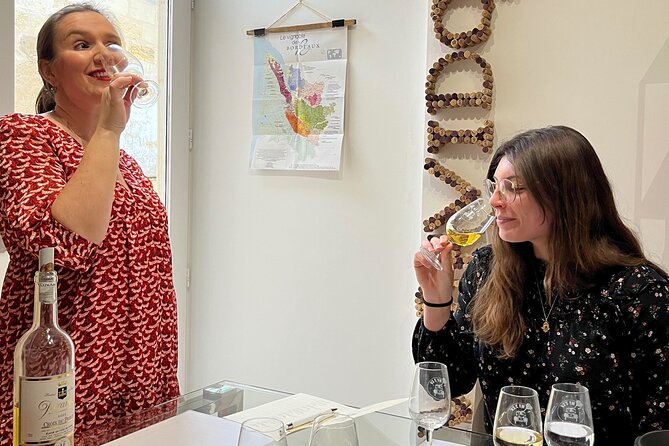
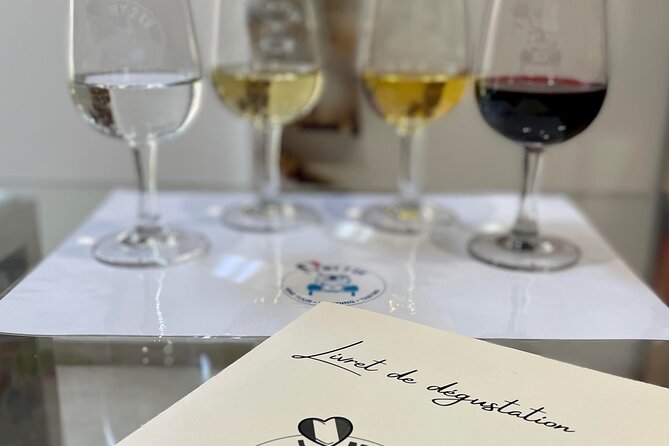
The experience is described as including six glasses of wine. The planned selection includes a mystery wine, two dry white wines representing the left and right banks, three reds showing blends and bank differences, and one sweet wine.
There is a small numerical wrinkle here: that list appears to add up to seven tasting categories, while the overall description says six wines. Since the exact lineup may change with availability and season, I would confirm the number and style of the pours when booking or at the start of the session.
That does not weaken the basic idea. The tasting clearly aims to cover the main Bordeaux spectrum:
- A mystery wine to get you thinking before the explanation
- Dry whites from both sides of the region
- Red wines showing Bordeaux blends and different origins
- A soft or sweet wine to finish
The mystery pour is a smart opening. Without a label or backstory, you pay attention to color, smell, acidity, body, and finish. Then the explanation gives your first impressions a framework.
The white wines are also important. Many people associate Bordeaux only with deep red wine, but the region produces dry and sweet whites too. Comparing two dry whites can show how place and blend influence a wine before you even reach the reds.
Learning left bank, right bank, and Bordeaux blends
The left-bank and right-bank comparison is the educational heart of this activity. Bordeaux is not one uniform wine region. Its subregions, soils, grape mixes, and estates create noticeably different results.
You will learn that a Bordeaux red is often a blend rather than a single-grape wine. That makes the host’s explanation of blending particularly valuable. One grape may bring structure, another fruit, another color or softness. The final wine is shaped by the proportions, the growing conditions, and the winemaker’s decisions.
The session also helps explain why you may prefer one bank over the other. One person may respond to a bold, firm red, while another prefers a softer, fruitier style. The point is not to declare one side superior. It is to help you recognize your own taste.
This is where the small group helps. You can ask why a wine feels dry, why one smells more floral or fruity, or how a label identifies the place where it was made. Several people have found the label lesson especially useful, since French bottles often assume you already know the appellation system.
Mathilde and Cécilia bring the technical side down to earth
Your host will be Mathilde or Cécilia. Both are trained at the University of Wine, and the experience is built around their ability to explain wine without making the subject feel stiff.
Cécilia is especially associated with clear explanations of the left bank, right bank, soils, and Bordeaux styles. She also gives practical suggestions for places to visit and bottles to try in Bordeaux. Mathilde brings the same mix of technical grounding and friendly conversation, with attention to aromas, blending, production, and reading French labels.
The best part of this format is the chance to ask questions as they arise. A large tasting can leave you holding a glass while a guide talks over a prepared script. With a maximum of six people, you have a better chance to discuss what you are actually tasting.
English is offered, and several people have found the explanations easy to follow. If your group includes more than one language, the presentation may take longer or feel less smooth. One mixed French and English session had to end abruptly because the language split reduced the time available for the tasting. If timing matters, ask in advance how the session will be conducted.
More Wine and Cheese Tastings in France
- Professional – Bordeaux Wine and Cheese Tasting with a walking tour
★ 5.0 · 218 reviews - Bordeaux Gourmet Experience: Cheese & Wine Tasting
★ 4.6 · 169 reviews - Bordeaux Gourmet Experience : tasting of French cheeses & wines
★ 4.5 · 71 reviews - Bordeaux Afternoon Food Tour : Sweets, Wine and Cheese
★ 5.0 · 38 reviews
The aromas exercise is simple, useful, and not too serious
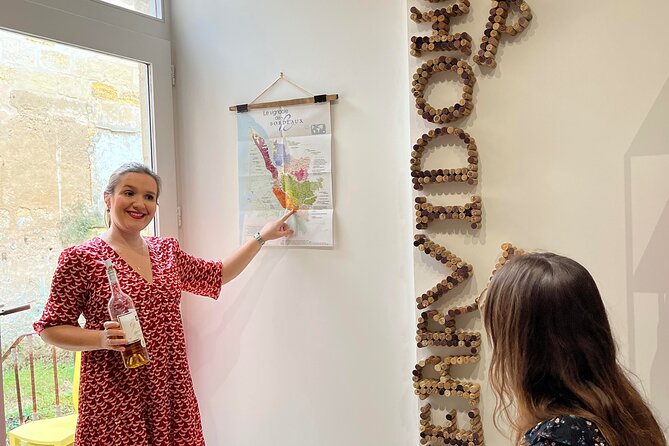
Wine tasting often becomes intimidating when people start naming obscure aromas. This experience takes a more approachable route by helping you focus on your senses.
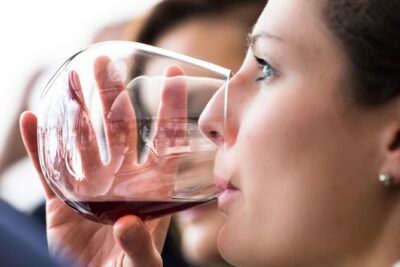
You may smell separate aroma samples before tasting, similar to an exercise used in wine school. That gives you a reference point for noticing fruit, floral, earthy, or other scents in the wine. You do not need a trained nose. You only need to slow down and pay attention.
I like this part because it can change how you taste wine after the activity. Instead of taking a sip and saying only I like it or I do not like it, you can ask what the wine is doing. Is it sharp or soft? Heavy or light? Fruity or dry? Does the smell match the taste?
The tasting booklet supports that habit. You receive it to continue practicing at home, so the value is not limited to the 75 minutes in Bordeaux.
Cheese and charcuterie: useful pairing, light portions
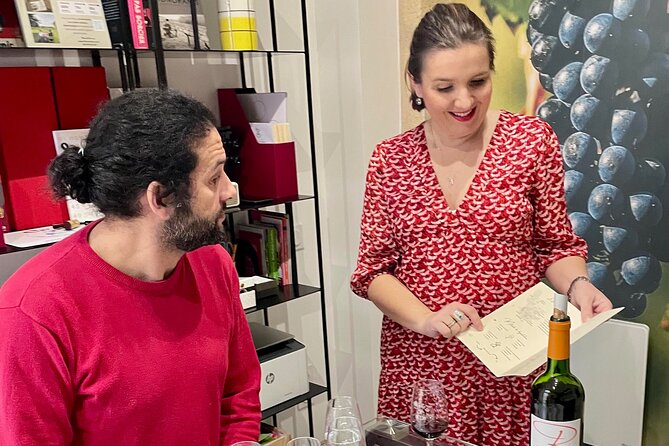
Food is included, but set your expectations correctly. You receive cheese and charcuterie as part of the tasting, not a full lunch or dinner.
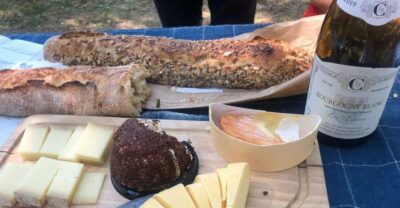
The pairing is meant to demonstrate how food affects wine. A salty, fatty, creamy, or strongly flavored bite can make a wine taste different. That is a worthwhile lesson, especially if you are planning restaurant meals or buying bottles for home.
The amount is the main point to consider. Some sessions have included a high-quality charcuterie board, while other people found only two cheeses and two meats, served in small portions at the end. Another account describes bite-sized pairings that were enough to show the idea but not enough to replace a meal.
I would eat beforehand if you are hungry. You can enjoy the food lesson without expecting a substantial spread. Vegetarian needs should be stated clearly when booking and repeated at the start, since one vegetarian booking was not handled correctly.
If you want a more filling food experience, a local-products picnic is available by reservation, but it is not included in the standard tasting.
The setting changes with the season
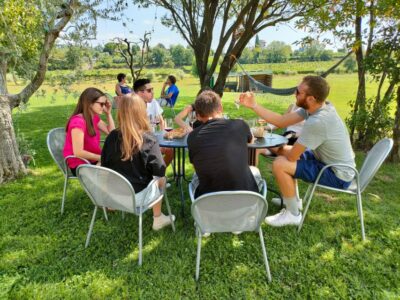
The tasting may take place in a private courtyard, a cellar, or a furnished tasting room. The courtyard setting can make the session feel relaxed and distinctly local, while a cellar or indoor room may suit cooler weather.
Because the exact setting depends on the season, do not book this expecting one fixed room or a grand château visit. This is an urban tasting experience in Bordeaux, not a day among vineyards.
That distinction is important. You will learn about Bordeaux wines and taste wines from the region, but you will not spend the afternoon touring vineyards, walking through vines, or visiting several estates. If that is what you want, the provider also offers vineyard outings in a Citroën 2CV, but those are separate experiences.
How the price compares with the time and contents
At $54.44 per person, the tasting sits above a casual bar flight but below the cost of a full wine day outside Bordeaux. The price includes the wine, food pairing, and tasting booklet, with the session lasting about 1 hour and 15 minutes.
For me, the value depends on what you want to learn. If you simply want a glass of Bordeaux, this is more than you need. If you want a compact lesson that helps you choose bottles and understand regional differences, the price is more reasonable.
The small group improves the value. You are paying for access to a trained guide, not only for liquid in a glass. The session covers history, appellations, soils, grapes, blends, classifications, aromas, labels, and pairing in a short period.
Still, the food should not be the reason you book. The wine education is the stronger part of the package. Also, the exact amount poured can vary. Some people have received generous pours, while others felt the quantities and food servings were modest.
Timing matters, especially if you are coming from a ship
The meeting point is 25 Av. Thiers, 33100 Bordeaux, and the activity returns there. It is near public transportation, but you should allow enough time to reach the address and return afterward.
One important warning applies to cruise passengers. The trip from the port can take close to two hours by train, and a scheduled tasting may leave little time for the return journey. A late arrival once forced the session to be shortened considerably.
An earlier 11:30 a.m. tasting is available, and that may be the safer choice if you have a ship departure or a long journey afterward. Do not assume the host can shift the time at the last minute. Cécilia has accommodated an early arrival before, but that should be treated as a kindness, not as part of the schedule.
For a normal Bordeaux visit, the timing is easier. The tasting works well as a mid-morning or afternoon activity between sightseeing stops, and its short length leaves room for a meal or more time in the city.
Who will get the most from this experience
I would choose this for a first visit to Bordeaux, particularly if French wine labels feel mysterious. You will leave with a clearer idea of how Bordeaux is organized and what to look for when buying a bottle.
It also suits a couple or small group with different levels of wine experience. Beginners can ask basic questions without feeling out of place, while experienced drinkers can focus on soils, blending, classification, and production.
It is a good fit for:
- People with only a few hours in Bordeaux
- Wine drinkers who want both white and red examples
- Visitors who want a small, conversational group
- Anyone planning to buy a bottle but unsure what to choose
- People who prefer learning through comparison rather than a large formal tasting
It may not suit you if you want a large meal, a vineyard visit, or a long evening of leisurely drinking. It is also not ideal if your transport schedule is tight or your group needs a guaranteed vegetarian pairing without confirming the request directly.
Booking, cancellation, and practical details
Confirmation is provided when you book, and the experience is offered in English. Mobile tickets make arrival simple, and service animals are allowed. Most people can take part, and the group is limited to six.
The wines tasted are available for purchase, which is handy if one bottle catches your attention. You can use the tasting to choose with more confidence instead of buying based only on a label or an expensive name.
Free cancellation is available up to 24 hours before the start time for a full refund. Cancellations or changes made inside that 24-hour window are not accepted, with cut-off times based on Bordeaux local time.
Should you book this Bordeaux wine tasting?
I would book it if you want a friendly, efficient introduction to Bordeaux wine and you care more about learning than about having a full meal. The small group, clear English explanations, aroma exercises, booklet, and left-bank versus right-bank comparison give the tasting real purpose.
I would skip it if your main goal is a vineyard day or a generous lunch. For cruise passengers, check the timing carefully and consider the 11:30 a.m. option. Also confirm the exact number of wines and the food arrangements, since the listed wine categories appear to exceed the stated six glasses.
For most people with limited time in Bordeaux, this is a practical way to make sense of a complicated wine region. You taste broadly, ask questions freely, and leave better prepared to order or buy Bordeaux wine on your own.
FAQ
How long does the Bordeaux wine tasting last?
The experience lasts approximately 1 hour and 15 minutes.
How many wines are included?
The tour summary states that six glasses of wine are included. The description lists a mystery wine, two dry whites, three reds, and one sweet wine, which appears to total seven categories. Confirm the exact lineup when booking.
Where does the tasting begin and end?
It begins and ends at 25 Av. Thiers, 33100 Bordeaux, France.
Is the tasting offered in English?
Yes. English is one of the offered languages.
Who leads the tasting?
The tasting is led by Mathilde or Cécilia, wine professionals trained at the University of Wine.
What food is included?
A food and wine pairing with cheese and charcuterie is included. The food is served as tasting portions, not as lunch.
Is lunch included?
No. A picnic with local products may be available by reservation, but it is not included in the standard experience.
How many people can join?
The activity has a maximum of six participants.
Can I cancel for a full refund?
Yes. You can cancel at least 24 hours before the start time for a full refund. Cancellations or changes made less than 24 hours before the start time are not accepted.
More Wine and Cheese Tastings in Bordeaux
- Blind Tasting: 4 Bordeaux Natural Wine + Cheese experience
★ 4.8 · 35 reviews - Wine Masterclass & Cheese Tasting Workshop in Bordeaux
★ 5.0 · 29 reviews - Bordeaux wines : tasting with 4 white wines and cheeses
★ 5.0 · 24 reviews - Tasting of Bordeaux White Wines Wine and Cheese Pairing
★ 5.0 · 10 reviews
More Cheese and Charcuterie Boards in Bordeaux
- Tasting of Bordeaux red wines, wine and charcuterie pairings
★ 5.0 · 24 reviews - Budapest: Wine, Cheese, and Charcuterie Tasting
★ 4.9 · 647 reviews - Hungarian Wine Tasting (with Cheese and Charcuterie) in Budapest
★ 5.0 · 531 reviews - Full-Day Group Wine Tour (with cheese and charcuterie) in Niagara-on-the-Lake
★ 5.0 · 349 reviews
Freshly cut around Bordeaux
- Wine Masterclass & Cheese Tasting Workshop in Bordeaux★ 5.0 · 2 reviews
- Tasting of Bordeaux red wines, wine and charcuterie pairings★ 5.0 · 24 reviews
- Tasting of Bordeaux White Wines Wine and Cheese Pairing★ 5.0 · 10 reviews
- Wines and Cheeses: Learning to combine perfectly★ 4.5 · 7 reviews
- Highlights of Bordeaux Walking Tour + Wine & Cheese Tasting★ 4.5 · 5 reviews
- Wine Masterclass & Cheese Tasting Workshop in Bordeaux★ 5.0 · 29 reviews
- Bordeaux Night Walk Ending with Delicious wine & cheese Tasting★ 5.0 · 10 reviews
- Bordeaux Food Tour : Sweets, Cheese & Wine pairing workshop★ 5.0 · 8 reviews
Cheese and Charcuterie Boards, plate by plate.
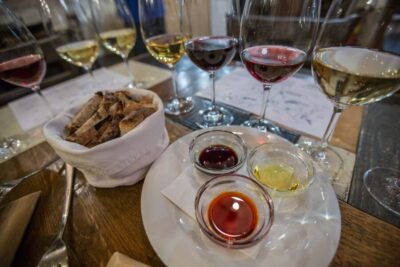
Full-Day Group Wine Tour (with cheese and charcuterie) in Niagara-on-the-Lake
Read our review →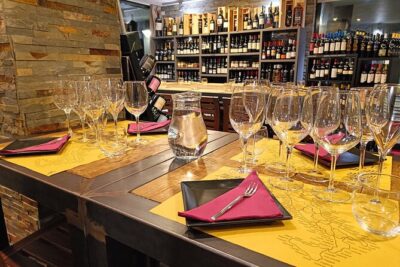
Taste of Lake Como: 4 Wines Paired with Local Cheese Charcuterie
Read our review →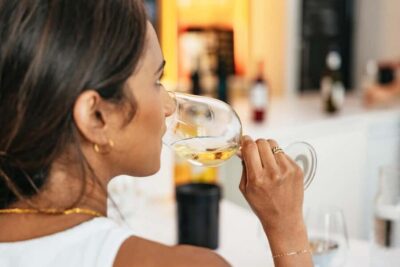
Bordeaux: Wine Masterclass with Cheese and Charcuterie Board
Read our review →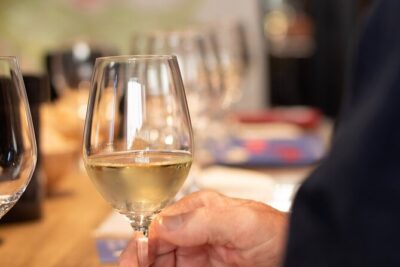
Introduction to Bordeaux wines paired with cheeses & charcuterie
Read our review →